
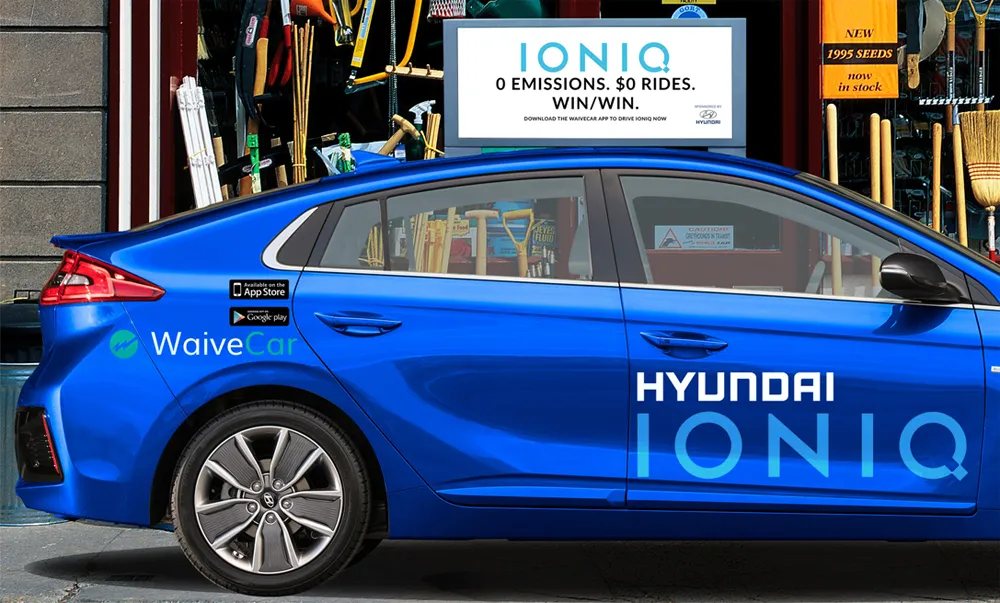
Traffic congestion has long been viewed as an urban problem. However, marketers are now asking a smarter question: what if traffic is not a barrier, but an opportunity? How Recent Car Advertising Campaigns Are Leveraging Traffic Congestion as an Advantage highlights how brands are rethinking mobility media to transform slow-moving roads into high-attention advertising zones.
As Indian cities experience longer commute times and denser traffic corridors, branded cars are gaining more visibility than ever before. Instead of chasing speed, advertisers are capitalising on stillness, dwell time, and repeated exposure.
Why Traffic Congestion Changes Advertising Dynamics
In traffic-heavy cities, vehicles often move slowly or remain stationary at signals, intersections, toll plazas, and bottlenecks. This environment naturally increases attention spans. Commuters, pedestrians, and two-wheeler riders have more time to observe their surroundings.
As a result, car advertising benefits from prolonged visibility. Unlike digital ads that disappear in seconds, a branded car remains in view for minutes. Therefore, traffic congestion unintentionally creates premium exposure conditions for mobility-led campaigns.
How Recent Car Advertising Campaigns Are Leveraging Traffic Congestion as an Advantage
Recent car advertising campaigns are intentionally designed for slow-speed environments. Bold colors, minimal text, oversized typography, and clear call-to-action messaging ensure readability even during stop-and-go traffic.
Brands are no longer designing creatives for fast highways alone. Instead, they optimise visuals for city traffic where eye contact with the ad lasts longer. Consequently, messaging becomes simpler, stronger, and more memorable.
Moving Billboards With Extended Dwell Time
Branded cars function as moving billboards. However, in congested traffic, they often become semi-static media. When vehicles halt at red lights or crawl through packed streets, surrounding commuters repeatedly view the same creative.
This repetition builds recall. Even without conscious attention, repeated exposure imprints brand messaging. Hence, traffic congestion enhances frequency without increasing media inventory or cost.
Strategic Route Planning in High-Traffic Zones
Modern car advertising campaigns are planned around congestion data. Brands deliberately choose routes known for high traffic density such as business districts, IT corridors, airport roads, mall zones, and central marketplaces.
Ride-based ecosystems and city traffic analytics allow advertisers to maximise time spent in high-visibility zones. As a result, campaigns achieve higher impression quality compared to random movement across low-density areas.
Ride-Hailing and Fleet-Based Campaigns Amplifying Reach
Car advertising gains scale when executed through ride-hailing branding and managed fleets. Platforms like Uber and Ola operate thousands of vehicles daily in congested cities.
Because these cars remain on the road throughout peak hours, branded fleets dominate traffic views. Additionally, familiar mobility vehicles enhance trust and brand legitimacy. Therefore, congestion-heavy routes turn into high-frequency branding loops.
Creative Storytelling Designed for Traffic Jams
Some recent campaigns even embrace traffic humor. Clever copy such as “Since you’re stuck anyway” or “Read this while the signal turns green” directly acknowledges the situation.
This contextual relevance makes advertising feel less intrusive and more relatable. Consequently, audiences engage rather than ignore. Traffic congestion becomes part of the brand narrative instead of an inconvenience.
Integration With Digital and Performance Campaigns
Car advertising during traffic congestion works best when integrated with digital touchpoints. QR codes, app download prompts, and short URLs encourage immediate action while commuters wait.
For example, a person stuck behind a branded car at a signal has enough time to scan a code or remember a brand name. Thus, offline exposure converts into online engagement seamlessly.
Cost Efficiency Compared to Premium Static OOH
Premium static OOH sites in congested areas are expensive and limited. In contrast, car advertising moves through multiple congestion points daily.
Since campaigns are priced by duration rather than location, brands achieve consistent exposure without bidding wars for fixed sites. Over time, cost per impression reduces significantly due to repeated traffic-based visibility.
Industries Benefiting Most From Traffic-Led Car Advertising
Several sectors are actively leveraging congestion-driven car advertising:
-
Fintech & Apps: App installs and feature awareness
-
FMCG & Retail: High-frequency brand recall
-
Entertainment & OTT: Show launches and releases
-
Automotive & Mobility: Brand familiarity and trust
Because traffic congestion is unavoidable, these industries use it as guaranteed attention inventory.
The Future: When Slower Roads Mean Smarter Advertising
Urban traffic is unlikely to ease anytime soon. However, advertising strategies are evolving faster. Car advertising proves that attention is not about speed—it is about presence.
How Recent Car Advertising Campaigns Are Leveraging Traffic Congestion as an Advantage shows that when cities slow down, brand visibility speeds up. In the future, the smartest campaigns will not fight congestion—they will design for it.