
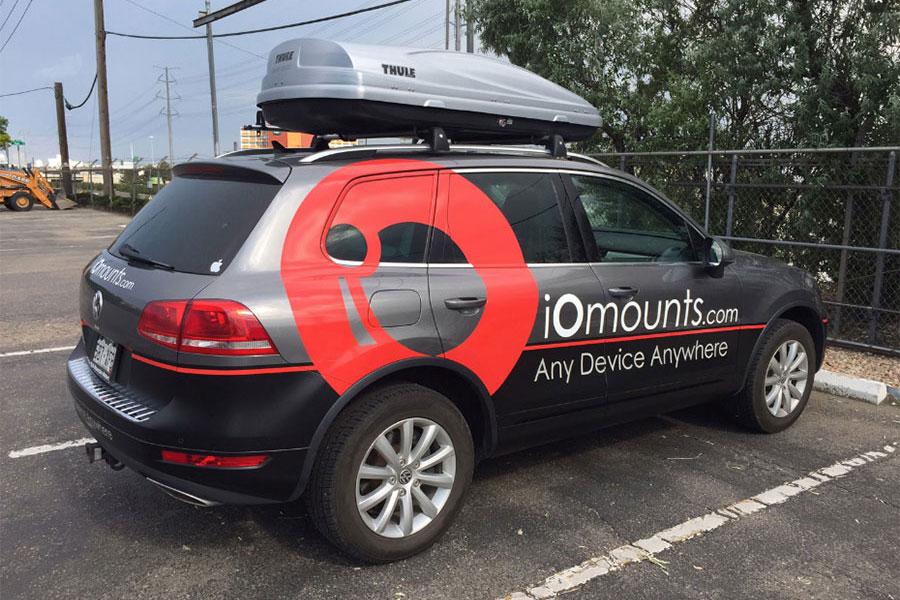
Urban India is no longer a single, uniform market. Instead, cities are fragmented into hundreds of micro-markets—each with its own lifestyle, income group, language preference, and buying behavior. This shift explains why brands are using car advertising to dominate micro-markets and neighborhoods rather than relying only on city-wide mass media.
Car advertising allows brands to be present exactly where consumers live, commute, and shop. Instead of waiting for audiences to pass a billboard, the brand enters the neighborhood daily. As a result, visibility becomes hyperlocal, repetitive, and highly relevant.
The Rise of Micro-Markets in Urban India
Metro cities like Mumbai, Delhi, Bengaluru, and Hyderabad function as clusters of neighborhoods rather than unified markets. A premium high-rise area behaves very differently from an older residential colony just a few kilometers away.
Because of this fragmentation, one-size-fits-all advertising often underperforms. Brands now need formats that adapt to local routes, streets, and daily routines. Car advertising fits this requirement perfectly, as vehicles move organically through defined catchment areas.
Why Brands Are Using Car Advertising to Dominate Micro-Markets and Neighborhoods
Car advertising works at street level. Branded cars repeatedly pass through the same lanes, societies, market roads, and office corridors. This repetition creates dominance within a limited geography.
When residents see the same brand every day near their homes, familiarity builds quickly. Over time, the brand becomes a part of the neighborhood’s visual environment. Therefore, recall strengthens without aggressive messaging or high-frequency digital ads.
Hyperlocal Reach Without Buying Multiple Locations
Traditional hyperlocal outdoor advertising requires multiple hoardings, pole kiosks, or posters to cover a few kilometers. This approach is expensive and operationally complex.
In contrast, a small fleet of branded cars can cover dozens of micro-markets daily. Because vehicles move continuously, they deliver coverage across multiple streets and junctions. Hence, brands achieve hyperlocal saturation without negotiating for numerous fixed sites.
Daily Route Repetition Builds Local Recall
One of the strongest advantages of car advertising is route consistency. Cars used for daily commuting, ride-hailing, or service operations follow predictable paths.
As a result, the same audience sees the brand repeatedly—morning, evening, and weekends. This repetition mirrors how local trust is built. Consequently, car advertising becomes especially effective for brands that rely on neighborhood-level decision-making.
Ride-Hailing and Private Car Networks Enable Precision
Car advertising through ride-hailing and private vehicle networks allows brands to select cities, zones, and even time windows. Platforms linked to mobility ecosystems such as Ola and Uber operate dense networks within residential and commercial pockets.
By deploying branded cars in selected zones, advertisers avoid wasted impressions. Therefore, budgets are spent where the target audience actually lives and travels.
Neighborhood Credibility and Trust Advantage
Advertising that appears within a neighborhood feels less intrusive than large-format hoardings. When residents see branding on cars driven by real people, trust develops faster.
This perceived authenticity benefits categories such as fintech, education, healthcare, real estate, and local services. As a result, car advertising supports both awareness and credibility at the local level.
Cost Efficiency for Local and Regional Brands
Dominating a micro-market through static OOH can be cost-prohibitive, especially for regional or emerging brands. Car advertising offers predictable pricing based on duration and vehicle count.
Since branded cars operate daily, impressions accumulate steadily. Over time, cost per impression drops significantly. Therefore, even small brands can achieve neighborhood-level dominance without large city-wide budgets.
Creative Messaging Designed for Local Audiences
Car advertising creatives are increasingly localized. Brands use local languages, area-specific offers, and culturally relevant cues.
For example, a food delivery brand may promote society-level discounts, while a real estate developer highlights a nearby project. Because the message aligns with location, engagement improves. Hence, creative relevance amplifies the impact of car advertising in micro-markets.
Integration With Digital and On-Ground Activation
Car advertising does not work in isolation. QR codes, local landing pages, and app prompts connect offline exposure with online action.
When a branded car parks near a society gate or slows at a signal, viewers have enough time to scan or remember the message. As a result, neighborhood visibility translates into measurable digital engagement.
Industries Using Car Advertising for Micro-Market Dominance
Several sectors are actively using car advertising to win neighborhoods:
-
Fintech & Apps: Local adoption and trust
-
Education & EdTech: Area-specific lead generation
-
Real Estate: Catchment-area visibility
-
Retail & D2C: Neighborhood recall
-
Healthcare & Diagnostics: Local credibility
These categories benefit most from repeated local exposure rather than mass reach.
The Future: Neighborhood-Level Brand Building
As cities grow denser, micro-markets will define marketing success. Brands that dominate neighborhoods will outperform those chasing only city-wide visibility.
Car advertising offers a scalable, flexible, and cost-efficient way to achieve this dominance. By moving with residents and integrating into daily routes, brands secure attention where it matters most.
Conclusion: Visibility That Lives in the Neighborhood
Why Brands Are Using Car Advertising to Dominate Micro-Markets and Neighborhoods comes down to relevance, repetition, and realism. Car advertising does not interrupt—it integrates.
In an era where local trust drives decisions, brands that show up daily in neighborhoods will stay top-of-mind. Car advertising makes that presence possible, one street at a time.