Mumbai media buying trends are evolving rapidly as brands look beyond traditional hoardings and print to capture fragmented urban attention. In India’s most competitive advertising market, DOOH (Digital Out-of-Home) and BQS (Backlit Quality Screens) have emerged as critical formats for high-impact visibility. Consequently, advertisers planning campaigns in Mumbai must understand how these screens fit into modern media buying strategies.
This article explores Mumbai media buying trends, focusing on how brands are leveraging DOOH and BQS screens, where these formats perform best, and what media planners must consider before investing.
Why Mumbai Is Driving the Shift Toward DOOH & BQS Media
Mumbai offers unmatched audience density, long commute times, and high dwell zones. However, static outdoor formats alone can no longer guarantee attention. Therefore, brands are shifting budgets toward DOOH and BQS screens that offer dynamic creatives, better illumination, and flexible buying models.
Moreover, Mumbai’s mix of corporate districts, malls, arterial roads, and transit corridors makes digital outdoor formats highly scalable.
Understanding DOOH Advertising in Mumbai’s Media Mix
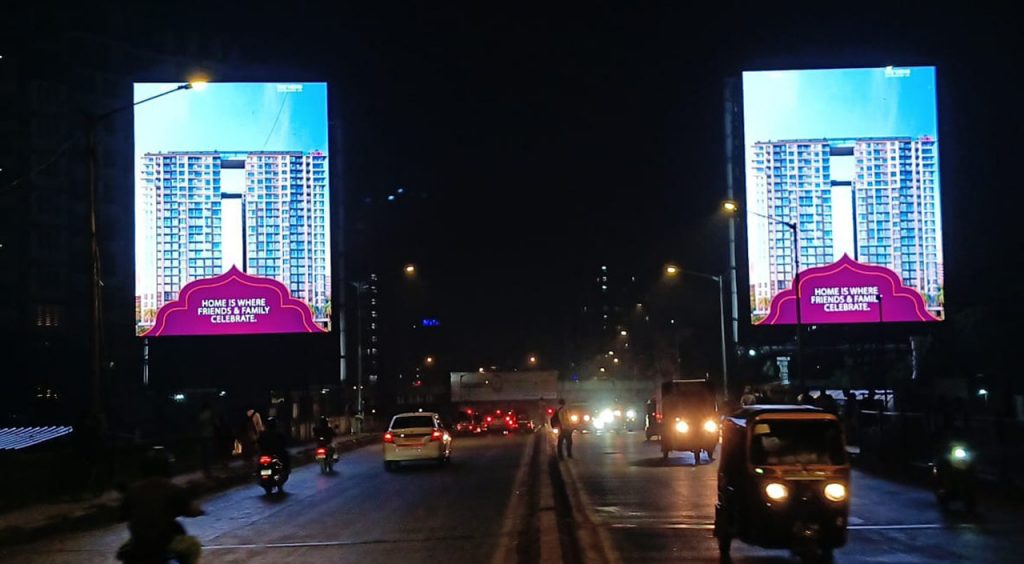
DOOH advertising in Mumbai includes large-format LED screens, digital billboards, mall screens, and transit-based displays. These screens allow brands to rotate multiple creatives, run time-based messaging, and optimise campaigns dynamically.
Why Brands Prefer DOOH Screens in Mumbai
-
High brightness and day-night visibility
-
Ability to run multiple creatives in one location
-
Better recall compared to static hoardings
Additionally, DOOH screens are ideal for short-duration campaigns such as launches, festive promotions, and movie releases.
Role of BQS Screens in Mumbai Media Buying
BQS screens refer to premium backlit static or semi-digital formats placed at eye-level locations. These screens are commonly seen at junctions, near malls, corporate parks, and high-footfall urban pockets.
Why BQS Screens Still Matter
While DOOH is growing fast, BQS screens remain relevant due to their:
-
Consistent illumination and clarity
-
Lower cost compared to full LED DOOH
-
Strong presence at signal-free corridors and junctions
As a result, many brands use BQS screens to complement DOOH buys rather than replace them.
Key Locations Where DOOH & BQS Screens Perform Best in Mumbai
Media planners prioritise specific zones to maximise impact.
High-Performance DOOH Zones
-
Western Express Highway
-
Bandra–Kurla Complex (BKC)
-
Lower Parel and Worli
-
Major malls and multiplex clusters
Effective BQS Screen Locations
-
Signal junctions with long wait times
-
Office-heavy corridors
-
Residential-commercial mixed catchments
Therefore, selecting the right mix of locations is as important as choosing the format itself.
Mumbai Media Buying Trends: DOOH vs BQS Screen Planning
Brands increasingly follow a hybrid approach.
-
DOOH screens are used for high-frequency, short-format messaging
-
BQS screens are used for sustained visibility and cost efficiency
Consequently, media buyers often allocate 60–70% budgets to DOOH for impact and the remaining to BQS for coverage.
Creative Strategies That Work on DOOH & BQS Screens
Creative execution plays a decisive role in campaign success.
DOOH Creative Best Practices
-
Short, bold messages (6–8 seconds)
-
High-contrast visuals
-
Motion-led storytelling
BQS Creative Best Practices
-
Minimal text with strong brand cues
-
Large typography for distance visibility
-
Clear call-to-action
Because commuters process information quickly, simplicity drives recall.
Cost Trends for DOOH & BQS Media Buying in Mumbai
Mumbai commands premium outdoor pricing. However, DOOH and BQS offer better value when planned strategically.
Indicative Cost Ranges:
-
DOOH screens: ₹3–10 lakh per month per screen (location-dependent)
-
BQS screens: ₹60,000–₹2 lakh per month
Although DOOH costs are higher, brands justify spends due to flexibility, visibility, and campaign agility.
Industries Actively Using DOOH & BQS Screens in Mumbai
Several sectors dominate Mumbai’s digital outdoor landscape:
-
FMCG and packaged food brands
-
Real estate and luxury housing projects
-
OTT platforms and entertainment brands
-
BFSI, fintech, and e-commerce players
These industries rely on frequent exposure and strong visual presence.
How Brands Should Approach Mumbai Media Buying Today
Successful Mumbai media buying now requires:
-
Blending DOOH and BQS formats
-
Prioritising high-dwell locations
-
Using data-backed scheduling and creative rotation
Moreover, brands must plan outdoor campaigns as part of an integrated media mix alongside digital and mobile advertising.
Future Outlook: DOOH & BQS in Mumbai Media Buying
Mumbai media buying trends clearly indicate sustained growth for DOOH and continued relevance for BQS screens. As programmatic DOOH, real-time triggers, and content automation expand, brands will gain even greater control over outdoor messaging.
Ultimately, brands that understand what DOOH and BQS screens can deliver—and where—will win attention in Mumbai’s cluttered media environment.