
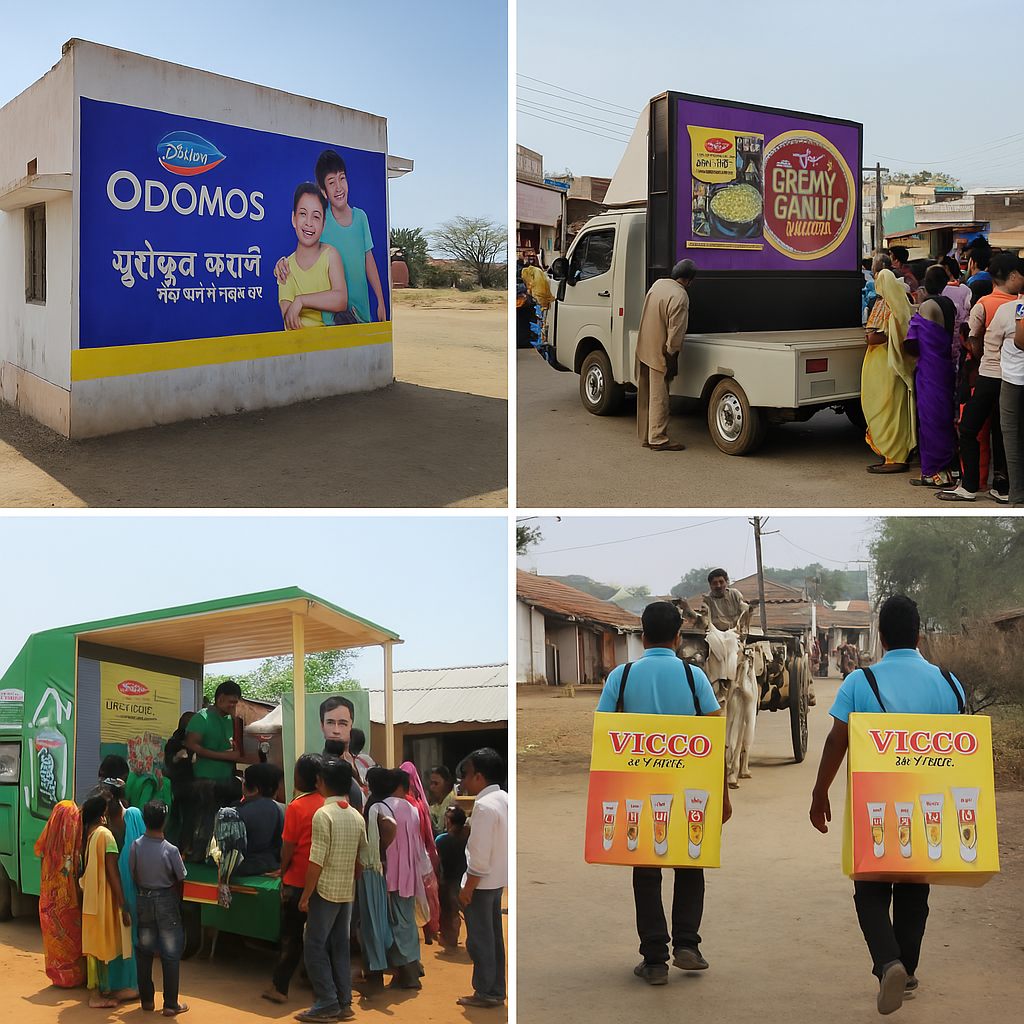
Rural Brand Promotion with MyHoardings – Reaching Real India Reaching rural India requires more than traditional marketing—it demands cultural insight, local trust, and deep ground-level execution. At MyHoardings, we specialize
Category: Rural Advertising
Rural advertising refers to marketing and promotional activities aimed at reaching and engaging consumers in rural areas. It focuses on the unique characteristics, preferences, and lifestyles of rural populations. Here’s a brief overview:
Key Features of Rural Advertising
- Localized Approach
- Cultural Relevance: Ads are tailored to the local culture, language, and traditions to resonate with rural audiences.
- Community-Oriented Messaging: Emphasis on family, community values, and local events.
- Traditional Media Channels
- Radio and Print: Local radio stations, newspapers, and magazines are commonly used due to their wide reach and accessibility.
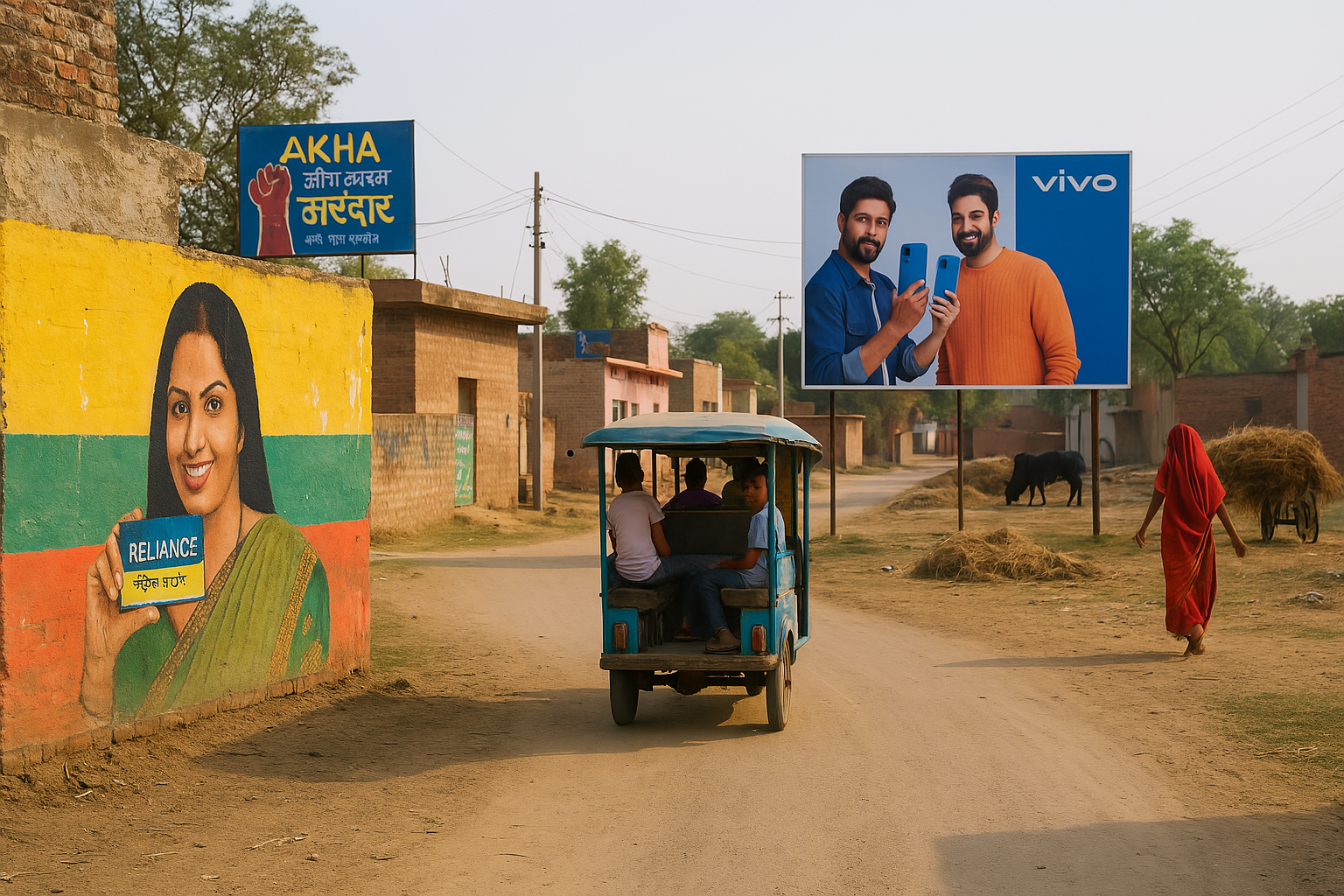
- Outdoor Advertising: Billboards, wall paintings, and posters are popular methods in areas with limited digital access.
- Direct Marketing
- Village Fairs and Events: Leveraging local fairs, festivals, and markets to showcase products and engage with the community.
- Door-to-Door Campaigns: Personalized interactions through direct visits and product demonstrations.
- Word-of-Mouth
- Influencers: Leveraging local influencers, community leaders, and satisfied customers to spread the word about products and services.
- Social Networks: Utilizing the strong community networks in rural areas to amplify messages.
- Adaptation to Rural Infrastructure
- Simplified Messaging: Clear, straightforward, and easy-to-understand messages to cater to varying literacy levels.
- Affordable Products: Emphasis on affordability, value for money, and practical benefits of products and services.

What factors should brands consider when planning a rural advertising campaign?What factors should brands consider when planning a rural advertising campaign?
Rural Campaign Planning – A Strategic Guide for Brands in India Creating visibility in rural India requires more than just placing an ad—it requires cultural understanding, logistical precision, and strategic

How does rural advertising differ from urban advertising?How does rural advertising differ from urban advertising?
Rural vs Urban Advertising: Two Markets, Two Mindsets India is a land of contrasts—metro cities buzzing with tech and trends, while rural heartlands stay rooted in community and tradition. At

Which advertising mediums are most effective for rural areas in India?Which advertising mediums are most effective for rural areas in India?
Rural Advertising Mediums That Truly Work in India At MyHoardings, we understand that rural India isn’t just a market—it’s a movement. With over 850 million people living outside urban areas,
What is rural advertising and why is it important in India?What is rural advertising and why is it important in India?
The Power of Rural Advertising in India India is not just a country of cities—it’s a nation of villages. With over 65% of the population living in rural areas, businesses

How does MyHoardings handle campaign execution in remote or rural regions of India where media access is limited?How does MyHoardings handle campaign execution in remote or rural regions of India where media access is limited?
At MyHoardings, we understand that Rural campaign execution of India is critical for brands looking to reach untapped markets. While these regions present challenges due to limited traditional media infrastructure, our
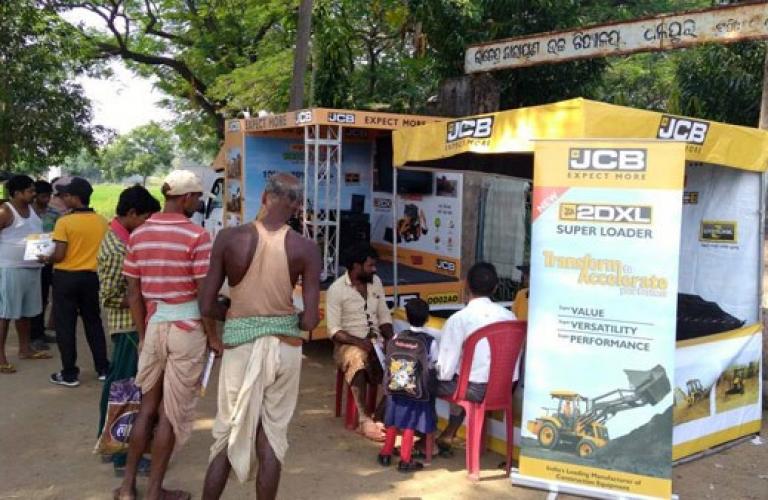
How rural marketing is different from urban marketing?How rural marketing is different from urban marketing?
Rural marketing activities vary highly when compared to urban marketing which need separate planning and crafting different messages for different group of target audience. Rural marketing is also dependent on
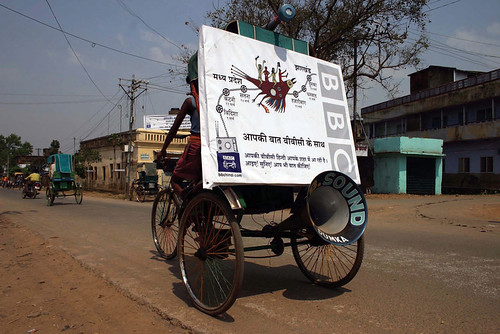
What is roadshow advertising targeting Indian villages in India?What is roadshow advertising targeting Indian villages in India?
Roadshow advertising is used to promote a company products and services by displaying same on vehicles and carrying vehicle in busy rural areas. Usually promoters also accompany roadshow in order
How can rural advertising agency like MyHoardings help to increase brand sales in India?How can rural advertising agency like MyHoardings help to increase brand sales in India?
Growth story of Indian villages in past few decades is a well-known. Will rise in rural economy, more brands plan to penetrate in Indian villages in order to increase company

What is Wall wrap advertising?What is Wall wrap advertising?
Wall wrap advertising are usually large size flex or vinyl stickers pasted on road walls, offices buildings, retail areas in India. Wall wrap is an extremely economical and cost effective