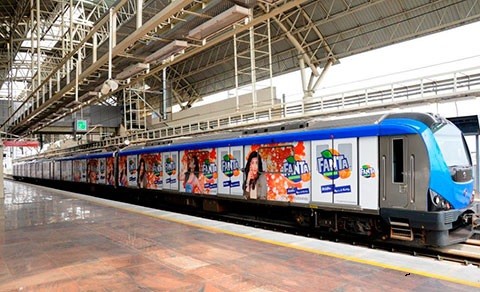
Outdoor advertising delivers scale, visibility, and high-frequency exposure. However, its effectiveness depends on structured measurement across the entire campaign lifecycle. Understanding the key metrics for evaluating outdoor advertising before, during, and after a campaign helps marketers make informed decisions, optimise execution, and demonstrate ROI.
Rather than relying on visibility alone, modern OOH planning uses data-led indicators at every stage—from planning and monitoring to post-campaign assessment.
Why OOH Measurement Must Be Stage-Based
Unlike digital advertising, OOH performance unfolds over time. Metrics must therefore align with three distinct stages:
-
Before the campaign: planning quality and potential reach
-
During the campaign: execution accuracy and live exposure
-
After the campaign: impact on brand and business outcomes
Stage-based evaluation ensures accountability throughout the campaign lifecycle.
Pre-Campaign Metrics (Planning & Forecasting Stage)
These metrics help predict campaign effectiveness before execution begins.
1. Estimated Reach and Impressions
Reach estimates indicate how many people are likely to encounter the advertising based on:
-
Traffic and footfall data
-
Location visibility
-
Media format type
-
Duration and frequency
This metric helps compare site options and plan scale.
2. Target Audience Alignment
This evaluates whether the selected locations align with the intended audience.
Factors include:
-
Residential vs commercial zones
-
Transit routes and commuter profiles
-
Proximity to retail or service outlets
High alignment improves campaign efficiency.

3. Location Quality Score
Location quality considers:
-
Viewing angle and distance
-
Obstruction risk
-
Traffic speed
-
Dwell time potential
Premium locations typically deliver higher recall.
4. Frequency Potential
Frequency measures how often the same audience may see the ad during the campaign period. Repetition is critical for recall in OOH.
5. Cost Efficiency Metrics
Common planning benchmarks include:
-
Cost per thousand impressions (CPM)
-
Cost per day per site
-
Cost per reach point
These help optimise budget allocation.
During-Campaign Metrics (Live Execution Stage)
These metrics ensure the campaign runs as planned.
6. Proof of Display (POD)
POD confirms:
-
Correct installation
-
Accurate creative placement
-
Display start and end dates
It provides execution transparency.
7. Site Uptime and Visibility
This metric checks whether the media remained continuously visible without:
-
Damage
-
Power failure (for DOOH)
-
Obstruction
-
Maintenance lapses
Consistent visibility ensures delivery integrity.
8. DOOH Impression Delivery
For digital OOH, live impression tracking includes:
-
Play counts
-
Screen uptime
-
Loop completion rates
These metrics validate delivery against plan.
9. Attention and Dwell Time Metrics (DOOH)
Advanced DOOH environments measure:
-
Average dwell time near screen
-
Attention seconds
-
Opportunity-to-see ratios
These indicators evaluate exposure quality.

10. Geo-Lift and Search Lift Tracking
During the campaign, brands often track:
-
Increase in local search queries
-
Website traffic spikes from campaign areas
-
App installs in exposed locations
These signals reflect real-time influence.
Post-Campaign Metrics (Impact & Effectiveness Stage)
These metrics evaluate overall campaign success.
11. Brand Recall and Awareness Lift
Post-campaign studies measure:
-
Aided and unaided recall
-
Brand recognition
-
Message comprehension
Recall remains the primary success metric for OOH.
12. Footfall and Store Visit Lift
For retail-driven campaigns, brands assess:
-
Increase in walk-ins
-
Location-level footfall uplift
-
Visit frequency change
This is often measured using mobile location data or store analytics.
13. Conversion Support Indicators
While OOH is not direct-response, it supports conversions through:
-
Increased inquiries
-
Call volume uplift
-
Lead form completions
-
App downloads
These metrics demonstrate indirect performance.
14. Market-Level Sales Uplift
In long-duration campaigns, brands may track:
-
Regional sales growth
-
City-level performance differences
-
Correlation between OOH presence and revenue
This supports ROI justification.
15. Cost Efficiency Post Analysis
Post-campaign evaluation includes:
-
Actual CPM vs planned CPM
-
Cost per recall point
-
Cost per store visit
This informs future media planning decisions.
Summary Table: OOH Metrics by Campaign Stage
| Stage | Key Metrics |
|---|---|
| Before | Reach, impressions, frequency, location quality, CPM |
| During | POD, uptime, DOOH delivery, attention, geo-lift |
| After | Recall, footfall, search lift, sales impact |
Common Mistakes in OOH Evaluation
-
Measuring only visibility, not impact
-
Ignoring mid-campaign monitoring
-
Not linking OOH with digital metrics
-
Evaluating too early after campaign end
-
Using a single metric to judge success
Balanced measurement delivers clearer insights.
Why Integrated Measurement Matters
OOH performs best when evaluated alongside:
-
Digital performance metrics
-
Retail data
-
Search behaviour
-
Brand health tracking
This integrated approach reflects the true contribution of outdoor media.
Conclusion
Understanding the key metrics for evaluating outdoor advertising before, during, and after a campaign allows marketers to plan better, execute accurately, and prove effectiveness.
Modern OOH is no longer unmeasurable. With the right combination of forecasting, monitoring, and outcome analysis, brands can confidently integrate outdoor advertising into performance-driven media strategies.