Outdoor advertising is often associated with fixed locations—billboards, unipoles and digital screens positioned at strategic points across a city. Bus branding introduces a different dimension: the advertising location itself moves.
A branded bus can travel through multiple roads, neighbourhoods, commercial areas and transit corridors during a single day. As it moves through the city, the brand becomes visible in constantly changing environments.
This creates what can be called the Moving Landmark Effect—when a branded vehicle becomes a recognizable visual element within everyday urban movement.
Turning Daily Routes Into Brand Touchpoints
Consumers often travel along the same roads repeatedly. They may see a particular bus route during their morning commute, while shopping or while travelling between residential and commercial areas.
When a bus carries consistent brand communication, these repeated encounters can create familiarity. The audience doesn’t need to encounter the advertisement at exactly the same fixed location. Instead, the brand travels through the routes that consumers already use.
This makes bus advertising particularly interesting for brands looking to establish broad city-level visibility.
The Power of Route-Based Repetition
A successful bus branding campaign begins with understanding where the vehicle travels.
Routes connecting residential areas with business districts, shopping destinations, educational hubs, railway stations and major transit points can expose the campaign to different audience groups throughout the day.
The combination of mobility and repetition gives brands an opportunity to create a continuous visual presence. One branded bus can appear across several different city environments while maintaining the same campaign identity.
Making the Vehicle Part of the Creative
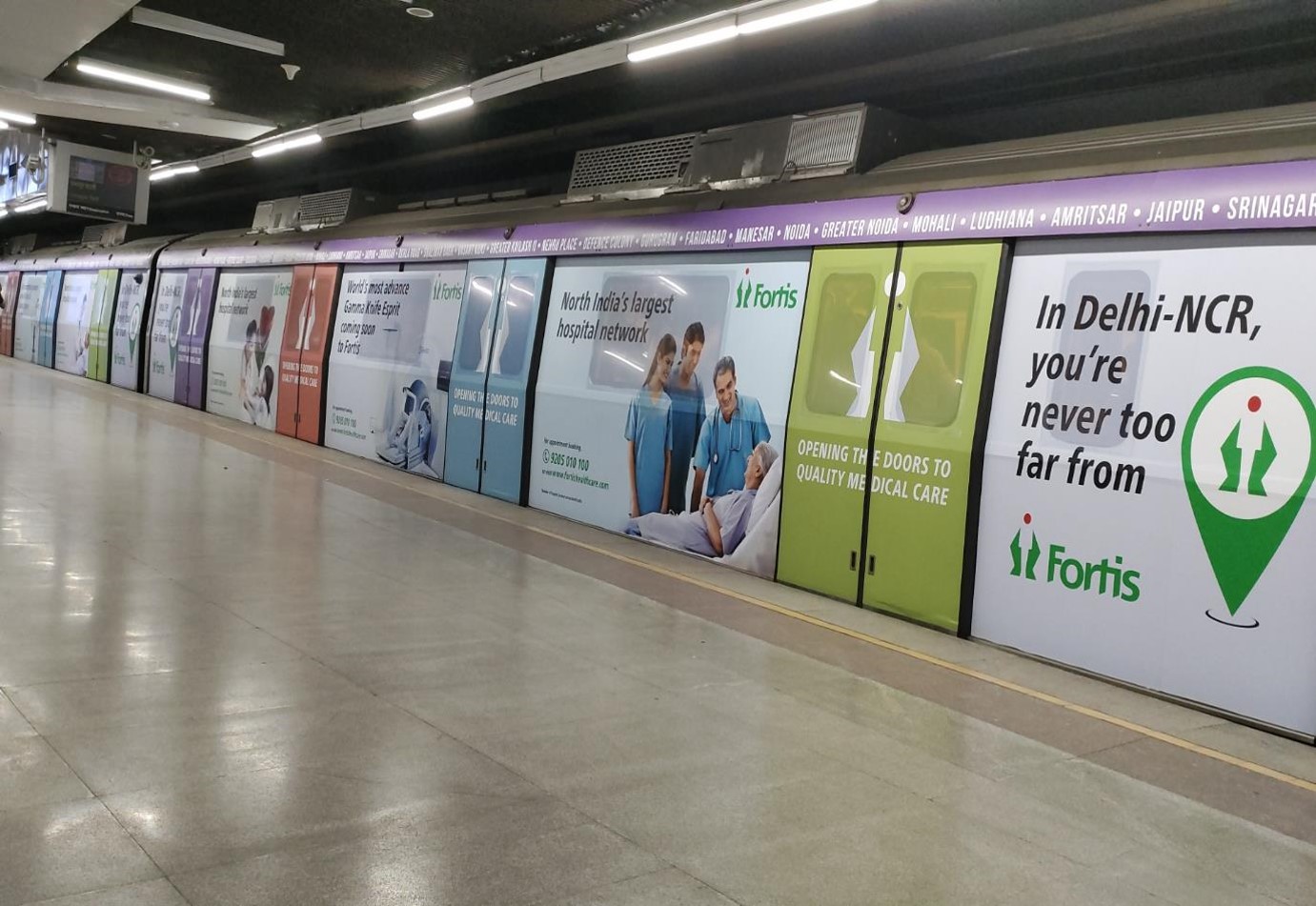
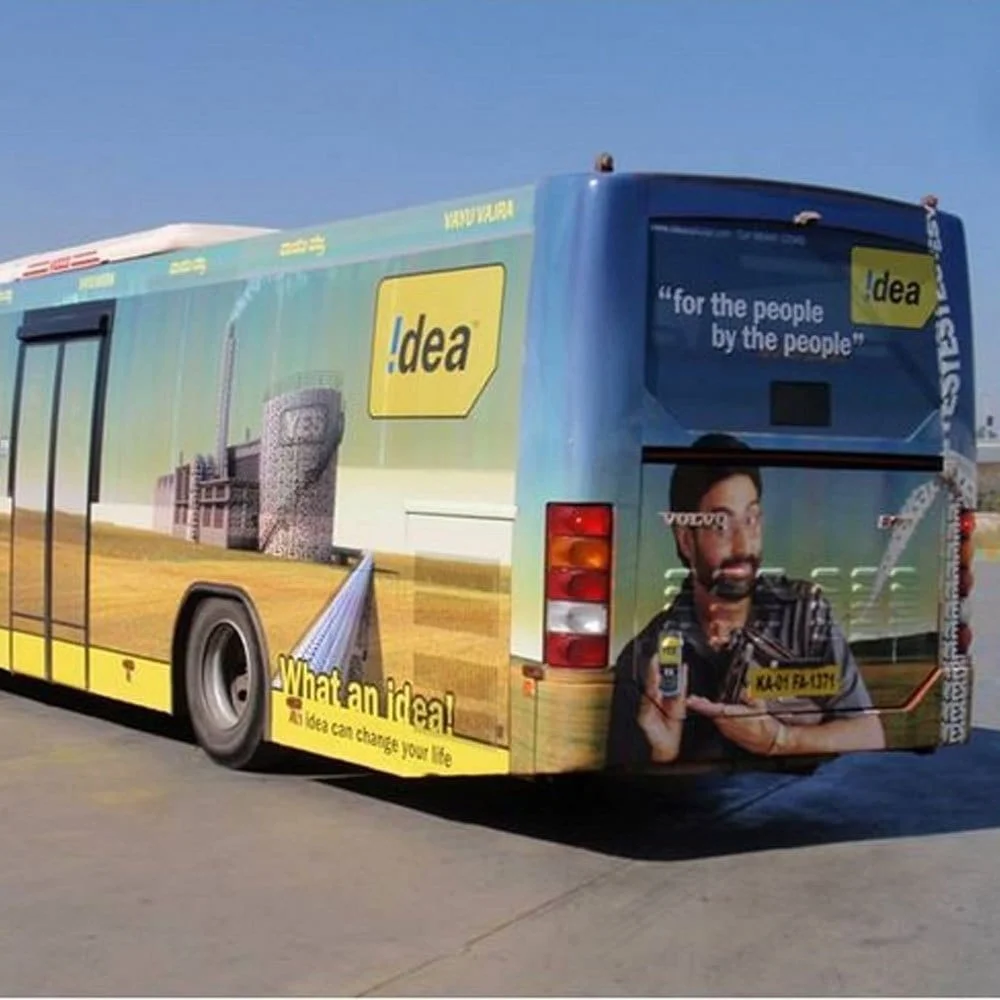
Bus advertising also gives brands a larger canvas than many conventional street-level formats. Full-body branding, rear-panel advertising and carefully designed side panels can transform the vehicle into an integrated creative asset.
The strongest executions make the design work with the vehicle rather than simply placing a rectangular advertisement on it. Large visuals, clear branding and short messaging can remain recognizable even when the bus is moving.
The result is an outdoor format where the medium becomes part of the message.
From Moving Exposure to Brand Memory
The value of bus branding lies not only in how many people see the campaign, but in how naturally it becomes part of their everyday environment.
A branded bus passing through familiar streets can create repeated visual encounters without requiring consumers to deliberately engage with an advertisement. Over time, these encounters can contribute to brand recognition and recall.
For brands launching products, entering new markets, promoting stores or building city-wide awareness, bus advertising offers a way to take the brand message directly into the flow of urban life.
The Moving Landmark Effect shows that a brand does not always need to wait for consumers to pass an advertisement. Sometimes, the advertisement can move with them.