As India’s technology capital, Bengaluru presents a unique challenge for outdoor advertisers. Long commute hours, dense IT corridors, and a digitally savvy audience mean that not all outdoor formats perform equally. This is where the debate around BQS vs Traditional DOOH becomes crucial for media planners and brands.
This article explains BQS vs Traditional DOOH: Choosing the Right Digital Outdoor Format in Bengaluru, helping advertisers decide which format aligns best with campaign goals, budgets, and audience movement patterns.

Understanding Bengaluru’s Digital Outdoor Ecosystem
Bengaluru’s outdoor media effectiveness is shaped by predictable daily routines. Large sections of the working population travel between residential clusters and IT corridors such as ORR, Whitefield, and Electronic City. Therefore, digital outdoor formats that deliver high visibility and repeat exposure perform better than static media.
Moreover, advertisers in Bengaluru increasingly prefer digital formats because they allow:
-
Faster creative changes
-
Better time-based scheduling
-
Stronger alignment with mobile-first audiences
As a result, both BQS and Traditional DOOH have become central to city-level media planning.
What Is BQS Advertising in Bengaluru?
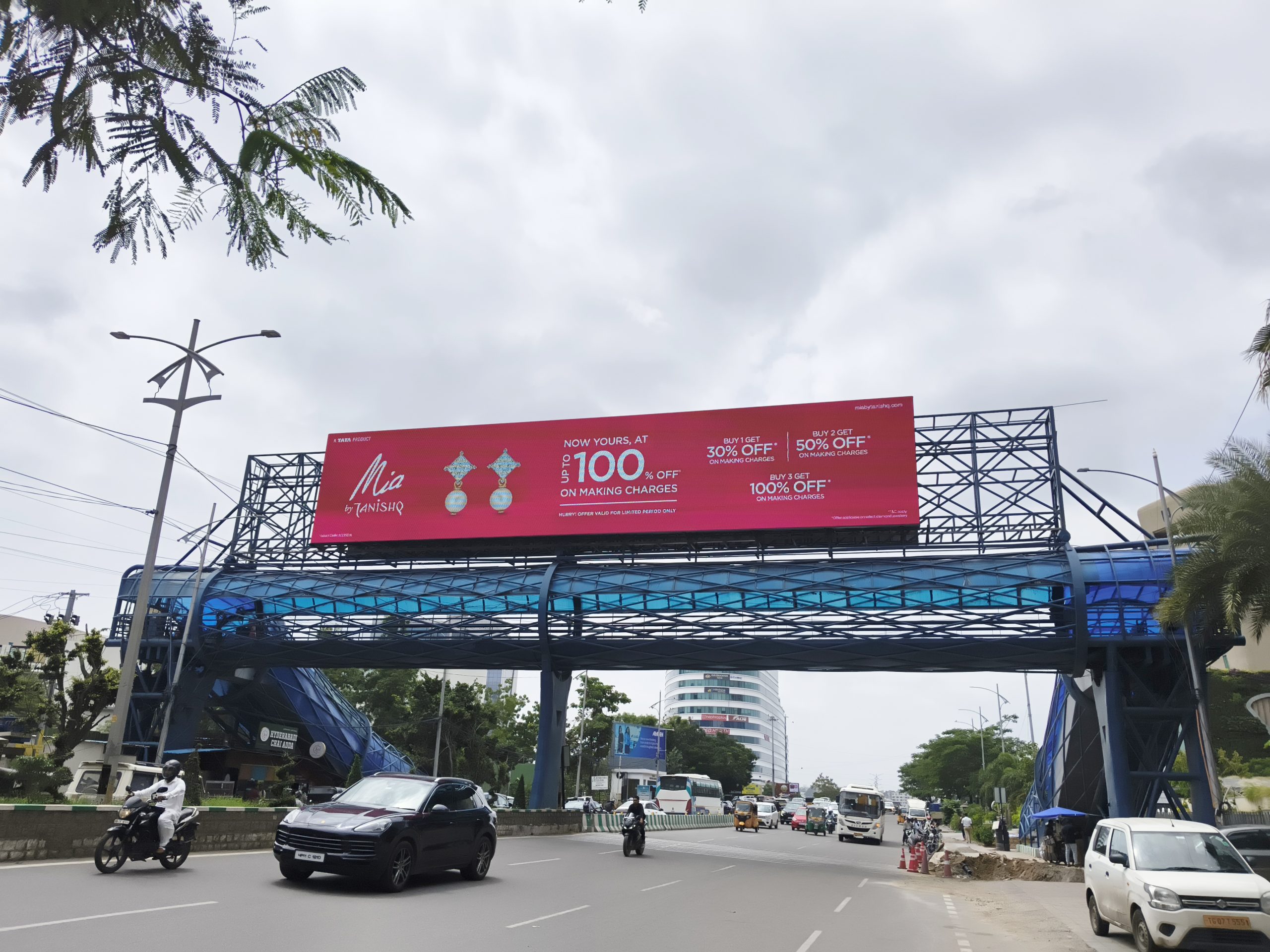
BQS (Billboard Quality Segmentation) refers to large-format, premium digital billboards placed at high-traffic junctions and arterial roads. These screens are designed for instant impact and long-distance visibility.
Key Characteristics of BQS
-
Very large LED digital billboards
-
Limited inventory at premium locations
-
High brightness and elevation
-
Fewer advertisers per creative loop
Prime BQS Locations in Bengaluru
-
Outer Ring Road (ORR)
-
Airport approach roads
-
Central Business District junctions
-
High-visibility commercial intersections
When BQS Works Best
BQS is ideal for:
-
Brand and product launches
-
Festive and seasonal campaigns
-
Corporate and reputation advertising
-
Short-duration, high-impact visibility
Because BQS screens dominate the visual landscape, they are best suited for top-of-funnel awareness objectives.
What Is Traditional DOOH in Bengaluru?
Traditional DOOH includes networks of smaller digital screens deployed across multiple locations. These screens may not match BQS in size, but they compensate through frequency and proximity.
Key Characteristics of Traditional DOOH
-
Medium to small digital screens
-
Higher screen density across the city
-
Closer viewing distance
-
Higher repetition and recall
Common DOOH Locations in Bengaluru
-
IT parks and office campuses
-
Bus shelters along commute routes
-
Malls, food courts, and multiplexes
-
Signal junction waiting zones
When Traditional DOOH Works Best
Traditional DOOH performs well for:
-
Always-on brand presence
-
App installs and service promotions
-
Hyperlocal or corridor-based targeting
-
Budget-optimised, long-duration campaigns
Because of repeated exposure, this format supports mid- and lower-funnel objectives effectively.

BQS vs Traditional DOOH: Key Differences Explained
| Parameter | BQS Advertising | Traditional DOOH |
|---|---|---|
| Screen Size | Very large | Small to medium |
| Location Count | Limited | Extensive network |
| Visibility | Long-distance | Close-range |
| Frequency | Lower | Higher |
| Cost Structure | Premium | Flexible |
| Ideal Objective | Awareness | Recall & reinforcement |
Thus, the decision depends on whether the campaign prioritises impact or frequency.
Choosing the Right Format Based on Campaign Goals
Choose BQS When:
-
You need immediate attention at scale
-
The campaign is time-bound
-
Brand stature and visibility matter most
Choose Traditional DOOH When:
-
You want sustained daily exposure
-
The objective is recall or conversion support
-
Budget efficiency is a priority
However, Bengaluru’s best-performing campaigns rarely rely on only one format.
Integrated Strategy: Using BQS and DOOH Together
In practice, successful Bengaluru media plans use BQS for impact and Traditional DOOH for continuity. For example:
-
A BQS screen on ORR creates instant brand awareness
-
DOOH screens inside IT parks reinforce the message daily
Consequently, audiences encounter the brand multiple times across their commute, improving recall without increasing fatigue.
Cost and ROI Considerations in Bengaluru
Although BQS carries higher rates, it delivers unmatched visibility per exposure. On the other hand, Traditional DOOH offers better CPM efficiency over longer durations.
Therefore:
-
High-budget launches benefit from BQS
-
Mid-budget, long-term campaigns benefit from DOOH
-
Combined strategies deliver the strongest ROI
Conclusion
BQS vs Traditional DOOH: Choosing the Right Digital Outdoor Format in Bengaluru is not about selecting a better format, but about selecting the right format for the right objective. Bengaluru rewards advertisers who understand commuter behavior and deploy digital outdoor media accordingly.
In conclusion, BQS drives attention, Traditional DOOH drives frequency, and together they create high-performing, city-smart outdoor campaigns.