If you’ve ever sat in a marketing meeting and heard someone say, “We need a billboard,” you know how vague that is. In 2026, saying you want “outdoor advertising format” is like saying you want “food.” There are a hundred flavors, and if you pick the wrong one, you’re just throwing money into the wind.
Choosing the right format isn’t about what looks the coolest; it’s about where your customer’s eyes are when they aren’t looking at their phones. Here is how you actually make the call.
1. The “Ego” vs. The “Engine” (Large Format)
Let’s talk about the big ones. Large-format billboards (the ones you see on highways) are “Ego” boards. They make your brand look massive. If you’re launching a new app or a national car brand, you need these for stature.
-
The Trap: Don’t put a QR code on a highway board. Nobody is going to scan a code while going 70 mph.
-
The Win: Use these for three words and one giant image. If a driver can’t understand your ad in three seconds, you’ve failed.
2. The “Dwell Time” Strategy (Transit & Rail)
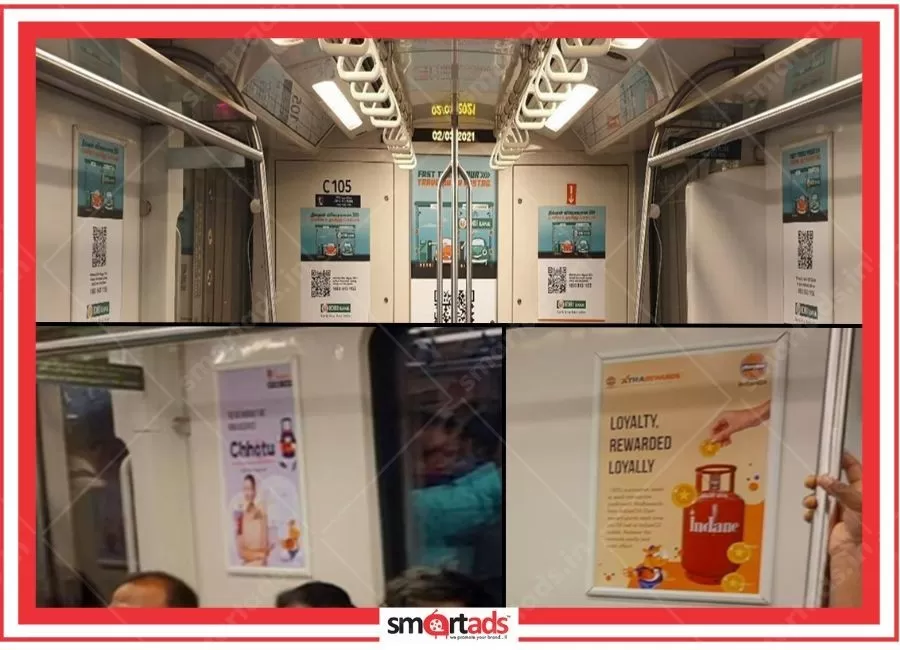
If your product needs a “why” (like a B2B software or a complex insurance plan), you need Transit ads. Why? Because people are bored. Whether they are sitting on a train or standing on a subway platform, they have “dwell time.”
-
Insider Tip: This is the only place where you can get away with more text. A commuter will actually read a clever paragraph if they’re waiting five minutes for the Red Line. This is where you put your QR codes and your deep-dive stories.

3. Street Furniture: The Neighborhood Hero
Bus shelters, kiosks, and suburban posters are the “Engine” of local business. If you run a gym or a cafe, a highway billboard is a waste. You need the Bus Shelter three blocks away.
-
Why it works: It’s at eye level. It’s personal. It’s part of the neighborhood “furniture.” People walk past these every single day, building a subconscious “friendship” with your brand before they even walk through your door.
4. Digital (DOOH) is Not Always Better
Everyone wants Digital Out-of-Home (DOOH) because it’s shiny. Yes, you can change the creative based on the weather (e.g., “It’s raining, buy an umbrella”) or the time of day.
But here is the catch: On a digital board, you usually share the “loop” with five other brands. You get 10 seconds of fame every minute.
-
Static (Classic) boards give you 100% ownership. Your face is there 24/7. Sometimes, being the “permanent” landmark is more powerful than being the “flashing” screen.
5. The “Instagrammable” Factor (3D & Anamorphic)
In 2026, the best outdoor ads aren’t just seen on the street; they are seen on TikTok. The “3D” screens you see in places like Times Square or Tokyo are expensive, but the ROI comes from people filming them on their phones.
-
The Strategy: If you have the budget for one “Hero” placement, go for a 3D anamorphic digital screen in a high-footfall area. One great execution can go viral and get you 10x the impressions online than it did in person.

6. Sustainability: It’s Not Optional Anymore
If you’re a brand that talks about being “green,” and then you wrap a 40-foot bus in non-recyclable plastic, people will notice the hypocrisy.
-
The Move: Look for vendors using PVC-free vinyl or Smog-eating coatings (yes, they exist now). Using eco-friendly materials isn’t just a “feel good” move; it’s a PR shield.
How to Choose? (The 3-Second Rule)
Close your eyes and imagine your target customer.
-
Are they driving? Go Big, Go Simple (Classic Billboards).
-
Are they waiting? Go Detailed, Go Interactive (Transit/Bus Shelters).
-
Are they shopping? Go Digital, Go Urgent (Mall Screens).
Conclusion
Outdoor advertising format is about frequency. Seeing an ad once is a fluke. Seeing it every day on the way to work is a habit. Don’t try to be everywhere at once. Pick one route, one neighborhood, or one format, and “own” it until people start using your billboard as a landmark.
If your ad doesn’t work as a thumbnail on your phone, it won’t work on a 50-foot steel structure. Keep it simple, keep it bold, and for heaven’s sake, make sure the font is legible from a distance.