Outdoor advertising works best when it speaks to people at the right place and the right time. The Fevicol Shoe-Fix marathon campaign does exactly that by addressing runners while they are actively testing the limits of their footwear. Instead of focusing on motivation or athletic performance, the brand smartly taps into a real, relatable concern—shoe wear and tear during long-distance runs.
As a result, the campaign stands out for its relevance, simplicity, and contextual creativity.
Why Is Contextual Advertising Central to the Fevicol Shoe-Fix Marathon Campaign?
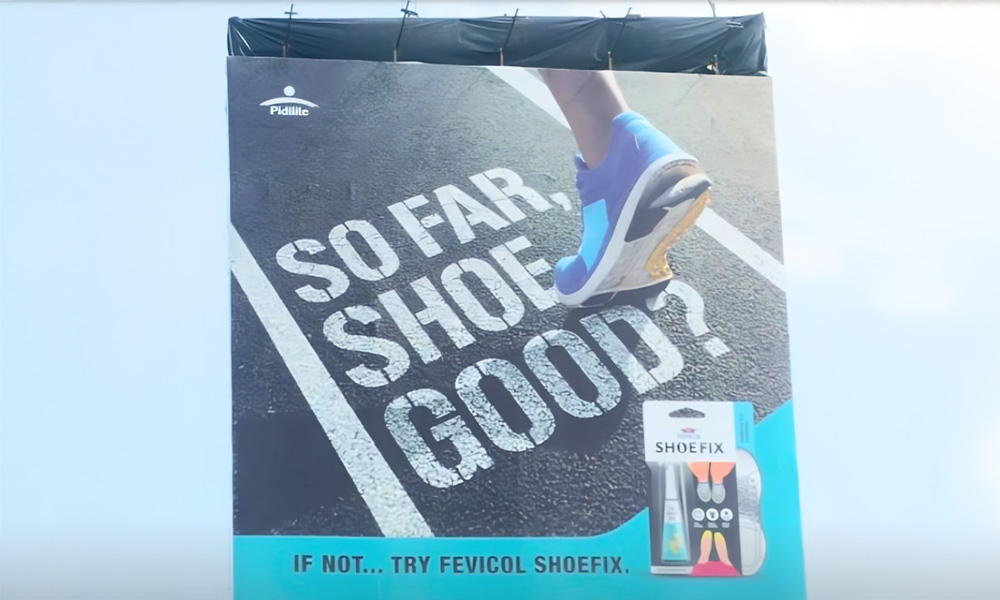
Context plays a critical role in modern advertising. In this campaign, Fevicol places its billboard directly along the marathon route, ensuring runners encounter the message while they are physically experiencing shoe stress.
Moreover, the timing amplifies impact. Runners are not just seeing an ad—they are living the problem the brand highlights. Consequently, the message feels less like advertising and more like a helpful reminder, which strengthens brand recall.
How Does the “So Far, Shoe Good?” Line Capture Attention Instantly?
The billboard headline, “So far, shoe good?”, uses humour and wordplay to break through physical and mental fatigue. While runners push themselves mile after mile, this light, clever line creates a moment of connection.
Additionally, the pun works because it feels natural in the environment. It does not distract runners with complexity. Instead, it delivers instant understanding and relatability. Therefore, the brand earns attention without demanding effort from the audience.
What Makes the Visual Design of the Fevicol Shoe-Fix Campaign Effective?
Visual restraint plays a key role in this campaign’s success. The billboard mirrors the running environment using road-like textures and minimal graphic elements. This design choice prevents clutter and ensures the message remains the hero.
Furthermore, the Fevicol Shoe-Fix product pack appears clearly but subtly. It supports recall without overpowering the headline. As a result, the audience absorbs both the problem and the solution in a single glance.
How Does the Campaign Position Fevicol Shoe-Fix as a Practical Solution?
Rather than overpromising, the campaign keeps its messaging grounded. The closing line, “If not… try Fevicol Shoe-Fix”, reinforces the brand’s role as a dependable fix for unexpected shoe damage.
This approach works because it aligns perfectly with Fevicol’s long-standing brand equity around strength and reliability. Consequently, Shoe-Fix feels like a natural extension of what consumers already trust the brand for.

Why Does This Marathon Campaign Stand Out in Sports Marketing?
Most marathon advertising focuses on endurance, inspiration, or celebration. However, the Fevicol Shoe-Fix marathon campaign shifts attention to a practical pain point that runners rarely see addressed.
Because of this differentiation, the campaign feels fresh and authentic. It respects the runner’s experience instead of interrupting it. Therefore, Fevicol positions itself as a brand that understands real-world problems, not just marketing narratives.
Key Takeaway: What Can Brands Learn from the Fevicol Shoe-Fix Marathon Campaign?
This campaign proves that impactful advertising does not require loud visuals or complex storytelling. Instead, it requires insight, timing, and relevance.
By meeting consumers in the middle of their experience, the Fevicol Shoe-Fix marathon campaign demonstrates how contextual OOH advertising can deliver strong engagement, memorability, and brand trust—all with a simple, well-placed message.