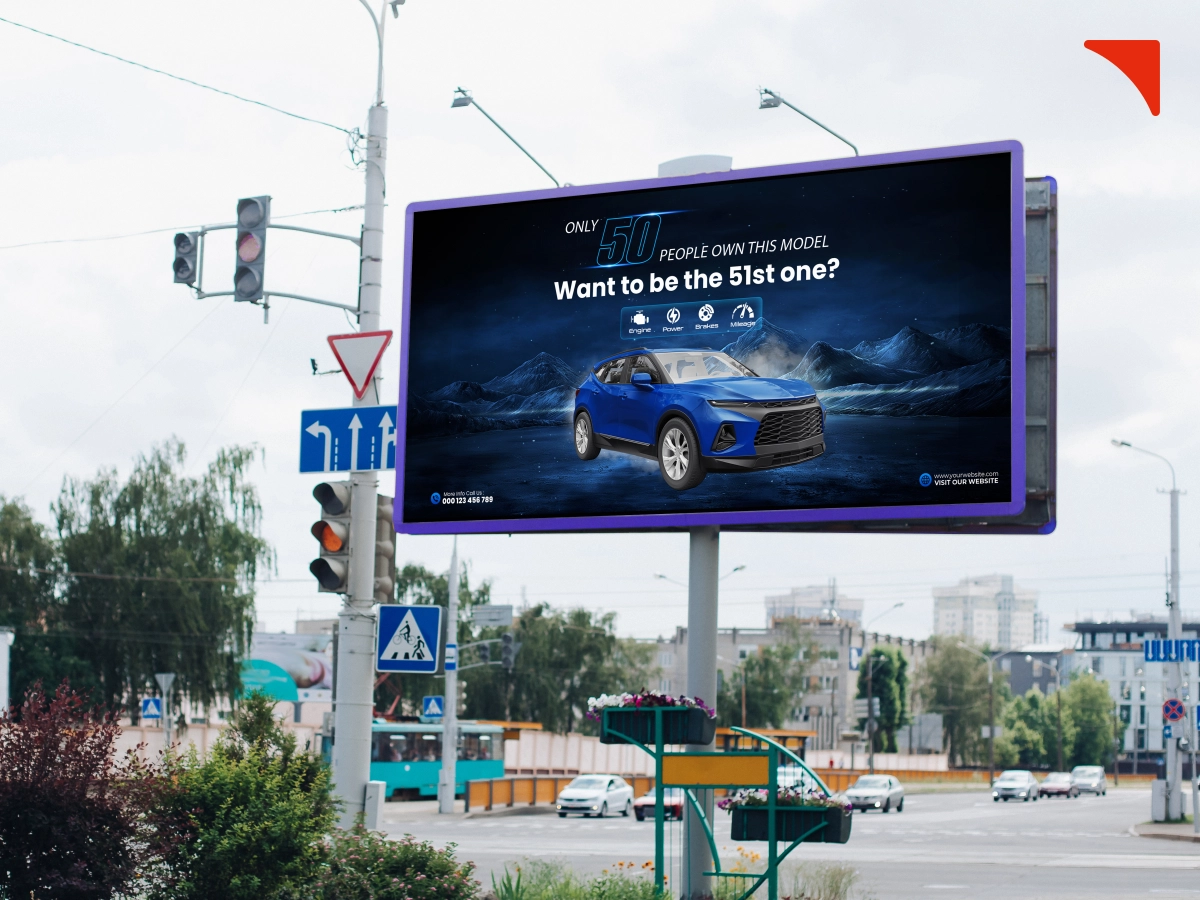
The outdoor advertising industry is undergoing a major technological shift. With augmented reality (AR) and motion tracking entering the OOH (Out-of-Home) landscape, static billboards are evolving into interactive, immersive experiences. How Is AR and Motion Tracking Technology Transforming Traditional Billboard Advertising? By merging digital intelligence with physical formats, these innovations are reshaping how brands capture attention and drive engagement.
Below is a detailed look at how this transformation is taking place.
AR Makes Billboards Interactive and Engaging
AR allows brands to layer digital elements onto real-world billboard structures. Instead of simply viewing an ad, audiences can interact with it through their smartphones or AR-enabled apps. This engagement significantly boosts recall and deepens emotional connection.
Moreover, AR helps brands create dynamic, memorable experiences that extend beyond the physical billboard. For example, a fashion brand can let users “try on” products virtually, while an automobile company can project a 3D model of its new car.
Motion Tracking Enhances Real-Time Audience Interaction
Motion tracking technology detects movement around a billboard. By analysing gestures or user behaviour, the ad adapts instantly. As a result, the billboard becomes a quasi-digital interface rather than a passive display.
For instance, when a pedestrian approaches the screen, an ad can change to greet them. Similarly, speed-based sensors on highways can trigger different creative messages depending on traffic flow.
This responsive behaviour keeps audiences engaged longer and improves message retention.
How AR and Motion Tracking Create Hyper-Personal Experiences
Both technologies enable billboards to respond to real-world conditions. This ability helps brands deliver tailored communication even in high-traffic OOH environments.
Geo-Triggered Interactions
Brands can link AR experiences to specific locations. When users scan the billboard area, AR assets appear, offering coupons, product details, or gamified interactions.
Crowd Behaviour Analysis
Motion tracking can identify footfall density and adjust ad playback accordingly. For example, an entertainment brand may display a full-length trailer only when crowds gather.
Time and Weather-Based Personalization
AR and motion sensors can trigger content based on weather changes or day-night cycles, enhancing contextual relevance.

Benefits of AR and Motion Tracking for Modern Advertisers
The combination of these technologies offers multiple advantages.
Higher Engagement and Longer View Time
Traditional billboards rely solely on visual appeal. However, AR and motion tracking encourage active participation, significantly increasing dwell time.
Better Recall and Emotional Impact
Interactive experiences create memorable moments. Consequently, audiences are more likely to remember the brand and its message.
Data-Driven Insights for Smarter Decisions
Motion tracking captures behavioural analytics such as footfall, heatmaps, reaction patterns, and viewing angles. These insights improve future media planning.
Stronger Integration with Digital Campaigns
AR experiences link seamlessly to mobile apps, websites, and social media. Therefore, the OOH format becomes a powerful omnichannel entry point.

Why This Technology Is the Future of OOH Advertising
India’s rapid smartphone adoption and growing DOOH infrastructure make this transformation inevitable. Cities are installing more digital screens, and brands seek fresh ways to break creative monotony. AR and motion tracking help advertisers stand out in cluttered spaces while adding measurable performance metrics.
Additionally, younger audiences respond well to tech-enabled storytelling. As their expectations rise, brands will increasingly use AR-led narratives and gesture-controlled billboards to stay relevant.
Conclusion
How Is AR and Motion Tracking Technology Transforming Traditional Billboard Advertising?
By turning static structures into interactive, responsive, and measurable media assets. These technologies redefine consumer engagement, blend physical and digital experiences, and open new creative possibilities for brands. As India’s OOH ecosystem evolves, AR and motion tracking will play a central role in shaping the future of billboard advertising.