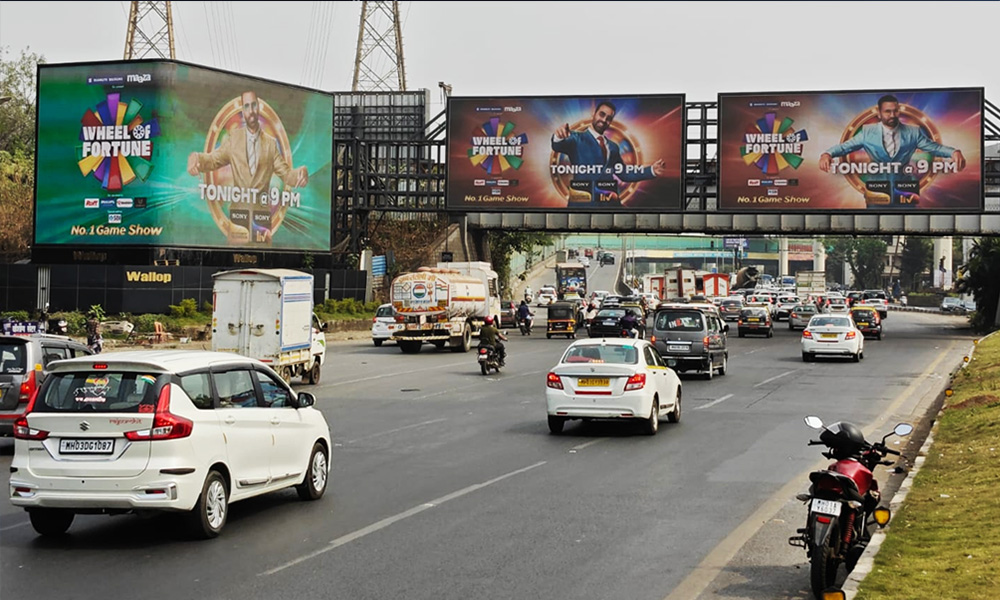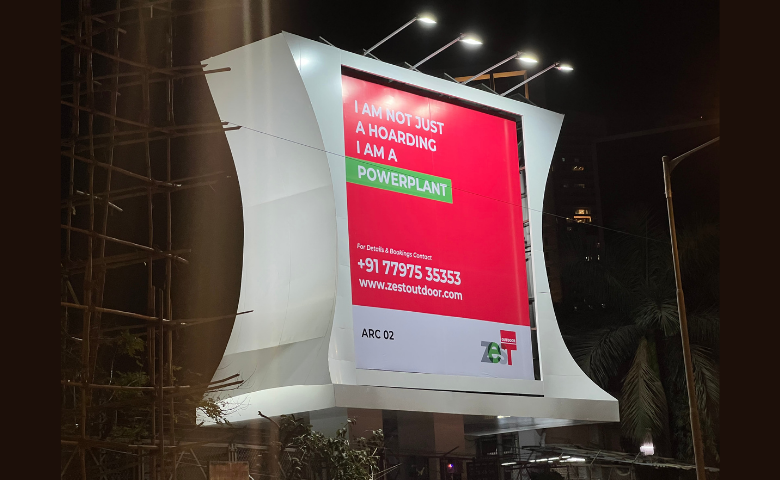
If you still think outdoor advertising in India is just about giant vinyl sheets pasted on rusted iron frames, you’re looking at a version of India that’s rapidly disappearing. In 2026, the Indian OOH (Out-of-Home) landscape has undergone a massive tech-overhaul.
From the high-tech hubs of Bangalore to the premium sea-faces of Mumbai, “billboards” have evolved into interactive, data-driven storytellers. Here is what is actually changing the game on Indian streets right now.
1. The Rise of “Anamorphic” 3D Screens
You’ve likely seen videos of “waves” crashing out of a screen in Seoul or a “dragon” flying over New York. That tech has officially landed in India. Major hubs like CyberHub in Gurgaon, Phoenix Palladium in Mumbai, and Brigade Road in Bangalore now feature massive L-shaped LED screens.
-
The Innovation: These screens use “forced perspective” to make images look three-dimensional to the naked eye.
-
Why it’s huge for India: In a country where everyone has a smartphone, an anamorphic ad is “viral bait.” People stop their cars, film the ad, and share it on WhatsApp and Instagram, giving a local billboard global reach for free.

2. “Programmatic” DOOH (Digital Out-of-Home)
The biggest headache in Indian outdoor ads used to be the “fixed contract” you bought a board for 30 days, whether it rained or shone. Programmatic DOOH has changed that.
-
The Innovation: Brands can now buy digital screen time just like they buy Facebook ads. You can bid for “slots” based on the time of day.
-
The Indian Context: A food delivery app like Zomato can now trigger an ad for “Hot Biryani” on a digital screen in Delhi specifically when the local weather sensor detects it has started raining, or a sunscreen brand can increase its “bid” for screen time only when the UV index crosses a certain level in Chennai.
3. “Eco-Friendly” and Smog-Eating Billboards
India faces significant environmental challenges, and the advertising industry is finally responding. We are seeing a shift from toxic PVC (vinyl) to sustainable materials.
-
The Innovation: Many premium sites now use TiO2 (Titanium Dioxide) coated fabrics. These aren’t just posters; they are “smog-eaters.” When sunlight hits the coating, it triggers a chemical reaction that neutralizes nitrogen oxides (pollutants) in the air.
-
The Branding Win: For a brand, using these materials isn’t just a “green” checkbox it’s a powerful PR story in a country that is increasingly conscious of air quality.
4. Vehicle Wraps with “Real-Time Tracking”
While “Auto-Rickshaw branding” has been around forever, the 2026 version is high-tech. Startups are now wrapping thousands of cabs and autos with GPS-enabled devices.
-
The Innovation: Instead of a static sticker, these vehicles often carry small digital tops. Advertisers get a dashboard showing exactly where their “moving billboard” is at any moment.
-
The Data: If a brand wants to target high-income shoppers, they can program the ads to only play when the cab enters a specific “geofence” like South Mumbai or Jubilee Hills in Hyderabad.
5. AR-Integrated Transit Points
Metro stations in Delhi, Mumbai, and Bangalore have become laboratories for Augmented Reality (AR).
-
The Innovation: You’ll see a large screen at a metro platform that looks like a mirror. Using AR, it might “overlay” a digital outfit on you (for a fashion brand) or place a digital tiger standing next to you (for a wildlife documentary).
-
The Impact: It turns a boring “wait for the train” into an active brand experience. In India, where “dwell time” at transit hubs is high, this interactive tech has much higher recall than a static poster.

6. Solar-Powered “Smart” Kiosks
With India’s push toward solar energy, the “lit” billboard advertising is getting an upgrade. New-age kiosks in Tier-1 cities are now 100% self-sustaining.
-
The Innovation: These kiosks use solar panels to power their LED displays at night and often provide free Wi-Fi or mobile charging stations to the public.
-
The Benefit: By providing a utility to the public, the brand moves from being an “interruption” to being a “service provider.”
The Reality Check
The “Innovation” in India isn’t just about the screen; it’s about the data. In 2026, media owners are using mobile pings to tell advertisers exactly how many people walked past a board, what their age group was, and even what apps they have on their phones.
Conclusion
Outdoor advertising in India is no longer a “dumb” medium. It’s smart, it’s connected, and it’s becoming the most exciting way to bridge the gap between the physical street and the digital world.