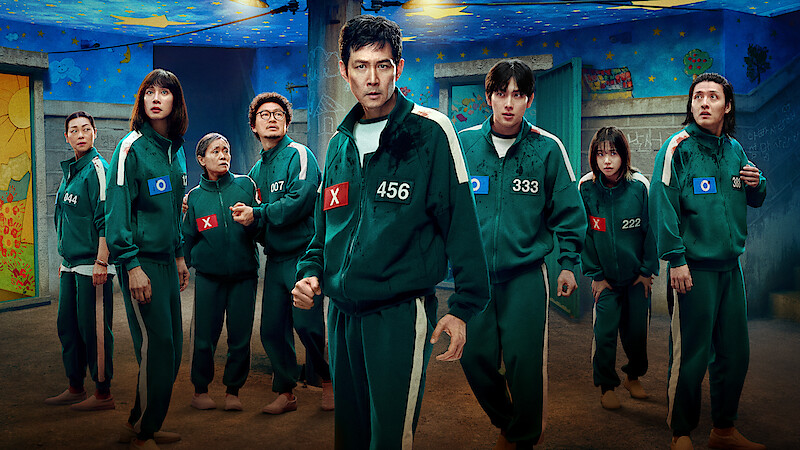
The Netflix Squid Game Season 3 DOOH campaign in Seoul is a striking example of how immersive technology and cultural relevance can redefine outdoor advertising. To announce the new season of one of the world’s most iconic series, Netflix executed an anamorphic 3D digital out-of-home (DOOH) takeover across major transit hubs in South Korea.
By bringing Squid Game’s unmistakable visuals into real-world spaces, Netflix blurred the line between fiction and reality. As a result, everyday commutes were transformed into cinematic moments that instantly captured attention and fueled global buzz.
The Power of Squid Game as a Cultural Phenomenon
Squid Game is not just a show; it is a global cultural symbol that originated in South Korea and resonated worldwide. The Netflix Squid Game Season 3 DOOH campaign leveraged this cultural equity by amplifying familiar characters, symbols, and visual tension through large-scale outdoor formats.
Because audiences already had an emotional connection to the series, the outdoor executions required little explanation. Recognition was instant. Consequently, the campaign focused on spectacle and immersion rather than information-heavy messaging.
This approach ensured high impact while respecting the intelligence and familiarity of the audience.
Anamorphic 3D DOOH as the Hero Format
The defining feature of the campaign was its use of anamorphic 3D DOOH screens. These high-resolution digital displays created the illusion that Squid Game elements were bursting out of the screen and into public space.
The Netflix Squid Game Season 3 DOOH anamorphic executions delivered depth, motion, and drama—key qualities that mirror the show’s intense storytelling. From towering characters to dynamic scene transitions, the visuals demanded attention even in crowded transit environments.
Because the content appeared hyper-realistic from specific viewing angles, commuters often stopped, watched, and recorded the screens, increasing dwell time significantly.
Transit Hubs as Immersive Storytelling Arenas
Transit hubs were a strategic choice for this campaign. Seoul’s subway stations and transit corridors handle massive daily footfall, making them ideal for large-scale cultural moments.
The Netflix Squid Game Season 3 DOOH campaign turned these high-traffic locations into immersive storytelling arenas. Rather than feeling like ads, the screens felt like extensions of the Squid Game universe—unexpected yet perfectly placed within the rhythm of urban life.
This contextual placement ensured repeated exposure, as commuters encountered the visuals multiple times across different journeys.
Buzz, Social Sharing, and Global Amplification
One of the campaign’s biggest strengths was its organic amplification. Passersby filmed the anamorphic 3D screens and shared them widely on social media. Marketing communities, entertainment pages, and fans across the world engaged with the content online.
As a result, the Netflix Squid Game Season 3 DOOH campaign achieved far more than local visibility. It became a global talking point, extending reach well beyond Seoul without additional media spend.
This crossover highlights how modern DOOH campaigns are increasingly designed with both physical impact and social shareability in mind.
Why DOOH Was the Perfect Medium for This Launch
DOOH was central to the campaign’s success. Squid Game thrives on tension, scale, and visual drama—qualities that large-format digital outdoor screens deliver exceptionally well.
The Netflix Squid Game Season 3 DOOH executions leveraged outdoor media’s non-skippable nature. Unlike digital ads that users can ignore, these screens commanded attention in public spaces. Moreover, their sheer size and realism created a sense of event rather than promotion.
This made the season launch feel monumental, aligning with the show’s global stature.
Technology, Entertainment, and Urban Culture
The campaign also reflected how entertainment marketing is evolving. By combining advanced screen technology with iconic content, Netflix demonstrated how DOOH can function as experiential media rather than just advertising inventory.
The Netflix Squid Game Season 3 DOOH campaign showed that when technology enhances storytelling, outdoor advertising becomes part of popular culture itself. This approach is particularly effective in media-savvy cities like Seoul, where audiences appreciate innovation and spectacle.
Key Learnings for Entertainment and DOOH Marketers
Key takeaways from this campaign include:
-
Anamorphic 3D DOOH delivers exceptional attention and dwell time
-
Iconic IP works best when amplified through spectacle
-
Transit hubs are ideal for immersive entertainment launches
-
Social sharing multiplies the impact of physical OOH
-
DOOH can turn content launches into cultural events
These insights are especially relevant for streaming platforms and entertainment brands competing for attention.
Conclusion
The Netflix Squid Game Season 3 DOOH campaign in Seoul sets a new benchmark for immersive outdoor advertising. By using anamorphic 3D digital screens in transit hubs, Netflix transformed a season launch into a city-wide spectacle.
This campaign proves that when storytelling, technology, and cultural relevance come together, DOOH becomes more than advertising—it becomes an experience audiences actively seek out and share.