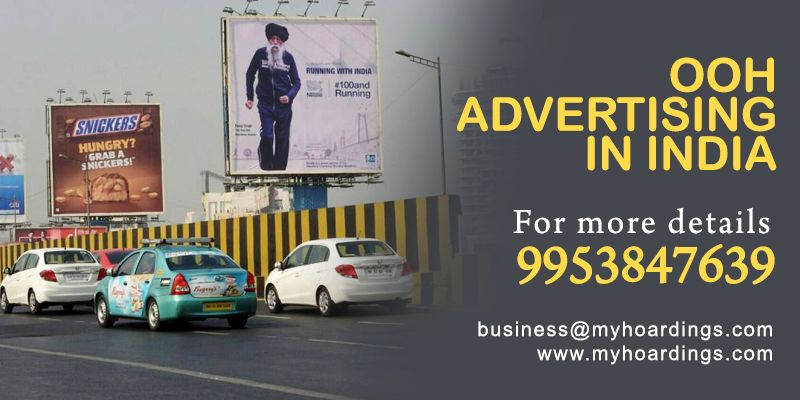
OOH Advertising Mistakes That Look Good on Paper but Fail on Ground are more common than most brands realise. Media plans often appear flawless in presentations, complete with high impressions, attractive CPMs, and premium locations. However, once the campaign goes live, the reality on the street can look very different.
Out-of-Home advertising is deeply influenced by physical context. Therefore, assumptions that work in spreadsheets may collapse when exposed to traffic flow, visibility challenges, or human behaviour. As a result, brands must understand where theory disconnects from execution.
Choosing High-Traffic Locations Without Auditing Visibility
One of the most common OOH advertising mistakes is prioritising traffic numbers over real visibility. High vehicle count does not automatically mean high ad exposure.
In many cases, hoardings face the wrong direction, get blocked by trees, or sit too far from the viewer’s eye line. Moreover, fast-moving traffic often reduces message absorption time. Consequently, the ad looks impressive in the plan but fails to register on ground.
Instead, brands must audit sightlines, stopping points, and dwell time before finalising locations.
Assuming Premium Locations Guarantee Impact
Premium junctions and landmark roads look powerful on paper. However, these zones often suffer from extreme visual clutter.
Multiple brands compete for attention in the same stretch. As a result, individual messages blur together. Even well-designed creatives struggle to stand out.
Therefore, opting for slightly off-core locations with cleaner surroundings often delivers better recall than overcrowded premium zones.
Overloading Creative With Too Much Information
Another major OOH advertising mistake that looks good on paper but fails on ground is information-heavy creative. In presentations, detailed messaging seems persuasive. On the road, it becomes unreadable.
OOH audiences have limited viewing time. Therefore, long copy, multiple offers, and excessive logos reduce clarity. Instead of engagement, confusion sets in.
Successful outdoor creatives focus on one message, one visual, and one call-to-action. Simplicity always outperforms complexity on ground.
Using the Same Creative Across All Cities
Uniform branding feels efficient during planning. However, cities differ in language, culture, and consumption behaviour. Therefore, a one-size-fits-all approach often fails.
For example, colour preferences, imagery, and even humour vary regionally. When creatives ignore local context, audiences disengage.
Adapting creative elements to city-specific sensibilities significantly improves resonance and effectiveness.
Chasing Lowest CPM Instead of Contextual Relevance
Low CPMs look impressive in media plans. However, cheap exposure often comes at the cost of relevance.
OOH effectiveness depends on context. A low-cost hoarding in an irrelevant zone delivers poor ROI, regardless of impression volume. On the other hand, a strategically placed medium-cost site can outperform high-volume locations.
Therefore, relevance should always outweigh raw cost metrics.
Ignoring On-Ground Maintenance and Lighting Conditions
Campaign mockups rarely account for wear and tear. However, faded prints, poor lighting, and delayed installations can severely impact performance.
Many OOH campaigns fail simply because the execution quality drops over time. Broken lights, damaged flex, or obstructed views weaken brand perception.

Regular monitoring and maintenance audits are essential to ensure consistency throughout the campaign period.
Overestimating Recall Without Frequency Planning
Another mistake brands make is assuming one premium exposure is enough. In reality, OOH works through repetition.
Without sufficient frequency across routes and zones, messages fade quickly. Therefore, isolated placements rarely deliver strong recall.
A better approach involves creating presence across multiple touchpoints along the consumer’s daily journey.
Relying Solely on Vendor Promises
Vendor decks often highlight best-case scenarios. However, ground reality may differ due to municipal changes, construction, or temporary obstructions.
Brands that rely entirely on vendor inputs risk surprises post-installation. Therefore, independent site visits or third-party audits are critical.
This extra diligence prevents unpleasant execution gaps.
Measuring Success Only Through Visibility Claims
Visibility alone does not equal effectiveness. Many campaigns look prominent but fail to drive action.
Brands often skip linking OOH exposure to business outcomes such as store footfall, enquiries, or brand lift. Consequently, they misjudge performance.
Aligning OOH with measurable objectives ensures accountability beyond aesthetics.
Conclusion
OOH Advertising Mistakes That Look Good on Paper but Fail on Ground stem from ignoring real-world conditions. Outdoor advertising lives in physical space, not in spreadsheets.
By auditing visibility, simplifying creative, localising messaging, and prioritising relevance over metrics, brands can bridge the gap between planning and performance. Ultimately, OOH success belongs to those who respect ground reality as much as presentation logic.