In a media landscape dominated by digital noise and fleeting impressions, brands are constantly searching for environments where attention is undivided. Surprisingly, one of India’s most effective media touchpoints is also one of the most overlooked. Petrol pump advertising offers brands a rare combination of high dwell time, forced attention, and daily relevance—making it one of India’s most underrated advertising formats.
Unlike billboards that are glanced at or mobile ads that are skipped, petrol pumps place brands directly in front of consumers at a moment when they are stationary, alert, and waiting. This unique behavioural context gives petrol pump advertising a recall advantage that many high-cost media formats fail to deliver.
Why Petrol Pumps Create Natural High Dwell Time
Dwell time is the single biggest driver of brand recall. At petrol pumps, dwell time is built into the experience.
A typical consumer spends:
-
2–4 minutes during refuelling
-
Additional time for payment or air checks
-
Even longer at high-traffic urban pumps
During this period, consumers have limited distractions. They are not driving, walking, or scrolling endlessly. As a result, petrol pump advertising benefits from focused, unavoidable attention, something very few media formats can claim.
Captive Audiences Mean Higher Brand Recall
Petrol pumps are controlled environments. Entry and exit are defined, movement is slow, and attention is naturally directed toward surroundings.
This creates:
-
Minimal ad avoidance
-
High visual absorption
-
Strong message retention
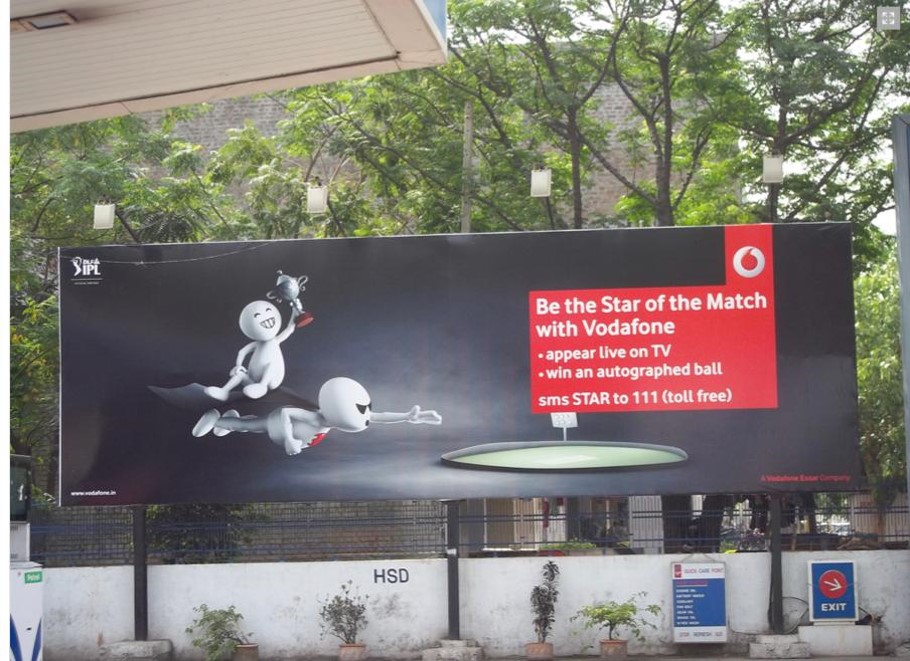
Whether it is a dispenser panel, nozzle branding, pole kiosk, or forecourt signage, petrol pump advertising is seen at close range. This proximity significantly improves brand recall compared to distant hoardings or cluttered digital feeds.

Audience Quality: Everyday Decision-Makers
Petrol pump audiences are not random. They represent active consumers with purchasing power.
Key audience segments include:
-
Private vehicle owners
-
Daily office commuters
-
Two-wheeler riders
-
Commercial drivers and fleet users
This makes petrol pump advertising especially effective for BFSI, FMCG, automotive, retail, real estate, education, telecom, and local service brands. The audience is already in a decision-making mindset, often thinking about spending, travel, or daily needs.
Multiple Touchpoints Within One Location
One petrol pump offers multiple branding surfaces, allowing layered communication without additional locations.
Common petrol pump advertising formats include:
-
Fuel dispenser panels
-
Nozzle and hose branding
-
Pole kiosks and LCD screens
-
Canopy fascia and entry gates
-
Payment desk and receipt branding
This multi-touchpoint exposure within a single visit increases frequency organically, which directly strengthens brand memory.
Better Recall Than Traditional Outdoor Media
Traditional outdoor media depends on fleeting exposure. A hoarding might be seen for two seconds while driving past. In contrast, this advertising holds attention for minutes.
This difference matters because:
-
Longer exposure improves comprehension
-
Repetition within the same visit reinforces memory
-
Close-range viewing increases logo and message clarity
As a result, petrol pump advertising often outperforms large-format OOH on unaided recall, despite lower visibility scale.

Ideal for Both National and Hyperlocal Brands
One of the biggest strengths of petrol pump advertising is flexibility.
National brands use it for:
-
City-wide frequency
-
Product launches
-
Trust-building campaigns
Hyperlocal brands use it for:
-
Area-specific targeting
-
Store visit generation
-
Service awareness within catchments
Since petrol pumps are evenly distributed across cities, brands can plan micro-market coverage with precision—something billboards struggle to offer.
Works Exceptionally Well for Repetition-Based Categories
Certain categories require repeated exposure rather than one-time impact. Petrol pump advertising excels here.
High-performing categories include:
-
Banks, insurance, and fintech
-
Education and coaching institutes
-
Healthcare and diagnostics
-
Retail stores and QSR chains
-
Automotive accessories and services
The daily or weekly nature of fuel visits ensures that brand messages are reinforced over time.
Cost Efficiency Beyond CPM Metrics
Petrol pump advertising is often undervalued because it is not judged correctly.
Instead of CPM, it should be evaluated on:
-
Cost per minute of attention
-
Cost per repeated exposure
-
Cost per high-intent consumer reached
When assessed through these lenses, advertising delivers exceptional ROI, especially compared to premium outdoor formats with lower attention quality.

Why Brands Still Ignore Petrol Pump Advertising
Despite its effectiveness, petrol pump advertising is often overlooked due to:
-
Lack of flashy scale
-
Misconception that it’s only for local brands
-
Over-fixation on digital metrics
-
Limited understanding of dwell-time economics
Ironically, these very reasons make it a low-clutter, high-impact medium today.
How Smart Brands Use Petrol Pump Advertising Strategically
High-performing campaigns follow three principles:
-
Simple, bold messaging suited for close-range viewing
-
High-frequency placement across key city pumps
-
Support with geo-targeted digital ads for amplification
This integrated approach turns petrol pumps into powerful memory-building zones.
Conclusion: Attention Is the New Premium Media
In conclusion, this advertising is India’s most underrated high-dwell-time media. While brands chase impressions across screens and skylines, petrol pumps quietly deliver something far more valuable—focused attention.
By placing brands in moments of pause, routine, and decision-making, petrol pump advertising achieves stronger recall, better trust, and higher efficiency than many celebrated media formats. In an era where attention is scarce, the smartest media choices are often hiding in plain sight.