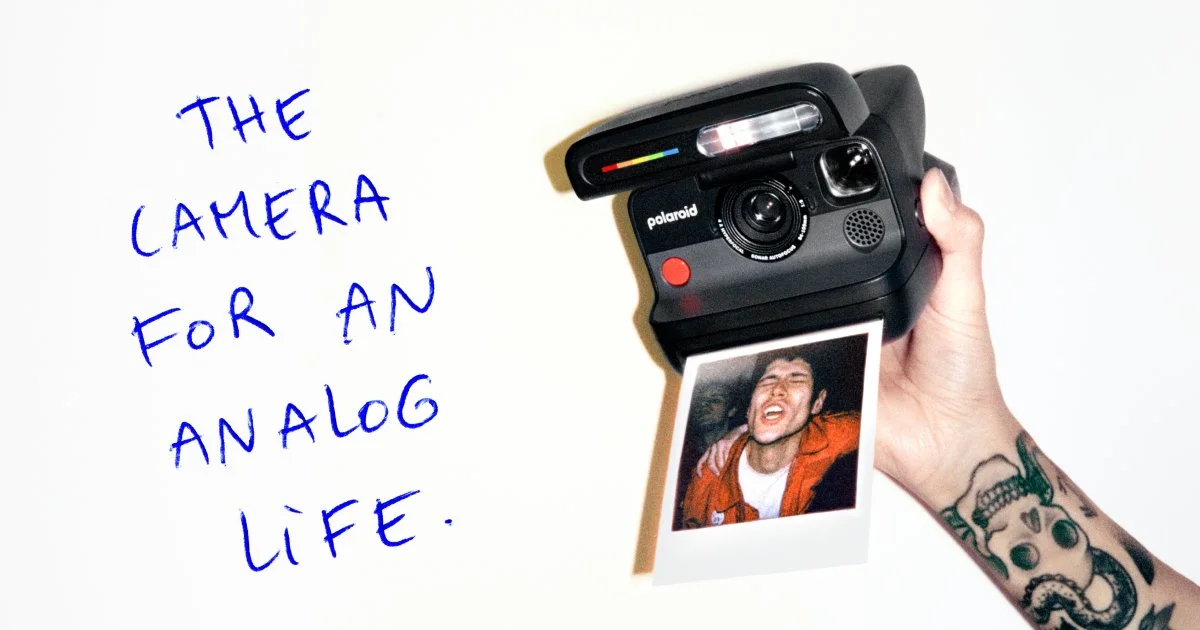
The Polaroid “The Camera for an Analog Life” campaign is a powerful global out-of-home (OOH) statement that challenges modern screen obsession and celebrates real, tactile experiences. In a world dominated by smartphones and endless scrolling, Polaroid used outdoor advertising to remind people of the joy of physical photography and being present in the moment.
Deployed across subway platforms and urban digital screens worldwide, the campaign encouraged audiences to literally look up from their phones. As a result, Polaroid transformed everyday transit spaces into quiet acts of resistance against digital overload.
The Cultural Insight: Screen Fatigue Is Universal
At the heart of the Polaroid “The Camera for an Analog Life” campaign was a deeply relevant cultural truth. People feel overwhelmed by constant notifications, screens, and digital validation. While technology connects us, it also distracts us from real experiences.

Polaroid leaned into this tension without being judgmental. Instead of rejecting digital culture outright, the campaign gently proposed an alternative: slow down, observe, and capture moments physically. Consequently, the message resonated across generations, from digital natives to nostalgic creatives.
This insight gave the campaign emotional depth rather than promotional urgency.
Outdoor Advertising as a Medium of Contrast
OOH media played a strategic role in amplifying the message. Subway platforms and urban screens are places where people instinctively turn to their phones while waiting. By placing analog-first messaging in these environments, Polaroid created a powerful contrast.
The Polaroid “The Camera for an Analog Life” campaign used this behavioral moment to its advantage. While surrounded by screens, audiences encountered messaging that asked them to disengage—if only briefly. This irony made the campaign memorable and meaningful.
Outdoor advertising became not just the channel, but part of the idea itself.
Real Photography and Tactile Visual Language
Creatively, the campaign relied on real Polaroid photography rather than overly polished digital visuals. Grain, imperfections, and physical textures were intentionally visible. This tactile aesthetic reinforced the brand’s analog philosophy.
The Polaroid “The Camera for an Analog Life” visuals stood out precisely because they did not look like typical ads. They felt human, imperfect, and emotionally grounded. As a result, viewers paused—not to consume content, but to reflect.
This restraint was a refreshing departure from high-gloss, hyper-stimulating advertising.
Subway Platforms as Mindful Touchpoints
Subway platforms were especially effective placements. These are transitional spaces where time slows down and attention drifts. Polaroid’s messaging fit naturally into this pause.
The Polaroid “The Camera for an Analog Life” campaign used these moments to encourage observation rather than distraction. Waiting commuters were prompted to notice their surroundings, other people, and real life unfolding around them.
This context-sensitive placement strengthened authenticity and emotional relevance.
Global Consistency with Local Resonance
Although the campaign ran globally, its message transcended language and geography. Screen fatigue and the desire for authenticity are shared experiences worldwide.
The Polaroid “The Camera for an Analog Life” campaign maintained a consistent core message while adapting to different urban environments. Whether seen in New York, London, Paris, or Tokyo, the campaign felt locally relevant yet globally unified.
This balance reinforced Polaroid’s identity as a timeless brand navigating modern culture thoughtfully.
Why OOH Was Essential to the Idea
Digital platforms would have diluted the campaign’s intent. Asking people to disconnect while advertising online would have felt contradictory. Outdoor advertising, however, allowed Polaroid to speak without demanding clicks, likes, or engagement.

The Polaroid “The Camera for an Analog Life” campaign leveraged OOH’s quiet power. It existed without interruption, algorithms, or urgency. This made the message credible and emotionally resonant.
In doing so, Polaroid proved that outdoor media can be philosophical, not just promotional.
Brand Positioning Through Cultural Commentary
Rather than pushing product features, the campaign reinforced Polaroid’s brand worldview. It positioned the camera not as a gadget, but as a tool for presence and memory.
The Polaroid “The Camera for an Analog Life” narrative aligned perfectly with the brand’s heritage while remaining relevant in contemporary culture. This consistency strengthened brand trust and differentiation in a crowded imaging market.
Polaroid emerged not just as a camera brand, but as a cultural voice advocating mindful creativity.
Key Learnings for Brands and Marketers
Key takeaways from this campaign include:
-
Cultural tension creates powerful OOH narratives
-
Contextual placement amplifies message credibility
-
Restraint can be more impactful than spectacle
-
Analog aesthetics stand out in digital-heavy environments
-
OOH is ideal for reflective, non-intrusive messaging
These insights are valuable for brands seeking meaning-driven visibility.
Conclusion
The Polaroid “The Camera for an Analog Life” campaign is a masterclass in using outdoor advertising to make a cultural statement. By encouraging people to look up from their screens and reconnect with the physical world, Polaroid delivered a message that felt timely, human, and deeply authentic.
In an attention economy driven by noise, this campaign proves that sometimes the most powerful advertising simply asks us to pause—and see the world again.