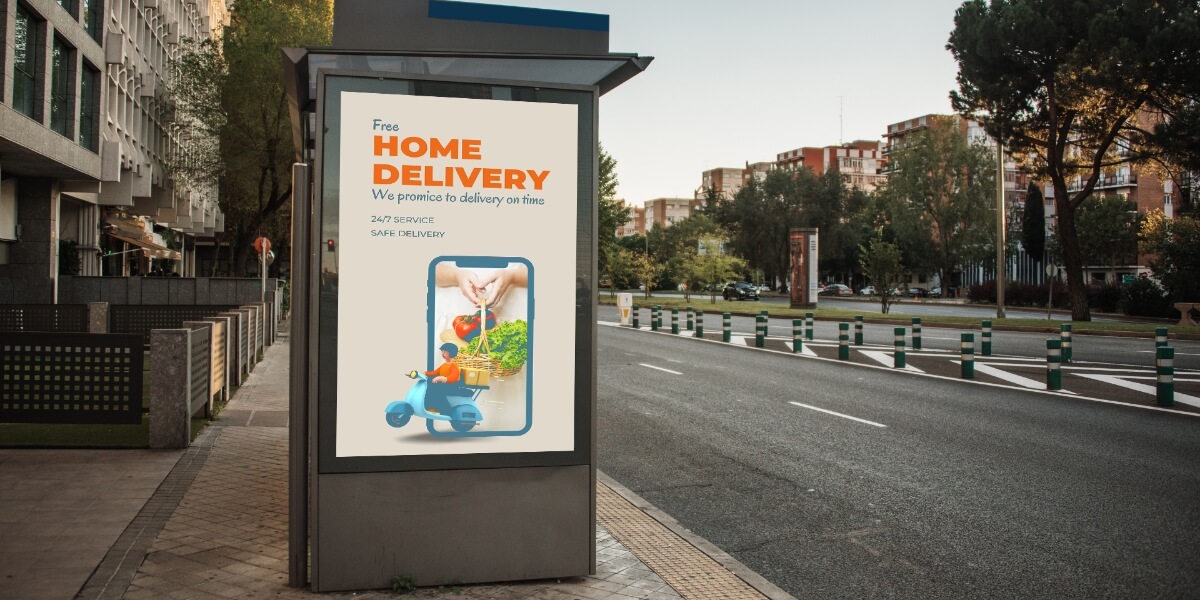
Digital Out-of-Home (DOOH) advertising has transformed how brands communicate in public spaces. Unlike traditional billboards, DOOH screens allow advertisers to measure performance using data-driven metrics. As a result, marketers increasingly rely on impressions, dwell time, and attention metrics to evaluate campaign effectiveness. However, many advertisers still misunderstand what these metrics actually represent and how they influence media planning decisions. This article explains these core DOOH metrics in detail and clarifies how brands should interpret them for better outcomes.
Understanding Impressions in Digital OOH Advertising
Impressions in digital OOH advertising indicate how many times an ad is likely to be seen. Typically, impressions are calculated using footfall data, traffic movement, and visibility angles near the screen location. Media owners combine anonymized mobility data with screen play counts to estimate impression volume.
However, impressions do not confirm that a person actually noticed the advertisement. Instead, they show potential exposure. Therefore, while impressions are useful for estimating reach and scale, they should never be the sole metric for campaign success. When advertisers focus only on impression numbers, they risk overvaluing reach without considering real engagement.

Dwell Time in DOOH: Measuring Audience Presence
Dwell time in digital OOH advertising measures how long people stay within view of a screen. This metric is particularly relevant in environments such as malls, airports, metro stations, elevators, and office lobbies. Longer dwell time increases the likelihood that viewers will process the message.
For example, a commuter waiting on a metro platform may have a dwell time of several minutes. As a result, DOOH screens in such locations can deliver stronger message brand recall compared to roadside billboards with fleeting exposure. Therefore, advertisers often prioritize dwell time when planning branding or storytelling campaigns.
Attention Metrics in Digital OOH Advertising Explained
Attention metrics in DOOH advertising go beyond impressions and dwell time. These metrics attempt to measure how much visual or cognitive focus an advertisement receives. Advanced DOOH systems may use computer vision, audience modeling, or third-party attention studies to estimate this engagement.
Attention metrics typically account for:
-
Screen size and brightness
-
Creative motion and contrast
-
Audience proximity
-
Viewing angles
-
Environmental clutter
Because attention reflects actual engagement potential, many brands now consider it a more meaningful KPI than raw impressions. Consequently, attention-based planning is gaining traction among performance-oriented advertisers.
Impressions vs Dwell Time vs Attention Metrics: Key Differences
Although these metrics are connected, they serve different purposes. Impressions measure opportunity, dwell time measures exposure duration, and attention metrics measure engagement quality. When used together, they provide a holistic view of campaign performance.
For instance, a roadside LED may generate high impressions but low dwell time. On the other hand, a lift screen may generate fewer impressions but higher attention. Therefore, smart DOOH planning balances all three metrics instead of optimizing only one.

Why Advertisers Must Look Beyond Impressions
Relying only on impressions can lead to misleading conclusions. High impression counts do not guarantee brand recall or message impact. In contrast, campaigns that combine moderate impressions with high dwell time and attention often perform better in recall studies.
Moreover, attention-focused metrics help justify premium inventory pricing. As advertisers demand accountability, attention data strengthens ROI narratives. Consequently, DOOH buying is shifting from cost-per-thousand impressions to cost-per-attention models.
How Brands Should Use DOOH Metrics Strategically
To maximize DOOH performance, brands should align metrics with campaign objectives. For awareness campaigns, impressions still matter. However, for launches, storytelling, or product education, dwell time and attention become more critical.
Additionally, creative design should reflect the chosen metric. Short, bold visuals work best for high-impression locations. Meanwhile, longer narratives suit high-dwell environments. When metrics and creatives align, DOOH campaigns deliver stronger results.
The Future of Measurement in Digital OOH Advertising
As technology advances, DOOH measurement will continue to evolve. AI-driven attention modeling, programmatic optimization, and cross-media attribution will further refine how brands evaluate success. Therefore, advertisers who understand these metrics today will gain a competitive advantage tomorrow.