❝Cities are not just places, they are conversations between people and brands.❞
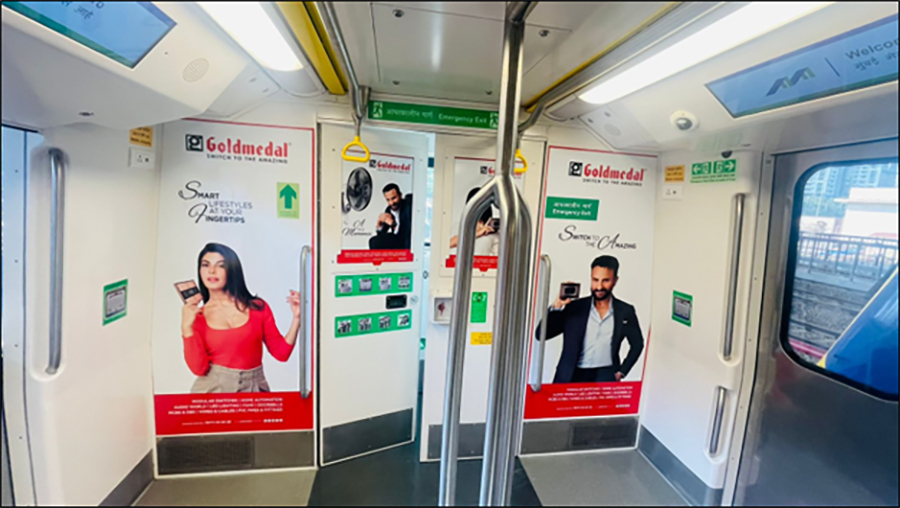
India’s metro revolution is not just about smoother travel — it has also created powerful advertising ecosystems where brands can connect with millions daily.
Marketers often ask us:
👉 Which Indian cities offer the highest audience engagement through metro advertising campaigns?
The answer depends on three things: ridership volume, commuter demographics, and campaign formats.
Let’s explore the cities where metro branding works best and why.
🚇 Top Indian Cities for Metro Advertising Engagement
1. Delhi NCR Metro (DMRC) – The Advertising Powerhouse
- Daily Ridership: ~5 million passengers (largest in India).
- Audience:
- Office-goers in Gurgaon, Noida, Central Delhi.
- Students from DU, JNU, IP University.
- Families shopping in Connaught Place, Saket, Noida malls.
- Engagement Highlights:
- High dwell time (20–30 mins avg).
- Immense variety of formats: train wraps, Rajiv Chowk domination, platform screens.
- Campaigns here often go viral on social media due to sheer visibility.
- Best For: Tech startups, food delivery apps, OTT platforms, e-commerce giants.
- Case Example: Netflix’s Sacred Games domination at Rajiv Chowk sparked national buzz.
👉 Verdict: Delhi Metro is India’s #1 metro branding hub — maximum impressions, maximum recall.

2. Mumbai Metro – The Premium Lifestyle Hub
- Daily Ridership: ~4 million (with ongoing expansions).
- Audience:
- Young professionals in Andheri, Bandra, Powai.
- Bollywood/media professionals traveling between studios.
- Students & college-goers from suburbs.
- Engagement Highlights:
- Metro routes connect high-spending zones (Bandra-Kurla Complex, SEEPZ, Lower Parel).
- Ads here reach premium lifestyle audiences with strong purchasing power.
- Mumbai is also India’s advertising capital, so campaigns get industry amplification.
- Best For: Luxury brands, financial services, real estate, entertainment launches.
- Case Example: Amazon Prime Video used Mumbai Metro interiors to promote binge-worthy content — sparking heavy Instagram chatter.
👉 Verdict: Mumbai Metro = High engagement + premium demographics.
3. Bengaluru Metro (Namma Metro) – The Tech Magnet
- Daily Ridership: ~2 million (rapidly rising with Phase 2 expansion).
- Audience:
- IT professionals from Electronic City, Whitefield, MG Road.
- Startup founders, entrepreneurs, digital-first youth.
- Students from Christ, IIM-B, and tech colleges.
- Engagement Highlights:
- Perfect for tech-driven, app-based campaigns (payments, food delivery, edtech).
- Commuters are digitally active → high QR code scanning & online conversions.
- Lower ad clutter compared to Delhi/Mumbai = better focus.
- Best For: Fintech apps, edtech platforms, SaaS startups, coworking brands.
- Case Example: Paytm launched a cashless travel campaign here, boosting app adoption.
👉 Verdict: Bengaluru Metro is the best for digital-first engagement.
4. Hyderabad Metro – The Family & Youth Connector
- Daily Ridership: ~0.9–1 million.
- Audience:
- Families heading to malls, cinema halls, and IT hubs.
- Students from Osmania, Hyderabad Central, and private colleges.
- Professionals in HITEC City and Banjara Hills.
- Engagement Highlights:
- Strong mall integration (metros connect major shopping complexes).
- Campaigns often lead to direct offline sales in nearby stores.
- Less saturation = higher visibility per brand.
- Best For: Retail, FMCG, fashion, multiplexes, consumer electronics.
- Case Example: Samsung promoted its Galaxy series here with experiential kiosks in stations.
👉 Verdict: Hyderabad Metro = best for retail-driven engagement.
5. Chennai Metro – The Emerging Player
- Daily Ridership: ~0.7–0.8 million.
- Audience:
- Families & professionals in Anna Nagar, Central, Airport corridor.
- Students in top universities around Guindy & Saidapet.
- Engagement Highlights:
- Growing acceptance of metro as daily travel.
- Low ad clutter = better attention span for each campaign.
- Airport connectivity → perfect for luxury + travel brands.
- Best For: Airlines, tourism, jewelry, automobile brands.
👉 Verdict: Chennai Metro is a rising star — high growth potential.
6. Emerging Metros (Pune, Lucknow, Nagpur, Kanpur, Kochi, Patna)
- Daily Ridership: 1–4 lakh (smaller networks but expanding fast).
- Why They Matter:
- Early mover advantage: brands face minimal competition in ad spaces.
- Affordable costs = better ROI for regional players.
- Perfect for local brands, education institutes, healthcare, and retail chains.
👉 Verdict: Emerging metros are hidden gems for cost-effective campaigns.
📊 Quick Engagement Ranking
| City | Engagement Score ⭐ | Why It Works |
|---|---|---|
| Delhi NCR | ⭐⭐⭐⭐⭐ | Largest ridership, maximum formats, viral potential |
| Mumbai | ⭐⭐⭐⭐½ | Premium audience, lifestyle branding |
| Bengaluru | ⭐⭐⭐⭐ | Tech-first, digital conversions |
| Hyderabad | ⭐⭐⭐½ | Retail, family audiences |
| Chennai | ⭐⭐⭐ | Airport + emerging branding |
| Emerging Metros | ⭐⭐½ | Low-cost, early mover advantage |
🌟 Key Takeaways for Brands
- Delhi NCR Metro = Maximum impressions, best for mass reach campaigns.
- Mumbai Metro = Premium audience, best for luxury and lifestyle brands.
- Bengaluru Metro = Best for digital-first, app-driven brands.
- Hyderabad Metro = Best for retail and family-oriented engagement.
- Chennai & Others = Best for cost-effective, localized campaigns.
👉 Related Read: Metro Branding ROI vs. Hoardings in India
👉 Explore: Different Types of Metro Advertising Options in India
✅ Our Promise
At My hoardings, we don’t just suggest where to advertise — we help you design city-specific strategies. Whether it’s a Zomato-style mass reach campaign in Delhi or a startup launch in Bengaluru, we ensure your message reaches the right audience with maximum impact.

Because for us, branding is about making your brand part of the city’s story.
Top 10 Brands Who Spend the Most on OOH Media
A look at the leading advertisers dominating global outdoor and transit media investments in 2024–2025.
| Rank | Brand | Industry | Estimated OOH Spend (USD Millions) | Key OOH Formats Used | Recent Campaign Highlights |
|---|---|---|---|---|---|
| 1 | Coca-Cola | Beverages | $320 | Billboards, 3D DOOH, Transit Wraps | Global “Create Real Magic” OOH campaign integrating AI-generated art. |
| 2 | Apple | Consumer Electronics | $290 | Premium Billboards, Airport Media | “Shot on iPhone” visuals on iconic landmarks worldwide. |
| 3 | Amazon | E-Commerce | $250 | Metro Wraps, Digital Screens | Holiday 2024 DOOH campaign with dynamic parcel-tracking visuals. |
| 4 | McDonald’s | Quick Service Restaurants | $230 | Billboards, Bus Shelters, Street Furniture | Minimalist OOH icons campaign featuring just the golden arches. |
| 5 | Samsung | Technology | $215 | 3D DOOH, Building Wraps, Transit Media | Galaxy Z Fold launch with immersive 3D billboards in NYC & Seoul. |
| 6 | Netflix | Entertainment / Streaming | $200 | 3D DOOH, Murals, Subway Ads | “Squid Game 2” campaign with 3D digital billboards across Asia. |
| 7 | Unilever | FMCG / Personal Care | $190 | Traditional OOH, Rural Hoardings | Lifebuoy and Dove campaigns promoting hygiene and sustainability. |
| 8 | Nike | Sportswear | $180 | Digital Billboards, Stadium Signage | “You Can’t Stop Us” OOH with AI-generated athlete visuals. |
| 9 | PepsiCo | Beverages / Snacks | $165 | Bus Ads, Hoardings, Airport Media | “Thirst for More” 2024 campaign with interactive digital screens. |
| 10 | Toyota | Automotive | $150 | Transit Media, Digital Hoardings | EV awareness campaign featuring smart dynamic OOH formats. |
Note: Data represents estimated 2024–2025 global OOH spending trends, compiled from industry reports and media intelligence sources.