









DSP vs. SSP: Understanding the Programmatic Advertising Ecosystem
5 min read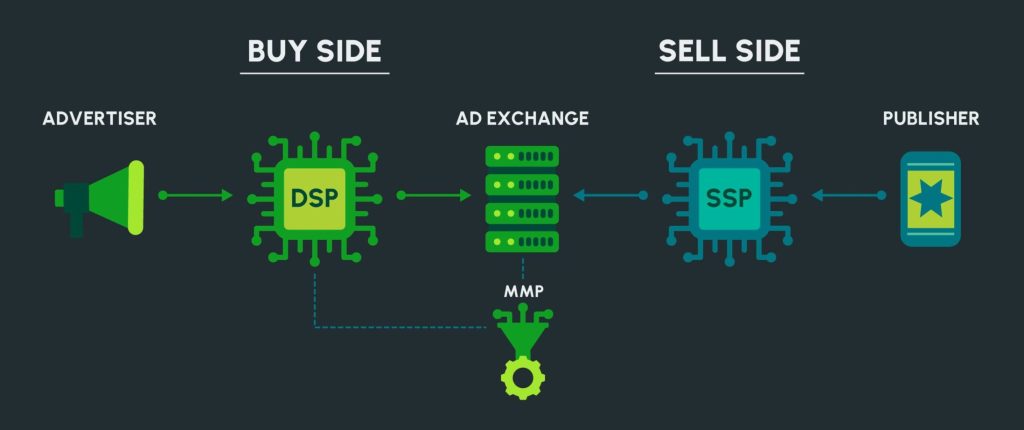
Learn the key differences between DSPs and SSPs and how they power the modern programmatic advertising ecosystem.
In the ever-evolving world of programmatic advertising, automation has revolutionized how digital ads are bought and sold. Behind every impression served, there’s a complex yet efficient system powered by technology — the Demand-Side Platform (DSP) and the Supply-Side Platform (SSP).
These two platforms form the backbone of digital media trading. While both operate in the same ecosystem, they serve opposite sides of the advertising equation: DSPs work for advertisers, and SSPs work for publishers.
To truly understand how programmatic advertising delivers precision, efficiency, and scale, marketers must grasp the difference between DSP vs. SSP and how they connect in the larger AdTech ecosystem.
1. What Is Programmatic Advertising?
Before diving into DSPs and SSPs, it’s essential to understand programmatic advertising — the automated process of buying and selling digital ad inventory using data, algorithms, and real-time bidding (RTB).
Instead of manual negotiations between advertisers and publishers, programmatic uses software to instantly match the right ad with the right audience, based on data and context.
Key advantages of programmatic advertising include:
-
Efficiency: Automated transactions save time and reduce human error.
-
Precision Targeting: Ads are shown to audiences most likely to convert.
-
Real-Time Optimization: AI adjusts bids and creatives dynamically.
-
Scalability: Access to millions of impressions across multiple channels instantly.
Now, let’s see how DSPs and SSPs make this possible.
2. What Is a DSP (Demand-Side Platform)?
A Demand-Side Platform (DSP) is a software platform that enables advertisers and agencies to buy ad inventory automatically across multiple ad exchanges, networks, and publishers — all from a single interface.
How DSPs Work:
-
Advertisers set campaign parameters (budget, target audience, bid strategy, etc.).
-
The DSP analyzes data from multiple sources (cookies, device IDs, first-party data).
-
It bids on impressions in real time through ad exchanges.
-
The highest bidder wins, and their ad is displayed instantly.
Key Features of DSPs:
-
Audience Targeting: Use behavioral, demographic, and contextual data.
-
Real-Time Bidding (RTB): Compete for ad impressions in milliseconds.
-
Cross-Channel Reach: Access display, video, mobile, and CTV ads from one dashboard.
-
Optimization Tools: AI-based algorithms improve campaign performance continuously.
-
Analytics: Real-time reporting on impressions, clicks, and conversions.
Examples of Popular DSPs:
-
Google Display & Video 360 (DV360)
-
The Trade Desk
-
Amazon DSP
-
MediaMath
-
Adform
In short, a DSP helps advertisers automate and optimize their ad buying across the open web.
3. What Is an SSP (Supply-Side Platform)?
A Supply-Side Platform (SSP) is a technology platform used by publishers to manage, sell, and optimize their available ad inventory. SSPs help publishers get the best possible price for their ad space while maintaining control over who advertises on their properties.
How SSPs Work:
-
The SSP connects a publisher’s inventory (websites, apps, etc.) to multiple ad exchanges.
-
When a user visits a page, the SSP sends information about the available ad impression to potential buyers.
-
DSPs bid in real time for that impression.
-
The SSP selects the highest bid and serves the ad — earning revenue for the publisher.
Key Features of SSPs:
-
Yield Optimization: Maximizes publisher revenue by identifying the highest-paying bids.
-
Inventory Management: Controls ad placements and formats across properties.
-
Brand Safety: Ensures quality and relevant ads appear on publisher pages.
-
Header Bidding: Allows multiple DSPs to bid simultaneously for better prices.
-
Analytics: Provides data on fill rates, revenue, and buyer performance.
Examples of Popular SSPs:
-
Google Ad Manager (GAM)
-
Magnite
-
PubMatic
-
OpenX
-
Index Exchange
In essence, an SSP helps publishers sell ad inventory efficiently and profitably through programmatic channels.
4. DSP vs. SSP: The Core Difference
| Feature | Demand-Side Platform (DSP) | Supply-Side Platform (SSP) |
|---|---|---|
| Primary User | Advertisers and agencies | Publishers and media owners |
| Goal | Buy ad inventory efficiently | Sell ad inventory profitably |
| Focus | Audience targeting, bidding, ROI | Yield optimization, fill rate, brand safety |
| Data Usage | Uses audience data for targeting | Uses inventory and user data for pricing |
| Integration | Connects to SSPs and ad exchanges | Connects to DSPs and ad exchanges |
| Revenue Flow | Spends money to reach audiences | Earns money from displaying ads |
| Examples | Google DV360, The Trade Desk | PubMatic, Magnite, OpenX |
Together, they form a two-way marketplace: DSPs represent buyers, SSPs represent sellers, and ad exchanges connect the two.
5. The Role of Ad Exchanges in Connecting DSPs and SSPs
An Ad Exchange acts as the digital marketplace where DSPs and SSPs meet. It facilitates real-time auctions, matching demand and supply efficiently.
Process Overview:
-
The SSP sends available ad impressions to the ad exchange.
-
The ad exchange forwards the bid request to DSPs.
-
DSPs analyze user data and bid for the impression.
-
The highest bid wins, and the ad is displayed to the user.
This entire process occurs in under 120 milliseconds, ensuring advertisers and publishers achieve real-time precision.
6. How DSPs and SSPs Work Together in RTB
RTB (Real-Time Bidding) is the mechanism that enables DSPs and SSPs to function together.
-
DSPs bid on impressions based on audience relevance and budget.
-
SSPs receive these bids and sell impressions to the highest bidder.
-
Ad Exchanges facilitate the real-time auction between the two sides.
This automated system ensures advertisers get maximum reach and ROI, while publishers get optimal monetization of their inventory.
7. The Role of Data and AI in the DSP-SSP Ecosystem
Artificial Intelligence and data analytics fuel the efficiency of both DSPs and SSPs.
-
In DSPs: AI predicts the best ad placements, adjusts bids in real time, and automates budget allocation.
-
In SSPs: AI optimizes yield pricing, detects fraud, and ensures better fill rates.
The result is a data-driven ecosystem where both sides benefit — advertisers achieve precise targeting, and publishers maximize earnings.
8. The Future of DSPs and SSPs: Integration and Transparency
As the digital landscape evolves, DSPs and SSPs are becoming more integrated to enable unified insights and greater transparency.
Key trends shaping the future include:
-
Cookieless Targeting: Relying more on first-party and contextual data.
-
Unified Platforms: Some companies now offer both DSP and SSP capabilities in one platform.
-
AI-Powered Optimization: Predictive bidding and contextual analysis will drive efficiency.
-
Programmatic DOOH and CTV: Expansion into new ad formats like connected TV and digital out-of-home.
-
Sustainability and Transparency: Publishers and advertisers demand clearer visibility into ad supply chains and carbon footprints.
The line between DSPs and SSPs may blur, but their shared mission remains — automating and optimizing advertising through data intelligence.
Conclusion
Understanding DSPs vs. SSPs is crucial for navigating the programmatic advertising ecosystem. While DSPs empower advertisers to buy smarter and reach the right audiences, SSPs help publishers sell inventory effectively and maximize revenue.
Together, they form the foundation of programmatic advertising, enabling automation, scale, and precision that manual ad buying could never achieve.
As technology advances and privacy becomes paramount, the DSP-SSP partnership will continue to evolve — shaping a smarter, more transparent, and data-driven future for digital advertising.