

Influencer-Led OOH: How Outdoor Ads Are Integrating Social and Offline Engagement
4 min read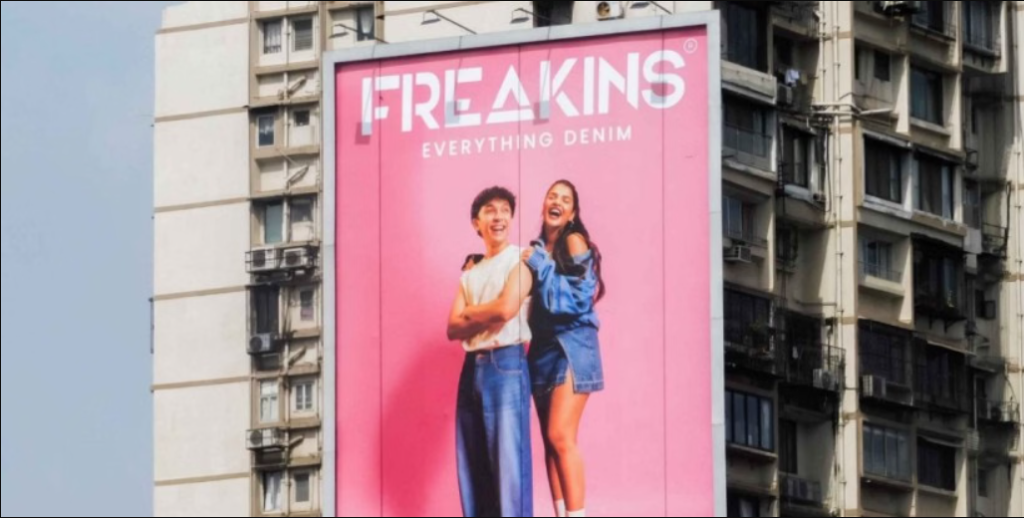
Budgetary Support for OOH in the Urban Renewal Context
Outdoor advertising is no longer designed only for people passing by. In 2025–26, a growing number of OOH campaigns are being created with a second audience in mind—the social media feed. Influencer-Led OOH has emerged as a powerful hybrid strategy where outdoor installations are amplified through creators, turning physical ads into digital moments. This evolution explains how outdoor ads are integrating social and offline engagement to drive virality.
Instead of treating OOH and influencer marketing as separate channels, brands are now designing campaigns where both work together from day one.
The Rise of Influencer-Led OOH Campaigns
Traditionally, influencers promoted products through reels, stories, and posts, while OOH focused on mass visibility. However, attention economics has changed. Consumers trust people more than posters, and they discover brands increasingly through creators.
As a result, brands are using influencers to:
-
Launch or reveal OOH campaigns
-
Create content at billboard locations
-
Drive audiences to physical installations
-
Extend the life of outdoor ads on social platforms
Therefore, OOH becomes both a media format and a content backdrop.
Influencer-Led OOH: How Outdoor Ads Are Integrating Social and Offline Engagement
Influencer-led OOH campaigns are designed backward—from social sharing to street presence.
Brands now ask:
-
Will this billboard look good on camera?
-
Is the installation Instagrammable or reel-friendly?
-
Can creators interact with it physically?

When the answer is yes, the OOH asset becomes a social trigger, not just a visibility tool. Consequently, one physical site can generate millions of organic impressions online.
OOH as a Content Set, Not Just Media Space
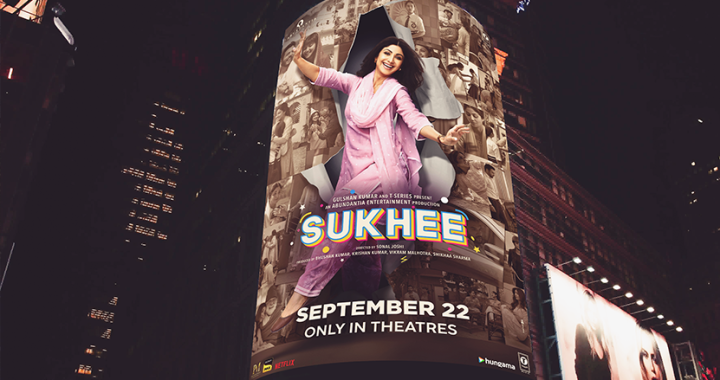
Modern influencer-led OOH treats billboards as content sets. 3D elements, bold typography, LED screens, interactive installations, and pop-up structures are crafted to invite filming.
Creators visit these locations to:
-
Shoot reels and short videos
-
Capture behind-the-scenes content
-
Engage followers with location-based storytelling
Because audiences experience the billboard through a trusted creator, engagement feels authentic rather than promotional.
Why Social Virality Is Now a Core OOH KPI
Earlier, OOH success was measured through reach and frequency. Today, virality and shareability are equally important.
Influencer-led OOH campaigns generate:
-
User-generated content
-
Earned media reach
-
Trend participation
-
Meme and remix culture
As a result, OOH impressions multiply far beyond physical footfall. This extended reach improves ROI and strengthens cultural relevance.
The Role of Platforms in Influencer-Led OOH
Social platforms play a central role in amplifying OOH-led moments. On Instagram, creators use reels, stories, and carousels to showcase outdoor installations. Meanwhile, short-form video platforms drive rapid discovery and resharing.
Because algorithms reward visually striking, real-world content, OOH assets often outperform studio-shot influencer posts. Therefore, outdoor advertising gains a second life as algorithm-friendly content.
Integrating Hashtags, QR Codes, and CTAs
Successful influencer-led OOH campaigns include built-in digital hooks. These may include:
-
Campaign hashtags on the billboard
-
QR codes linking to filters, contests, or landing pages
-
Social handles integrated into the creative
When influencers prompt audiences to scan, tag, or visit, offline exposure converts into measurable online action. Thus, OOH supports both awareness and engagement.

Why Brands Are Investing More in Influencer-Led OOH
Several factors are driving increased adoption:
-
Rising cost of pure influencer campaigns
-
Saturation of digital-only content
-
Demand for authenticity and scale
-
Need for standout moments in crowded feeds
OOH provides physical credibility, while influencers provide relatability. Together, they deliver trust and reach at scale.
Categories Leading Influencer-Led OOH Adoption
This hybrid strategy is especially popular among:
-
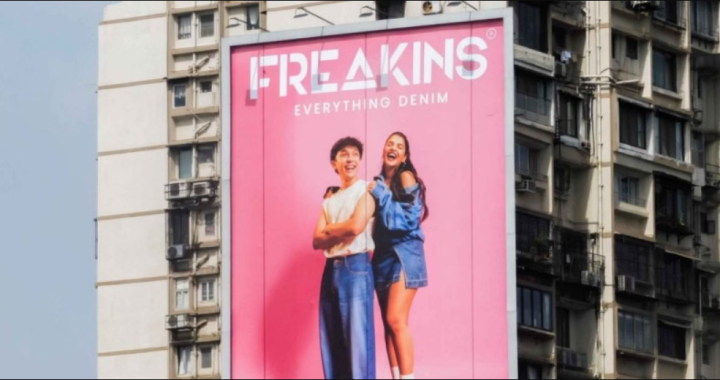
Fashion & Beauty: Visual storytelling and launches
-
OTT & Entertainment: Show and trailer promotions
-
D2C Brands: Lifestyle positioning
-
FMCG: Youth-focused campaigns
-
Tech & Apps: Feature launches and updates
These sectors benefit because they rely heavily on cultural relevance and social discovery.
Local Creators and City-Level OOH Impact
Brands are also partnering with city-specific influencers to activate OOH locally. A billboard in Mumbai may be amplified by Mumbai-based creators, while another city uses regional voices.
This localisation increases authenticity and helps brands dominate city-level conversations. Therefore, influencer-led OOH works effectively for both national and hyperlocal campaigns.
Measurement Beyond Traditional OOH Metrics
Influencer-led OOH introduces new performance indicators:
-
Creator reach and engagement
-
Hashtag usage and UGC volume
-
Location tags and mentions
-
Spillover traffic to brand pages
By combining OOH metrics with social analytics, brands gain a more holistic view of campaign impact.
Challenges Brands Must Manage
Despite its power, influencer-led OOH requires careful planning. Key challenges include:
-
Overdesigning billboards purely for virality
-
Mismatch between influencer tone and brand voice
-
Short-lived trends overshadowing long-term messaging
Therefore, strategy must balance spectacle with substance.
The Future: OOH as a Social-First Medium
Looking ahead, more outdoor campaigns will be designed for the camera first and the street second. OOH will increasingly function as:
-
A social content engine
-
A physical proof point
-
A catalyst for online conversations
As influencer marketing matures, its integration with OOH will become standard practice rather than experimentation.
Conclusion: From Streets to Screens, One Unified Experience
Influencer-Led OOH demonstrates how outdoor advertising is adapting to modern attention patterns. By integrating social creators into physical campaigns, brands transform billboards into moments that travel far beyond their locations.
In a world where virality defines visibility, the most powerful outdoor ads will not just be seen—they will be shared.