In today’s fragmented media landscape, brands often face a fundamental question: Should we invest more in traditional media buying or shift focus to digital platforms? The answer lies not in choosing one over the other—but in understanding how both can work together to maximize visibility, reach, and ROI.
Let’s explore how traditional and digital media buying differ, complement each other, and why modern brands in India are adopting an integrated approach.
What Is Traditional Media Buying?
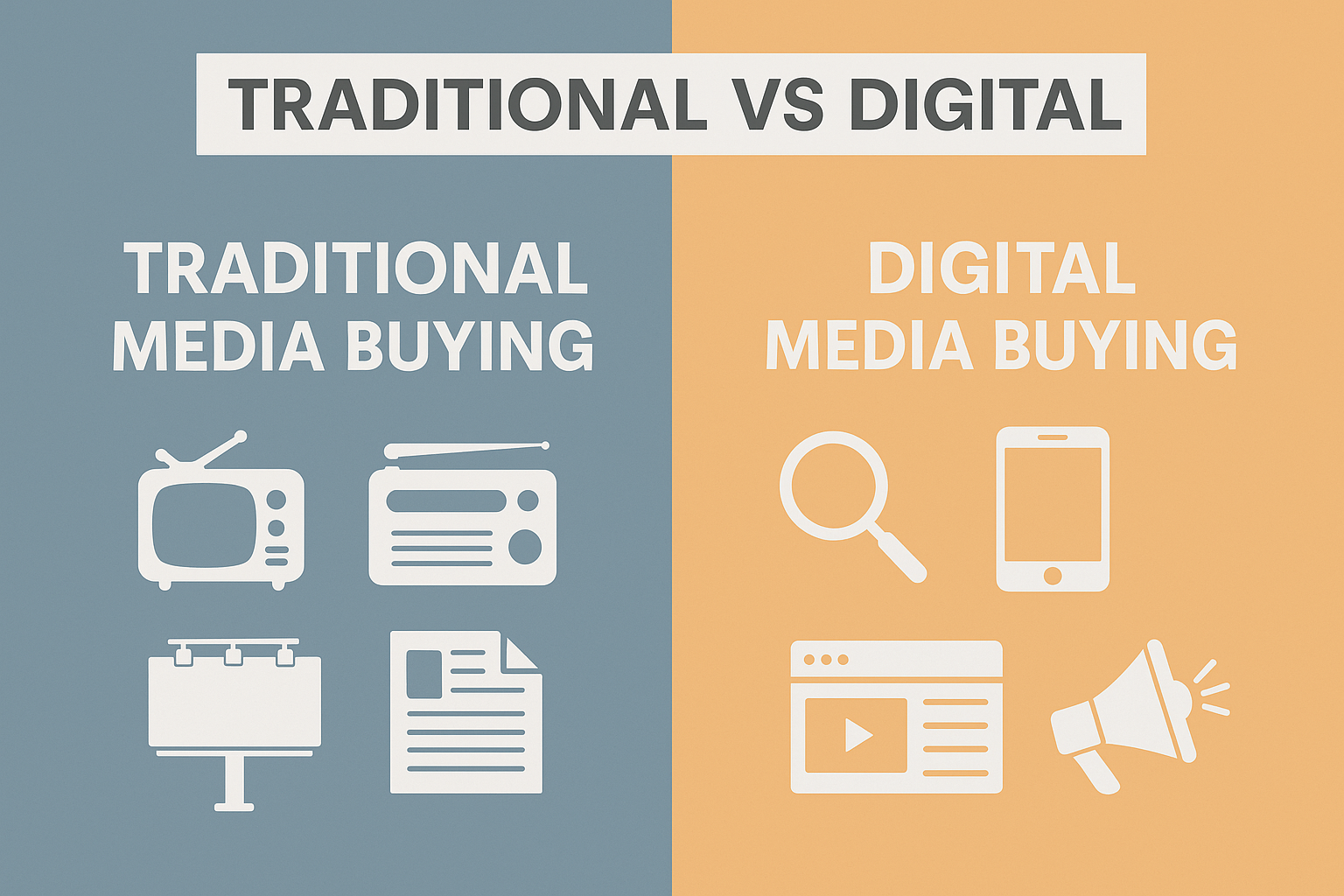
Traditional media buying refers to purchasing advertising space across non-digital platforms:
-
Television
-
Radio
-
Print (newspapers, magazines)
-
Outdoor (hoardings, bus shelters, metro panels, etc.)
-
Cinema Advertising
It involves negotiating with media owners or agencies for fixed ad spots, placements, and durations, typically with less flexibility in targeting and tracking.
What Is Digital Media Buying?
Digital media buying involves automated or manual purchase of ad space on online platforms:
-
Search Ads (Google Ads)
-
Social Media (Meta, LinkedIn, Twitter)
-
Display Networks
-
OTT Platforms (Hotstar, JioCinema, etc.)
-
Programmatic Ads and Retargeting
Here, advertisers can target users based on interests, location, behavior, and more, while tracking real-time performance.
Key Differences Between Traditional and Digital Media Buying
| Aspect | Traditional Media Buying | Digital Media Buying |
|---|---|---|
| Targeting | Broad, based on audience segments | Hyper-targeted via data & behavior |
| Flexibility | Fixed slots and timelines | Dynamic placements and budget control |
| Measurability | Limited, inferred through surveys | Real-time analytics and attribution |
| Cost Efficiency | Higher upfront costs | Scalable with any budget |
| Reach | Mass visibility (especially in India) | Depends on digital penetration |
| Creativity | Static creatives (print, OOH) | Video, animation, interactive ads |
Why Brands Still Trust Traditional Media Buying
Despite the digital boom, traditional channels hold significant ground in India:
-
TV reaches over 900 million viewers, with strong impact in Tier-II and Tier-III cities.
-
Print remains dominant in vernacular and business segments.
-
OOH is essential for geo-targeted awareness and brand prestige.
-
Radio excels in regional storytelling and frequency-based communication.
These formats are trust-rich, tangible, and memorable—especially when visibility and brand authority matter more than immediate clicks.
The Rise of Integrated Media Buying
Modern brands are embracing a hybrid model, blending traditional and digital media buying. This offers:
-
Wider Reach + Targeted Engagement: TV and OOH for awareness, digital for conversion.
-
Cross-Channel Storytelling: Consistent messaging across screens and streets.
-
Data-Driven Optimization: Use digital insights to refine traditional placements over time.
For example, a real estate developer may use hoardings and newspaper ads to create buzz while running geo-targeted Facebook ads to drive inquiries.

Cost and ROI Considerations
-
Traditional media typically has higher CPM (Cost Per Thousand Impressions) but offers mass, long-term visibility.
-
Digital media allows precise cost control with short-term goals like app installs, form fills, or sales.
The key is aligning each medium with a defined objective in the customer journey.
Tips to Balance Traditional and Digital Media Buying
-
Define your campaign goals first: Awareness? Traffic? Conversions?
-
Segment your audience by media habits: Younger urban users = digital; older rural users = traditional.
-
Use data from digital to inform offline placements.
-
Don’t overlook vernacular creatives in traditional media.
-
Track offline impact through QR codes, URLs, or regional sales data.
Common Pitfalls to Avoid
-
Treating traditional and digital as isolated efforts
-
Overspending on flashy digital channels without a strategy
-
Ignoring Tier-II/III offline impact for brands with rural relevance
-
Not measuring uplift caused by traditional awareness on digital performance
Conclusion
The future of media buying isn’t traditional vs digital—it’s about integration. When strategically aligned, both channels amplify each other. While digital brings performance and personalization, traditional media adds scale and trust.
In India’s diverse and media-rich environment, smart brands are no longer choosing sides—they’re mastering the mix.
About MyHoardings
At MyHoardings, we help brands find the perfect blend of traditional and digital media buys. From OOH and print to DOOH and geo-targeted mobile campaigns, we execute 360° media strategies that deliver results across touchpoints.
business@myhoardings.com | +91 9953847639 | www.myhoardings.com
Ways to promote products in Rural areas of India.
1
Rural Kiosk Ads
Rural Kiosk Ads
2
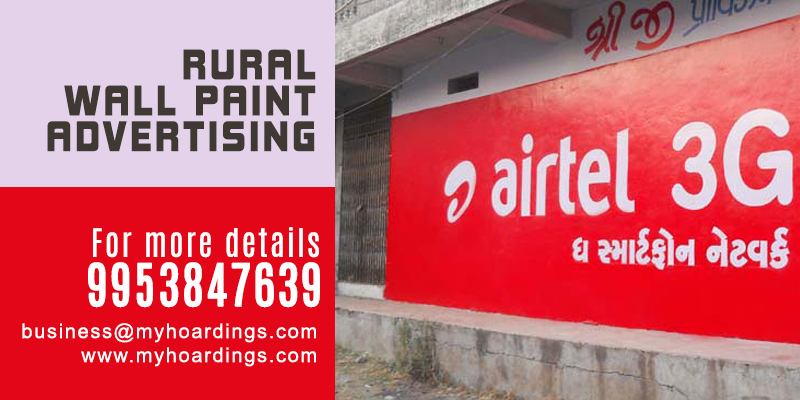
Rural Wall Paint
Rural Wall Paint