If you walked through Cyber Hub in Gurgaon or drove past the flyovers in Mumbai ten years ago, outdoor advertising was pretty simple: a giant vinyl sheet, a few spotlights, and a prayer that the right people saw it.
Fast forward to 2026, and the “hoarding” has gone to college. It’s smarter, it’s watching you back (in a non-creepy way, mostly), and it’s changing its message based on whether it’s raining in Bengaluru or if there’s a traffic jam on the Western Express Highway.
AI isn’t just a buzzword in Indian OOH (Out-of-Home) anymore; it’s the engine under the hood. Here is how it’s actually changing the game on the ground.
1. From “Static” to “Sentient” (Dynamic Content)
The biggest change is that ads are no longer “set it and forget it.” AI-powered Digital Out-of-Home (DOOH) screens across India are now using real-time triggers.
Imagine you’re stuck in Delhi’s peak hour heat. An AI-enabled screen senses the temperature hitting 42°C and automatically switches from a generic clothing ad to a frosty, condensation-covered bottle of Limca or a Quick Commerce app promising ice cream delivery in 10 minutes.
It’s not just weather, either. During the IPL, screens are now syncing with live data feeds. If Virat Kohli hits a six, the billboard updates within seconds to celebrate. This kind of “moment marketing” was impossible five years ago.
2. Programmatic Buying: The “Google Ads” of the Street
In the old days, if you wanted a billboard in Lucknow, you had to call a vendor, negotiate, print a flex, and wait days for it to go up.
Now, with Programmatic DOOH (pDOOH), Indian brands are buying billboard space the same way they buy Facebook ads. Using AI algorithms, platforms like Broadsign or DGTOOHL allow a brand to bid for “slots.“
A luxury car brand might set a rule: “Only show my ad on the Mumbai-Pune Expressway when the traffic speed drops below 20km/h (meaning people have time to look) and only between 10 AM and 4 PM.” The AI handles the rest. This is why you’re seeing more startups and mid-sized Indian businesses on big screens—it’s finally affordable because they only pay for the “perfect” moments.

3. Solving the “Indian Measurement” Problem
The biggest headache for Indian marketers has always been: How many people actually saw my billboard? In 2026, we’ve moved past “estimated footfall.” AI-integrated cameras and sensors (like those from RoadStar or GoLive) are now mounted on digital boards. These sensors don’t record your face, but they use AI to detect:
-
Dwell time: How long did someone actually look at the screen?
-
Demographics: Is the crowd mostly Gen-Z students or office-goers?
-
Sentiment: Are people actually looking up, or are they glued to their phones?
This data allows brands like Tanishq or Vivo to justify their spend with hard numbers, turning a “blind” medium into a data-driven one.
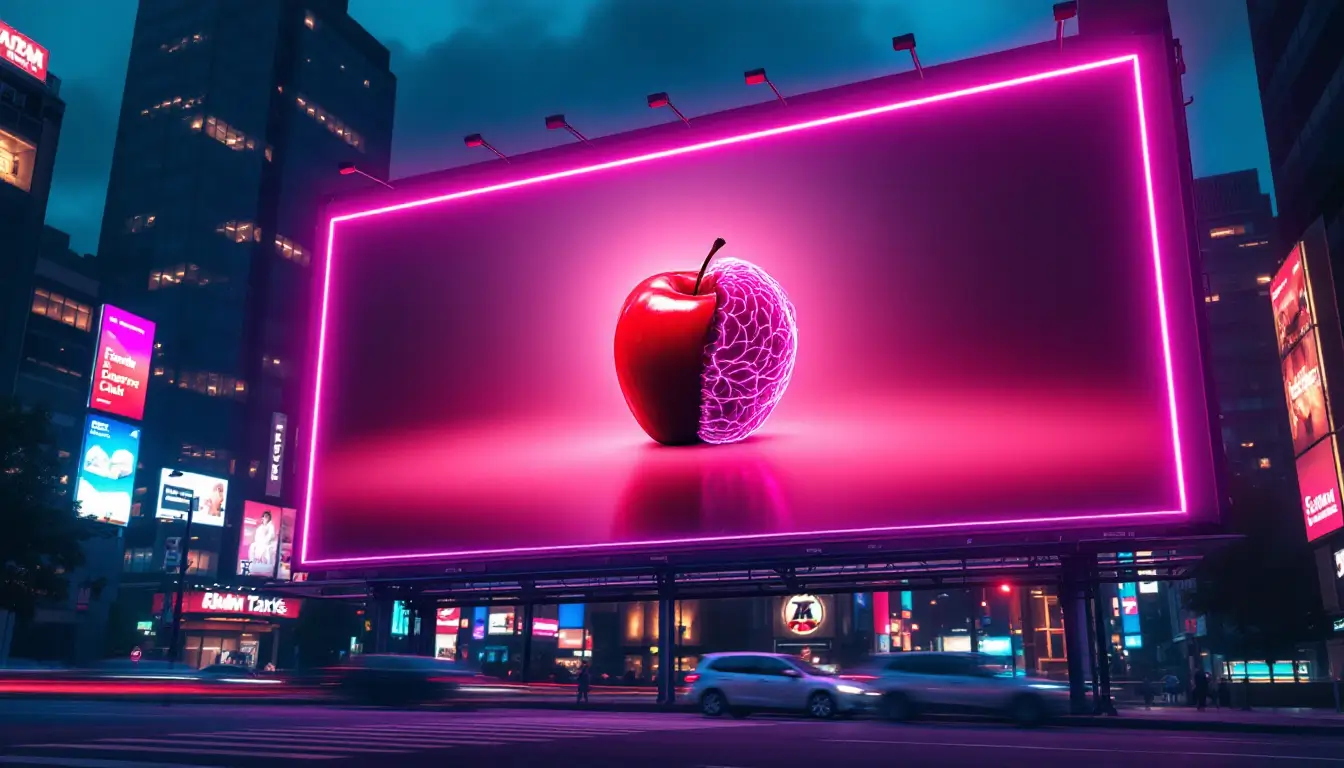
4. The 3D Anamorphic “Wow” Factor
You’ve probably seen those “3D” billboards in London or Tokyo where a cat or a car seems to jump out of the screen. Well, they’ve arrived in India in a big way—from DLF Mall of India to the Bengaluru airport.
AI helps in the design phase of these “Anamorphic” ads, calculating the exact angles needed so that the 3D effect looks perfect from the street level, regardless of where the viewer is standing. It’s the ultimate “thumb-stopper” for the physical world, often going viral on Instagram and Reels, giving the brand free digital reach.

5. Hyper-Local Language Adaptation
India is a land of 22 official languages. AI is now being used to localize OOH creative at scale. A national brand can run a campaign across 50 cities, and AI tools can instantly tweak the copy, slang, and cultural references for a billboard in Kochi versus one in Chandigarh. It ensures the brand doesn’t just look like a “visitor” but feels like a local.
Conclusion
Is it all perfect? Not yet. We still deal with power cuts in Tier-2 cities and messy regulations. But the shift toward AI is making outdoor advertising in India more accountable and, frankly, a lot more fun to look at.
We’re moving toward a future where the billboard isn’t just a sign it’s a service that gives you the right information (or the right craving) exactly when you need it.