Event advertising is more than just placing a logo on a banner. It’s a strategic process that turns brand presence into consumer connection. Whether you’re promoting a stall at a trade expo, sponsoring a concert, or activating a brand at a sports event, a solid plan is essential for maximizing impact.
This article covers the core elements that make event advertising successful, including pre-event planning, creative integration, on-ground tactics, and post-event amplification.
1. Define a Clear Objective
Every great event campaign starts with a well-defined goal. Ask yourself:
-
Are you aiming for brand awareness?
-
Do you want to increase product sampling or demos?
-
Is lead generation the top priority?
-
Are you launching a new product in a specific region?
A focused objective shapes your messaging, platform choice, and measurement KPIs.
Examples:
-
FMCG brand at a youth fest → High-volume sampling + social engagement
-
B2B software company at a tech expo → Lead generation and networking
-
Fashion label at a city flea market → On-spot sales and app downloads
2. Select the Right Event
Your brand doesn’t belong at every event. It belongs at the right one.
Factors to consider:
-
Audience match – Does the event attract your target customer?
-
Scale and format – Local vs. national, outdoor vs. conference, etc.
-
Event reputation – Credible events deliver better footfall and media coverage.
-
Geography – Is the venue in a market you want to enter or dominate?
The event type should reflect your brand values. For example, a sustainability brand should partner with green expos or clean-up drives—not beer festivals.
3. Brand Placement and Visual Integration
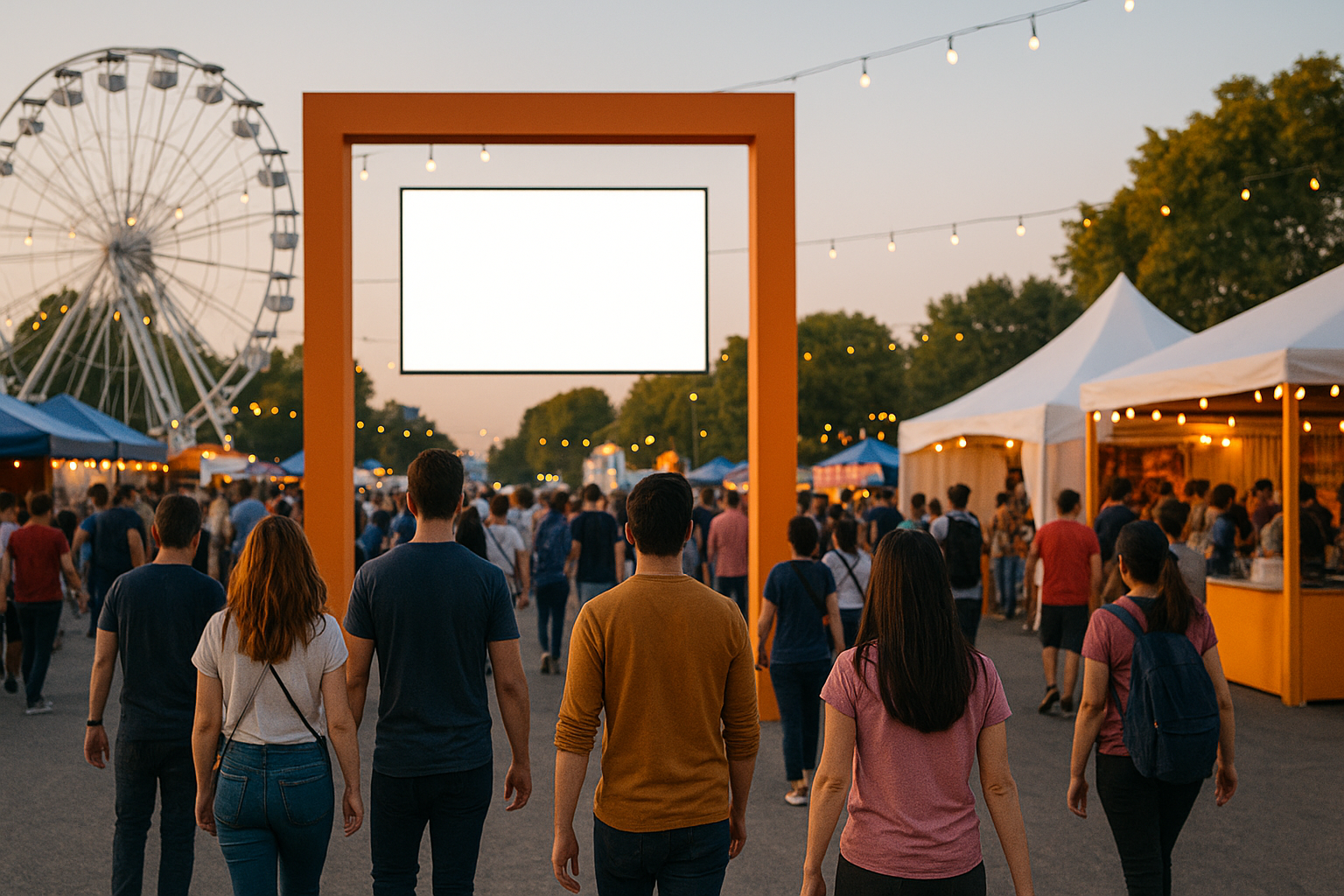
Visibility isn’t just about where your logo shows up—it’s how well it’s embedded into the experience.
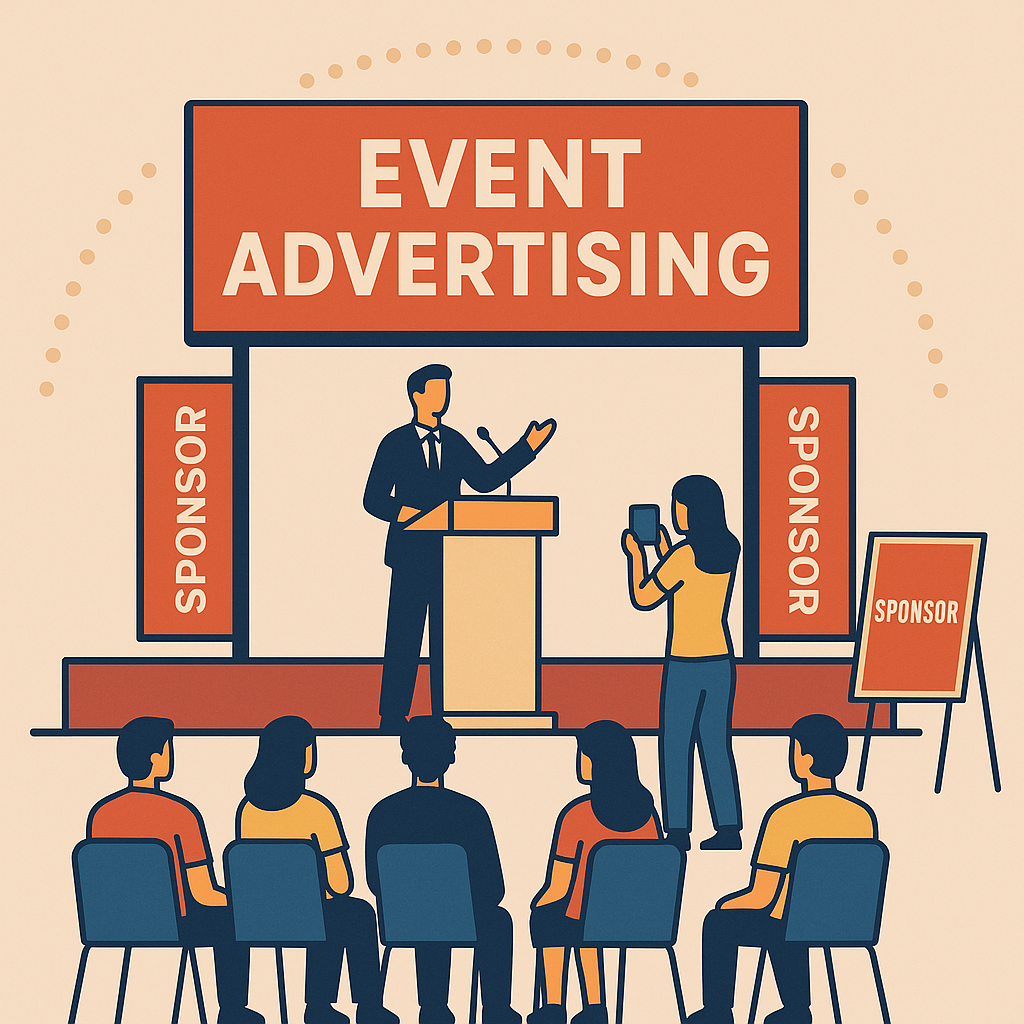
On-ground placements may include:
-
Entry gates and registration desks
-
Main stage backdrops
-
LED displays or interactive screens
-
Booths, pop-ups, and experience zones
-
Branded wristbands, lanyards, or gift bags
-
Mobile installations (like branded autos or trolleys)
The goal is to saturate the space with your brand across touchpoints without feeling overwhelming or forced.
4. Pre-Event Hype and Communication
Start building buzz before the event day to get people talking and noticing your brand early.
Pre-event tactics:
-
Co-branded teaser videos and event posters
-
Social media countdowns with the event organizer
-
Influencer shout-outs or giveaways
-
Event ticket contests via your digital handles
-
Press releases and local media plugs
This builds anticipation, increases footfall, and ensures that attendees arrive already familiar with your brand.

5. Experiential and Interactive Engagement
What makes event advertising truly successful is interaction, not just observation.
Make your brand part of the event, not just present at it:
-
Set up a selfie booth with your logo
-
Offer mini games or lucky draws
-
Integrate QR code challenges for discounts
-
Host a product demo zone
-
Offer branded merchandise or giveaways
-
Launch augmented reality filters or in-app scavenger hunts
The more people participate with your brand, the stronger the memory and connection.
6. On-Site Team and Brand Ambassadors
Event execution depends heavily on the on-ground crew. They represent your brand in real time, so professionalism and energy are essential.
Tips:
-
Hire trained promoters or brand ambassadors
-
Brief them thoroughly on brand tone and product details
-
Ensure proper attire and approachable behavior
-
Equip them with flyers, FAQs, and response scripts
Your staff can convert casual interactions into leads or conversions if trained well.
7. Real-Time Social Media Coverage
Events are meant to be shared. Use this to your advantage with real-time digital storytelling.
Use:
-
Instagram Stories and Reels from your booth
-
Event hashtags to trend online
-
Livestream product launches or performances
-
Giveaways for people who tag your brand
-
Interactive polls or shout-outs to audience members
This creates a digital echo of your physical presence, multiplying brand impressions far beyond the venue.
8. Post-Event Amplification and Follow-Up
The event might end, but your marketing shouldn’t.
Post-event strategy:
-
Share photo albums and highlight reels
-
Publish a campaign success story or PR release
-
Email event attendees with exclusive follow-ups or offers
-
Send thank-you notes or discount codes to visitors
-
Retarget online ads to those who interacted during the event
This ensures that engagement becomes conversion and your brand stays in mind long after the lights go off.
9. Track and Measure Results
Like any other campaign, event advertising needs performance tracking.
Metrics to measure:
-
Booth footfall
-
Sampling or giveaway volume
-
Lead collection or app downloads
-
QR code scans or coupon redemptions
-
Social media mentions, story shares, and hashtag impressions
-
Website traffic spikes during the event window
Measuring outcomes allows you to evaluate ROI and optimize future campaigns.
10. Consistency Across Campaign Touchpoints
Your event branding should reflect your brand identity consistently—across print, digital, and physical media.
Ensure:
-
Font and logo usage are uniform
-
Messaging tone is coherent across banners, ads, and social posts
-
Visual assets follow a consistent theme and color palette
This builds brand recall and professionalism, reinforcing trust among attendees and organizers alike.
Conclusion: Strategic Planning Unlocks Real Results
Event advertising is a high-reward platform—when executed with planning, energy, and purpose. From audience understanding and creative execution to digital integration and post-event follow-ups, each element plays a vital role in campaign success.
Rather than treating events as one-off visibility stunts, brands should treat them as experiential campaigns with measurable ROI, emotional impact, and long-term value.
MyHoardings: Your All-in-One Event Advertising Partner
From ideation to execution, MyHoardings helps brands plan, activate, and amplify their event presence across India. Whether you’re eyeing a college fest, expo, marathon, or lifestyle fair, we deliver tailored solutions to make your brand stand out and stay remembered.
? Call: 9953847639
? Email: business@myhoardings.com
? Visit: www.myhoardings.com
No directory items was found.