








Private Marketplaces in Programmatic Advertising: A Brand-Safe Approach
3 min read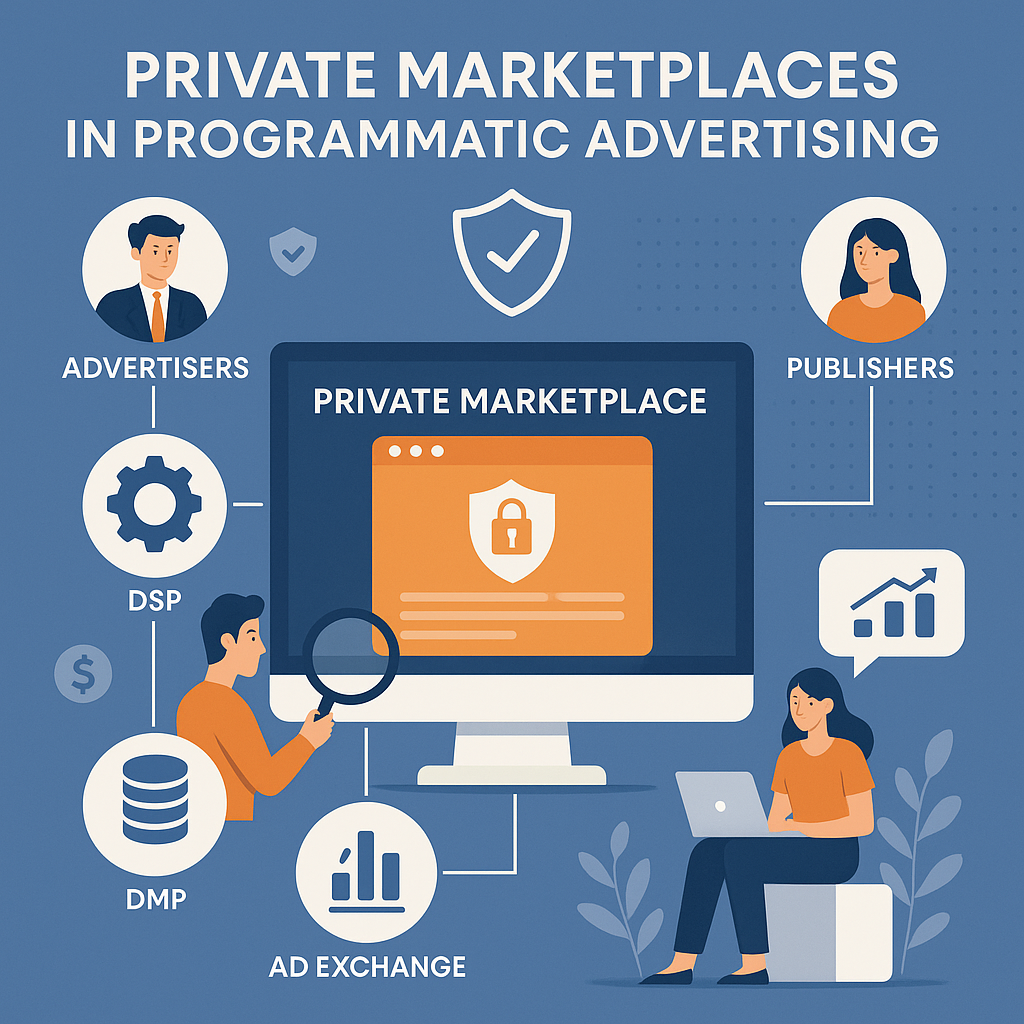
What Are Private Marketplaces (PMPs)?
Private Marketplaces, or PMPs, are invitation-only digital ad exchanges where high-quality publishers offer their inventory to selected advertisers. Unlike open auctions, PMPs offer greater transparency, control, and brand safety—making them increasingly attractive in today’s ad-tech ecosystem.
Programmatic advertising has often been criticized for issues like ad fraud, poor ad placement, and lack of contextual relevance. PMPs address these concerns by providing advertisers with access to premium inventory in a more secure and structured environment.
How PMPs Work in the Programmatic Stack
PMPs are integrated into the larger programmatic ecosystem and typically involve the following players:
-
Publishers: Media companies with premium inventory (news sites, apps, OTT platforms).
-
Demand Side Platforms (DSPs): Platforms advertisers use to bid on PMP inventory.
-
Ad Exchanges: Facilitate the deal and auction within PMP environments.
-
Data Management Platforms (DMPs): Provide insights to target specific audience segments.
A PMP is like a private VIP room—accessible only to advertisers approved by the publisher. Deals can be based on fixed prices, priority bidding, or volume guarantees.
Benefits of Private Marketplaces
? Brand Safety and Control
Advertisers know exactly where their ads are being placed, minimizing the risk of appearing on low-quality or controversial content.
? Premium Inventory Access
PMPs offer inventory from trusted, top-tier publishers, giving advertisers access to premium audiences.
? Enhanced Transparency
Clear terms on pricing, placement, and audience data ensure better decision-making and accountability.
? Precise Targeting
Use of verified data sets allows for accurate audience segmentation across devices and platforms.
Why Advertisers Are Shifting to PMPs
In recent years, there has been a marked shift from open exchanges to private marketplaces due to:
-
Increased scrutiny on ad placement transparency
-
Rising concerns around ad fraud
-
Tighter compliance requirements (GDPR, CCPA)
-
Greater demand for ROI and measurable outcomes
For advertisers seeking impact with safety, PMPs are quickly becoming the preferred route.

Use Cases for Private Marketplaces
PMPs are particularly beneficial in scenarios like:
-
Luxury Brand Campaigns: Need brand-safe, high-visibility placements.
-
CPG Product Launches: Require mass reach without compromising on quality.
-
Political & Social Messaging: Must maintain tight control over ad environment.
-
Programmatic DOOH & OTT Ads: Where ad context and placement are critical.
Challenges of Using PMPs
Despite their benefits, PMPs are not without limitations:
⚠️ Limited Scalability
Inventory is smaller than open exchanges, which may limit reach.
⚠️ Higher CPMs
You pay a premium for quality and exclusivity.
⚠️ Setup Complexity
Requires direct negotiations and customized deal IDs.
Still, for brands looking to trade reach for relevance and impact, PMPs remain a strong investment.
Setting Up a PMP Deal: A Step-by-Step Snapshot
-
Identify Target Audience and Goals
-
Select Trusted Publishers and DSPs
-
Negotiate Deal Terms (CPM, audience size, flight dates)
-
Set Up Deal ID
-
Launch, Track, and Optimize
Collaboration between media planners, publishers, and DSP operators is key to PMP success.
The Future of PMPs in Programmatic
The industry is seeing growth in:
-
Automated Guaranteed Deals: PMP-like deals with fixed pricing and impressions.
-
Header Bidding Integration: Giving publishers more control over demand.
-
Contextual Targeting with AI: Enhanced content relevance without relying on cookies.
-
Cross-Screen PMP Campaigns: Enabling seamless storytelling from mobile to smart TVs to DOOH.
About MyHoardings
MyHoardings offers access to top-tier Private Marketplace deals for brands looking to advertise smartly and securely. With a focus on quality, transparency, and results, we ensure your message reaches the right audience in the right environment. Contact us at business@myhoardings.com or call 9953847639. Visit www.myhoardings.com to get started.
Top 10 Software Companies in India
-
 1
1Tata Consultancy Services (TCS)
Services: IT services, consulting, and business solutions
-
 2
2Infosys Limited
Services: consulting, technology, outsourcing, and next-generation services, innovate with AI, automation, and digital solutions.
-
 3
3Wipro Limited
Services: Digital strategy, IT consulting, and software engineering
-
 4
4HCL Technologies
Services: Cloud computing, Cybersecurity, and IoT solutions
-
 5
5Tech Mahindra
Services: customer-centric digital transformation, consulting, and business re-engineering solutions
-
 6
6Oracle India
Services: integrated cloud applications and platform services, enterprise software and cloud computing innovations.
-
 7
7Microsoft India
Services: Cloud computing, productivity software, enterprise solutions, AI, cybersecurity and digital transformation.
-
 8
8Cognizant Technology Solutions India
Services: digital transformation, technology consulting, and business process services, AI, analytics and automation enhances business agility and efficiency.
-
 9
9IBM India
Services: cloud computing, AI, and blockchain solutions
-
 10
10Accenture India
Services: strategy, consulting, digital, technology, and operations