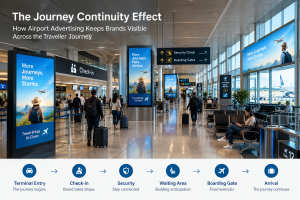
Transit Audience Insights: Who Sees Airport DOOH Screens and When They Engage
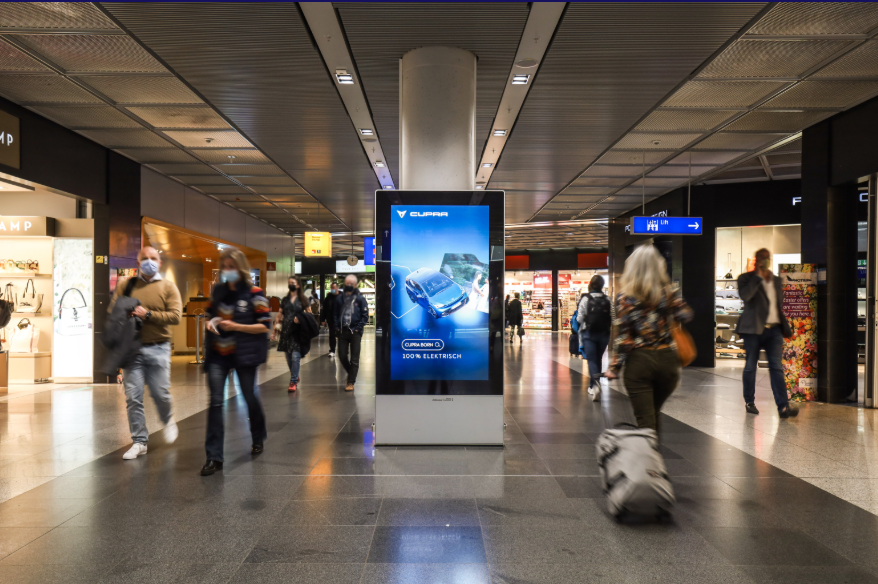
Transit audience insights explain who views airport DOOH screens and when passengers engage most during the journey.
Airport digital out-of-home advertising has become one of the most premium transit media formats in India. However, visibility alone does not guarantee effectiveness. To maximise performance, advertisers must understand transit audience insights for airport DOOH screens—specifically who sees these screens and when engagement actually occurs.
Unlike traditional outdoor advertising, airport environments present predictable passenger journeys. As a result, audience behaviour follows identifiable patterns. When brands align messaging with these moments, airport DOOH campaigns deliver significantly higher recall and attention.
Understanding the Airport Transit Audience
Airport audiences differ from typical outdoor viewers. Travelers enter terminals with purpose, time sensitivity, and heightened awareness.
Broadly, airport DOOH audiences include:
-
Business travelers
-
Leisure and family travelers
-
Frequent flyers
-
International passengers
-
Airport staff and crew
Each group interacts with screens differently depending on travel stage, dwell time, and mindset.
Therefore, audience segmentation becomes essential for DOOH planning.
When Passengers Engage Most with Airport DOOH Screens
Entry and Terminal Access Zones
Engagement begins at terminal entry points. At this stage, passengers are alert and scanning their surroundings.
DOOH screens placed at entrances attract early attention and establish initial brand exposure.
This moment works well for awareness-led messaging.
Check-In and Queue Areas
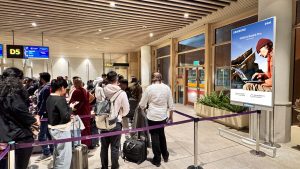
Check-in queues create one of the longest dwell periods in the airport journey. Passengers remain relatively stationary and often look around while waiting.
As a result, DOOH screens near check-in counters generate strong attention and repeated exposure.
Brand recall increases significantly in these zones.
Security Screening Zones
Security areas produce focused attention. Passengers monitor belongings while waiting, which limits mobile distraction.
Therefore, engagement levels with nearby digital screens rise sharply.
Messaging focused on trust, reassurance, or familiarity performs especially well here.
Boarding Gates and Lounges
Boarding gates offer the highest dwell time of the entire airport journey. Passengers sit, relax, and observe screens for extended periods.
Consequently, this stage delivers the deepest engagement.
Brand storytelling, sequential creatives, and longer-format DOOH content work effectively in this zone.
Arrival Corridors and Baggage Claim
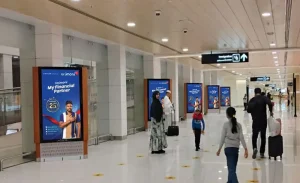
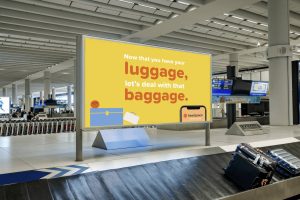
Engagement resumes after landing. Passengers move slowly and remain alert while waiting for luggage.
DOOH screens in arrival zones benefit from relaxed attention and repeated viewing cycles.
This makes arrivals ideal for recall reinforcement.
Who Engages Most with Airport DOOH Advertising
Business Travelers
Business travelers value efficiency and familiarity. They respond strongly to clean visuals and brand-led messaging.
Since they fly frequently, repeated airport exposure compounds recall over time.
Leisure and Family Travelers
Leisure travelers spend more time observing surroundings. They engage more with visual storytelling and destination-oriented messaging.
Their longer dwell times increase exposure frequency.
International Passengers
International travelers often experience extended wait periods. As a result, airport DOOH screens become a primary visual reference point.
This segment offers premium brand association opportunities.
Engagement Drivers for Airport DOOH Screens
Several factors influence engagement levels:
-
Screen placement near dwell zones
-
Creative clarity and motion discipline
-
Screen brightness and size
-
Message relevance to travel stage
-
Repetition across the passenger journey
When these factors align, attention levels rise significantly.
Why Timing Matters in Airport DOOH Campaigns
Passenger mindset changes throughout the journey. Therefore, timing determines creative effectiveness.
For example:
-
Entry: awareness messaging
-
Security: trust-based communication
-
Boarding: reinforcement and storytelling
-
Arrival: recall and brand anchoring
Aligning creative with timing improves campaign performance without increasing media spend.
Using Audience Insights for Smarter DOOH Planning
By analysing transit audience behaviour, advertisers can:
-
Select optimal screen locations
-
Schedule creatives by time of day
-
Match messaging to passenger mood
-
Reduce wastage and improve recall
This insight-led planning transforms airport DOOH from exposure media into strategic brand engagement.
The Future of Transit Audience Measurement
With the growth of smart airports, audience analytics will continue improving. Footfall mapping, dwell-time modelling, and attention measurement technologies are gradually shaping data-driven DOOH planning.
However, behavioural understanding will remain foundational.
Conclusion
Transit audience insights for airport DOOH screens reveal that engagement is not random. Passengers interact with screens at specific moments driven by movement patterns, waiting time, and mindset.
Brands that understand who sees airport DOOH screens—and when they engage—can design campaigns that achieve higher attention, stronger recall, and premium brand perception across the entire airport journey.