Airport DOOH vs Static Billboards: Choosing the Right Mix for Campaign Goals
Airport DOOH vs Static Billboards: Choosing the Right Mix for Campaign Goals
Airport advertising has evolved rapidly as brands look beyond traditional outdoor formats to capture premium audiences. Among the most debated media choices today are airport DOOH vs static billboards. While both formats deliver strong visibility, their roles within a campaign differ significantly. Therefore, selecting the right mix becomes critical for achieving specific marketing objectives.
As airports attract high-income travelers, business professionals, and frequent flyers, advertisers must evaluate which format aligns best with awareness, recall, engagement, or conversion goals.
Understanding Airport DOOH Advertising
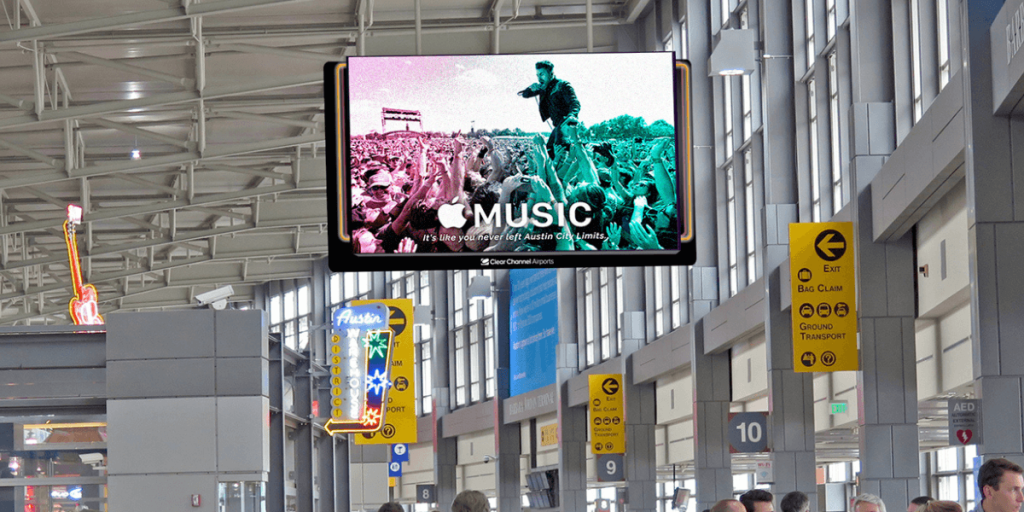
Airport Digital Out-of-Home (DOOH) advertising includes LED screens, video walls, digital totems, and motion displays placed across terminals. These screens support dynamic content and contextual messaging.
Moreover, airport DOOH allows advertisers to rotate creatives, schedule time-based messaging, and deliver visually immersive experiences. Consequently, brands gain flexibility that static formats cannot provide.
Key advantages include:
-
Motion-based attention capture
-
Multiple creatives in a single campaign
-
Day-part and flight-time targeting
-
Real-time content updates
As a result, DOOH works exceptionally well for time-sensitive and innovation-driven campaigns.
Understanding Static Billboards in Airports
Static billboards remain one of the most trusted airport advertising formats. These include backlit panels, wall wraps, column branding, and large-format hoardings within terminals.
Although static formats lack motion, they compensate with uninterrupted visibility. Passengers repeatedly pass the same unit during check-in, security, boarding, and baggage claim.
Therefore, static airport billboards are ideal for consistent brand reinforcement.

Key strengths include:
-
High frequency exposure
-
Strong brand recall
-
Premium large-format presence
-
Cost-efficient long-term visibility
For brand-building campaigns, static media continues to deliver dependable performance.
Airport DOOH vs Static Billboards: Core Differences
| Parameter | Airport DOOH | Static Billboards |
|---|---|---|
| Creative Format | Video and motion | Fixed visual |
| Content Flexibility | High | None |
| Attention Level | Very high | Moderate to high |
| Exposure Duration | Short but impactful | Long and repetitive |
| Cost Structure | Higher | More economical |
| Best Use | Engagement & innovation | Awareness & recall |
This comparison highlights that each format serves different campaign purposes.
Choosing the Right Mix Based on Campaign Goals
Brand Awareness Campaigns
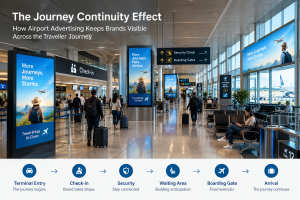
For mass brand visibility, static billboards provide sustained exposure throughout the traveler journey. Since passengers see the same message repeatedly, recall strengthens naturally.
However, adding limited DOOH screens enhances attention at key decision points.
Product Launches and New Offers
Airport DOOH performs better for launches due to animation, storytelling, and countdown messaging. Motion content builds curiosity and improves message comprehension.
Therefore, DOOH should lead while static units support continuity.
Premium Brand Positioning
Luxury and premium brands benefit from combining both formats. Large static displays establish scale, while digital screens add sophistication.
This integrated approach strengthens perceived brand value.
Performance-Driven Campaigns
When QR codes, app downloads, or short-term offers are involved, DOOH delivers higher interaction rates. Motion prompts immediate action more effectively than static visuals.
Why Integrated Campaigns Perform Better
Relying on a single format limits impact. Conversely, combining airport DOOH and static billboards creates a surround effect.
For example:
-
DOOH attracts attention
-
Static reinforces memory
-
Repetition builds familiarity
-
Visual dominance increases trust
As a result, integrated campaigns generate stronger brand lift and message retention.
Strategic Placement Matters More Than Format
Even the best creative underperforms if placed incorrectly. Therefore, brands must prioritise high-dwell areas such as:
-
Security queues
-
Boarding lounges
-
Arrival corridors
-
Baggage claim zones
Strategic placement ensures both DOOH and static billboards achieve maximum exposure.
Measuring Campaign Effectiveness
Advertisers evaluate airport media using:
-
Passenger footfall data
-
Estimated impressions
-
Dwell time analytics (for DOOH)
-
Brand recall studies
-
Post-campaign lift analysis
When measured together, DOOH and static media often demonstrate complementary performance rather than competition.
Future Outlook of Airport Advertising Mix
As airports digitise infrastructure, DOOH inventory will continue expanding. However, static billboards will not disappear. Instead, they will coexist as anchors of brand consistency.
Therefore, the future lies not in choosing one format—but in designing the right balance.
Conclusion
The debate of airport DOOH vs static billboards is not about superiority, but suitability. Each format plays a distinct role within the advertising funnel. DOOH captures attention and drives engagement, while static billboards build recall and trust.
Brands that align media selection with campaign goals achieve stronger outcomes. When used together, both formats deliver a powerful, high-impact airport advertising strategy.