Airport Advertising Cost in India What Brands Should Expect in 2026
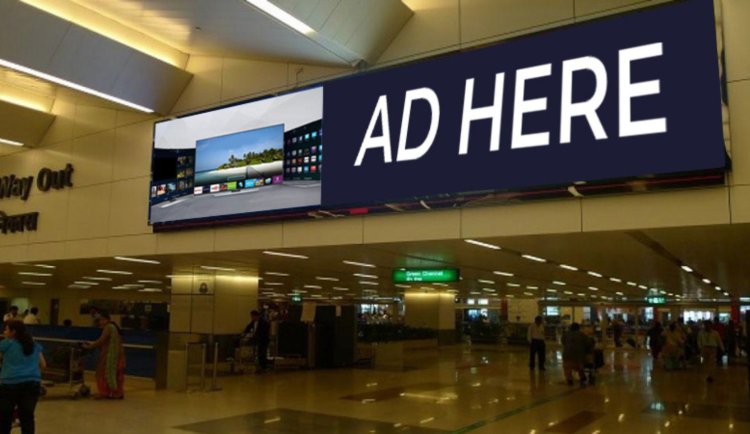
If 2024 was about recovery and 2025 was about expansion, then 2026 is the year airport advertising in India became “intelligent.” With over 160 operational airports and a middle class that has firmly traded rail berths for flight seats, the Indian airport terminal has become the ultimate battleground for brand premiumization.
For CMOs and business owners, the “entry fee” to this elite club has shifted. It is no longer just about buying a static billboard; it is about navigating a high-tech ecosystem where data and “dwell time” dictate the price.
The 2026 Passenger: Captive and High-Value
The allure of the Airport Advertising remains its demographic. In 2026, the average Indian flyer isn’t just a traveler; they are a high-income decision-maker with an average of 90 minutes of “forced leisure” post-security. This year, the integration of biometric “Seamless Travel” systems has actually increased retail dwell time, as passengers clear checkpoints faster and spend more time in the lounges and duty-free zones.

Where the Money Goes: 2026 Pricing Tiers
Pricing today is sharply divided by the “tier” of the airport and the “intent” of the zone.
1. The Metro Titans (Delhi, Mumbai, Bengaluru) In hubs like IGIA (Delhi) and CSMIA (Mumbai), premium real estate comes at a premium price. For a high-impact digital wall in the International Departures area, brands are currently seeing monthly rates between ₹8,00,000 and ₹15,00,000. These locations are the “Gold Standard” because they offer 24/7 visibility to global business elites and luxury shoppers.
2. The Greenfield Growth (Noida & Navi Mumbai) The newest players in the game, Noida International (Jewar) and Navi Mumbai, have introduced “Smart Pricing.” Because these airports were built with digital-first infrastructure, they offer more “Programmatic” options. Brands can now buy slots for as little as ₹2,00,000 per month by targeting specific flight windows—such as only showing ads when corporate shuttles from Bengaluru or Hyderabad land.
3. The Tier 2 Revolution Cities like Jaipur, Lucknow, and Kochi are no longer “secondary” options. With the surge in domestic tourism, these airports offer massive reach at a fraction of the cost. A dominant static panel in a Tier 2 arrival hall typically costs between ₹80,000 and ₹2,00,000 per month. For a national brand, “blanketing” five Tier 2 airports often yields a higher ROI than a single premium site in Mumbai.
The Rise of Programmatic DOOH (pDOOH)
The biggest change in 2026 is that airport advertising has started behaving like Facebook or Google ads. Through Programmatic Digital Out-of-Home (pDOOH), brands now bid on “impressions” rather than “duration.“
If you are a luxury watch brand, your ad can be programmed to trigger only when a flight from a high-net-worth hub (like London or Singapore) is at the gate. This “Contextual Triggering” ensures that not a single rupee of your budget is wasted on an audience that doesn’t fit your profile.

Beyond the Screen: Experiential & Utility
Utility-based advertising is the “stealth” winner of 2026.
-
Charging Stations & Lounges: Brands are moving away from passive boards to “branded experiences.” Sponsoring a high-speed Wi-Fi zone or a luxury charging lounge allows for deeper engagement, though these “Activation Zones” can cost upwards of ₹20,00,000 for a seasonal campaign.
-
The Humble Trolley: Still the workhorse of airport media. At roughly ₹2,000 to ₹4,000 per trolley per month, it remains the most cost-effective way to achieve high-frequency visibility throughout the entire passenger journey.
Strategic Advice: The “Arrivals” Advantage
While most brands fight for the Departures area branding, smart money in 2026 is moving to Arrivals. Why? Because at the baggage belt, the audience is stagnant and bored. They are waiting 15–20 minutes for their luggage with nothing to do but look at their surroundings. This “Baggage Belt Branding” has become one of the most high-retention formats in the country, often outperforming the flashy screens in the main concourse.
Conclusion
Airport advertising in India for 2026 is a game of precision. It is no longer enough to be “big”; you have to be “relevant.” While the costs in Tier 1 cities continue to climb, the ability to use data-driven triggers and experiential zones means that for the first time, airport media is as accountable as it is impactful.