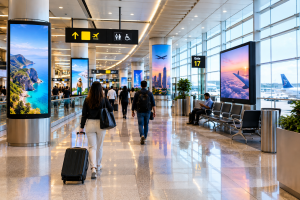
Airport Advertising Strategy Guide for Brands Targeting Premium Travelers
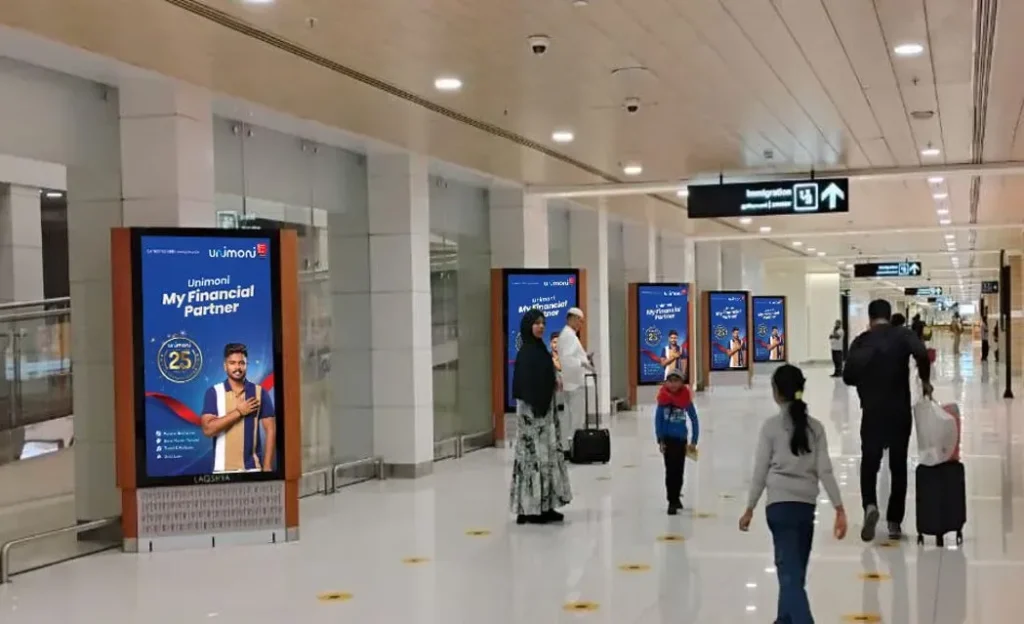
In 2026, the Indian airport has officially graduated from a transit hub to a “Luxury Marketplace.” With the rise of the ultra-high-net-worth individual (UHNWI) and a younger, tech-savvy “New Wealth” demographic, the way luxury brands communicate has to change. If you are targeting the top 5% of flyers, your strategy can’t just be about visibility; it has to be about prestige and intentionality.
Here is how premium brands are winning the airport game this year.
1. The Strategy of “Silent Luxury”
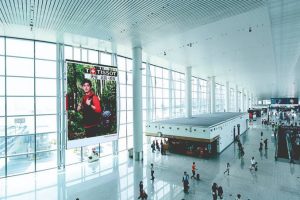
High-end travelers in 2026 are increasingly allergic to “loud” advertising. The trend is moving toward Minimalism. Instead of cluttered billboards advertising with five different USPs, luxury brands are using single, high-fidelity images with zero text other than the brand name.
At airports like Delhi T3 or Mumbai T2, “Quiet Luxury” stands out more than flashing lights. The goal is to make the traveler feel like they are part of an exclusive club, not like they are being sold a product.

2. Digital-First: 3D and Programmatic
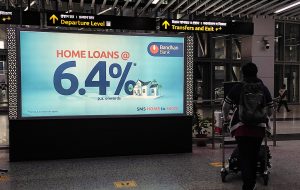
Static panels are for awareness; 3D Anamorphic screens are for awe. In 2026, luxury car and watch brands are dominating the corners of domestic and international terminals with “naked-eye 3D” creatives. These aren’t just ads; they are social media bait. A traveler who films your 3D ad and puts it on Instagram is giving you free, high-trust reach.
Additionally, Programmatic DOOH (pDOOH) allows luxury brands to be surgical. You can now bid for screen time specifically when flights from high-wealth hubs like London, Dubai, or Singapore land. Why show a ₹20 Lakh watch ad to everyone when you can show it specifically to the person who just got off a First-Class flight?
3. Owning the “Wait Time” (Lounge & Baggage)
The premium traveler spends a significant amount of time in two places: the VIP Lounge and the Baggage Claim.
-
In the Lounge: The strategy is Utility. Sponsor the high-speed charging pods, the Wi-Fi portal, or create a “branded sensory zone” with a signature scent and soft lighting. When you provide a service, the brand recall is 3x higher.
-
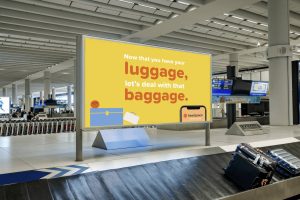
At Baggage Claim: This is the highest dwell-time area (15–20 minutes). Brands in Real Estate and Private Banking are using large “Impact Walls” here. Since the passenger is stagnant, they actually have the time to read a QR code or look at a detailed property rendering.

4. Sustainability as a Status Symbol
In 2026, “Green” is the new “Gold.” Indian premium travelers are becoming hyper-conscious of their carbon footprint. Brands that highlight sustainable craftsmanship or eco-friendly initiatives in their airport creative are seeing much higher engagement. If your luxury brand is eco-conscious, the airport where travelers are already thinking about their “flight footprint” is the best place to talk about it.
Conclusion
As we look at the aviation landscape of 2026, airport advertising for premium brands has moved from a “mass reach” tactic to a “precision strike” strategy. The modern affluent traveler in India doesn’t want to be shouted at; they want to be inspired.
By leveraging high-dwell-time zones like lounges, utilizing cutting-edge 3D tech, and focusing on purpose-driven messaging, luxury brands can turn the airport into their most effective sales gallery. In a world of digital noise, the physical, high-prestige environment of the terminal remains the last great frontier for building true brand authority. The runway is set it’s time for your brand to take flight.