Airport advertising takes a flight in post- Covid travel boom: Ad rates soar 10-15%

Airport advertising takes a flight in post-Covid travel boom as passenger traffic across Indian airports continues to surge rapidly. After nearly two years of restricted mobility, travel demand has rebounded strongly, creating premium opportunities for brands. As a result, advertisers are once again prioritising airports as high-impact media zones. Consequently, advertising rates at major airports have increased by 10–15%, reflecting rising demand and limited inventory availability.
Moreover, with domestic and international flyers returning in large numbers, airport environments are regaining their position as powerful brand-building platforms. This shift has encouraged marketers to realign budgets toward transit media, especially airport advertising.
Post-Covid Travel Boom Reshapes Airport Media Landscape
The aviation sector has witnessed a remarkable recovery since the pandemic slowdown. Passenger footfalls at metro airports such as Delhi, Mumbai, Bengaluru, and Hyderabad have either reached or surpassed pre-Covid levels. As travel confidence improves, airports have transformed into high-dwell-time consumer environments once again.
Furthermore, travellers now spend more time within terminals due to enhanced security checks, early arrivals, and expanded retail zones. This extended dwell time significantly boosts exposure for advertisers. Hence, airport advertising takes a flight in post-Covid travel boom, supported by measurable attention and premium audience quality.
Why Airport Advertising Rates Are Rising by 10–15%
Several market-driven factors are contributing to the increase in advertising tariffs:
1. Surge in Passenger Traffic
With business travel, leisure tourism, and international routes reopening fully, airports now attract affluent and decision-making audiences. Brands are willing to pay higher rates to engage this premium segment.
2. Limited Advertising Inventory
Airport advertising spaces are finite. As demand rises faster than supply, media owners are revising rates upward to balance availability.
3. High Recall and Brand Visibility
Studies consistently show that airport ads deliver stronger recall compared to outdoor formats. Therefore, advertisers view higher pricing as justified.
4. Growth of Digital Airport Media
DOOH screens, interactive panels, and programmatic displays command higher rates due to dynamic messaging and real-time targeting capabilities.
As a result, airport advertising takes a flight in post-Covid travel boom, driven by both audience value and technological upgrades.
Preferred Airport Advertising Formats in 2026
Advertisers are increasingly opting for high-impact formats that deliver both scale and prestige.
✈ Terminal Digital Screens
Large-format LED screens at security hold areas and departure lounges remain the most sought-after options.
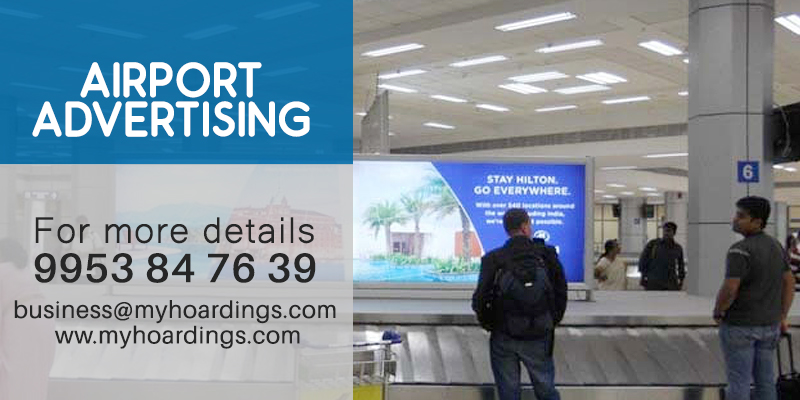
✈ Baggage Conveyor Belt Advertising
These placements ensure unavoidable exposure, especially during arrival dwell time.
✈ Aerobridge Branding
Brands benefit from exclusivity as passengers board or disembark aircraft.
✈ Check-in and Boarding Gate Panels
These formats offer repeated impressions within short durations.
✈ Experiential Installations
Product displays, tech demos, and interactive zones enhance engagement significantly.
Because of these advantages, airport advertising takes a flight in post-Covid travel boom across multiple categories.
Industries Actively Investing in Airport Advertising
The post-pandemic period has seen strong participation from diverse sectors:
-
Smartphones and consumer electronics
-
BFSI and fintech brands
-
Luxury products and premium automobiles
-
Travel, hospitality, and tourism boards
-
Real estate and global education brands
Notably, brands launching new products increasingly prefer airports for national-level visibility within limited timelines.
Airport Advertising as a Strategic Brand-Building Medium
Unlike conventional outdoor media, airport advertising does not rely solely on reach. Instead, it delivers quality exposure. Travellers are generally relaxed, attentive, and receptive to messaging. Therefore, airports function as controlled environments where brands can influence perception effectively.
Additionally, airport ads associate brands with aspiration, mobility, and global lifestyle. This emotional linkage enhances long-term brand equity. Hence, airport advertising takes a flight in post-Covid travel boom not merely due to traffic recovery, but because of its strategic positioning in the consumer journey.
Future Outlook for Airport Advertising in India
Looking ahead, the outlook remains highly optimistic. With new airport terminals under development and regional connectivity expanding under UDAN, advertising inventory will grow steadily. However, premium locations will continue commanding higher prices.
Furthermore, integration of AI-driven DOOH, QR-based engagement, and programmatic buying will redefine airport advertising execution. As innovation accelerates, brands that invest early will gain stronger competitive advantage.
Therefore, airport advertising takes a flight in post-Covid travel boom and is expected to remain one of the fastest-growing segments within transit media.
Conclusion
In conclusion, airport advertising has emerged stronger in the post-pandemic era. Rising passenger volumes, premium audience profiles, and advanced digital infrastructure have collectively pushed advertising rates up by 10–15%. Despite higher costs, brands continue to invest due to unmatched visibility, recall, and prestige.
As travel continues its upward trajectory, airport advertising is no longer optional—it has become a strategic necessity for brands seeking nationwide impact and premium positioning.