How do digital airport advertisements differ from static airport advertisements in terms of effectiveness?
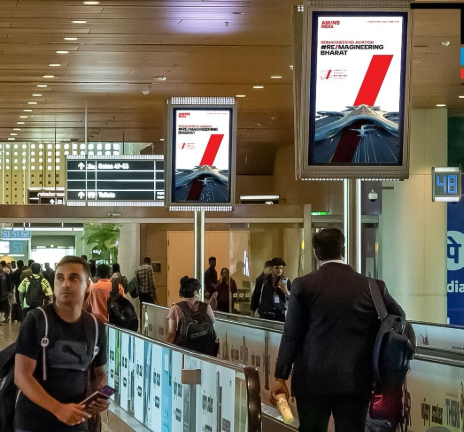
How do digital airport advertisements differ from static airport advertisements in terms of effectiveness and brand recall?
Airport advertising is widely regarded as one of the most impactful out-of-home (OOH) media channels. However, brands today face a crucial decision: how do digital airport advertisements differ from static airport advertisements in terms of effectiveness? While both formats offer premium visibility, their impact, flexibility, and performance vary significantly.
Understanding these differences helps advertisers select the right format based on campaign objectives, budget, and target audience. Therefore, a strategic comparison is essential before planning an airport advertising campaign.
Visibility and Attention-Grabbing Power
One of the most noticeable differences between digital airport advertisements and static airport advertisements is visibility. Digital screens use motion, animation, and dynamic visuals. As a result, they naturally attract more attention in busy terminal environments.
Static advertisements, on the other hand, rely on strong creative design and placement. While they remain visible throughout the day, they do not benefit from movement. Consequently, digital ads often achieve higher immediate attention, especially in high-footfall zones such as security queues and boarding gates.
Creative Flexibility and Messaging Control
Digital airport advertisements offer unmatched creative flexibility. Brands can change messaging by time of day, flight schedule, or audience profile. For instance, breakfast promotions can run in the morning, while premium branding plays during peak business travel hours.
In contrast, static airport advertisements remain fixed for the entire campaign duration. Therefore, once installed, creative updates involve additional printing and logistics. As a result, digital formats allow faster optimization, while static formats demand longer-term planning.
Audience Engagement and Recall
Effectiveness is closely linked to how well audiences engage with the message. Digital airport advertisements often use sequential storytelling, animations, and high-resolution visuals. Hence, they deliver stronger engagement and recall.

Static airport advertisements perform well in long-dwell areas like baggage claim or immigration halls, where repeated exposure reinforces memory. However, without movement, they rely heavily on creative strength. Therefore, digital formats generally deliver higher short-term recall, while static formats support consistent brand presence.
Dwell Time Utilization
Airports are high-dwell environments. Passengers spend extended periods waiting at check-in, security, lounges, and gates. Digital airport advertisements maximize this dwell time by rotating multiple creatives or storytelling loops.
Static airport advertisements, however, benefit from uninterrupted exposure. A single strong visual remains in sight throughout the dwell period. Consequently, static ads work best for simple, bold brand messages, while digital ads excel at layered communication.
Measurement and Performance Tracking
Another major difference in effectiveness lies in measurement. Digital airport advertisements allow data-driven evaluation. Advertisers can track play counts, impression estimates, and time-based performance. Additionally, integration with QR codes or short links enables engagement tracking.
Static airport advertisements rely on estimated impressions and brand lift studies. While effective for awareness, they offer limited real-time performance data. Therefore, digital formats provide clearer ROI visibility compared to static placements.
Cost Structure and Budget Efficiency
From a cost perspective, static airport advertisements often have lower production expenses. Once printed and installed, costs remain stable. Hence, they are ideal for long-term branding campaigns with controlled budgets.
Digital airport advertisements may involve higher media costs due to screen technology and premium placement. However, they eliminate printing expenses and allow multiple creatives within the same slot. As a result, digital formats can be more cost-efficient for short-term, high-impact campaigns.
Content Restrictions and Compliance
Both digital and static airport advertisements follow strict content guidelines. However, digital ads undergo additional scrutiny due to brightness, motion limits, and distraction concerns.

Static ads face fewer technical restrictions. Therefore, approval cycles for static airport advertisements are often shorter. Digital formats, while more impactful, may require longer lead times for technical clearance.
Best-Use Scenarios for Each Format
Digital airport advertisements are most effective when:
-
Launching new products
-
Running time-sensitive campaigns
-
Targeting premium or business travelers
-
Measuring engagement and interaction
Static airport advertisements work best when:
-
Building long-term brand presence
-
Reinforcing brand credibility
-
Targeting mass traveler audiences
-
Supporting sustained awareness campaigns
Thus, effectiveness depends heavily on campaign goals rather than format superiority alone.
Conclusion
In summary, how do digital airport advertisements differ from static airport advertisements in terms of effectiveness depends on visibility, flexibility, engagement, measurement, and cost efficiency. Digital formats deliver dynamic storytelling, higher engagement, and measurable performance. Meanwhile, static formats offer consistent visibility, lower production complexity, and strong long-term branding impact.
Therefore, the most effective airport advertising strategies often combine both digital and static formats. When used together, they create a powerful, layered presence that maximizes reach, recall, and return on investment.