Integrating Conveyor Belt & Security Tray Ads for a Complete Passenger Touchpoint Strategy
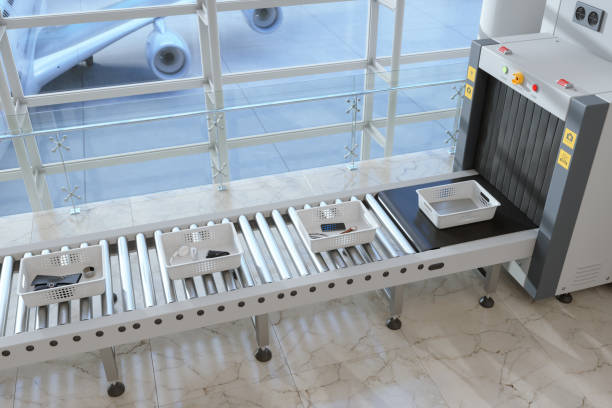
High Angle View Of Trays With Personal Belongings On Conveyor Belt At Airport Security Checkpoint
Airport advertising succeeds when brands engage travelers across multiple moments of their journey. Among high-impact internal terminal formats, conveyor belt & security tray ads have emerged as powerful tools for uninterrupted visibility. These formats appear precisely where passengers slow down, queue, and observe their surroundings. As a result, they deliver sustained attention that few other media options can match.
When integrated strategically, conveyor belt branding and security tray advertising create a seamless passenger touchpoint strategy. Instead of relying on isolated impressions, brands establish continuity across the screening experience.
Understanding Conveyor Belt Advertising in Airports
Conveyor belt advertising refers to branded visuals placed along security screening belts. As trays move through scanners, passengers naturally follow their belongings visually.
Therefore, brands benefit from repeated eye movement tracking across the belt surface. Unlike wall ads that compete for attention, conveyor belts command focus organically.
Key advantages include:
-
High dwell time during security queues
-
Continuous visual motion reinforcing brand recall
-
Close-range viewing distance
-
Repetitive exposure for every passenger
Because security screening is unavoidable, conveyor belt ads guarantee visibility.
Understanding Security Tray Advertising
Security tray ads appear directly beneath passenger belongings. Each tray functions as a personal advertising unit used by every traveler.
Moreover, passengers physically interact with trays, which increases cognitive engagement. This tactile proximity significantly enhances brand memorability.
Key benefits include:
-
One-to-one passenger interaction
-
Zero ad avoidance
-
Strong frequency of exposure
-
Excellent recall rates
Therefore, security tray ads offer one of the most intimate advertising experiences within an airport.
Why Integrating Conveyor Belt & Security Tray Ads Works
Individually, both formats perform well. However, when integrated, their impact multiplies.
As passengers place items in trays, they first notice tray branding. Then, as trays move through scanners, conveyor belt visuals reinforce the same message. This sequential exposure strengthens memory encoding.
Consequently, brands achieve:
-
Message repetition without fatigue
-
Visual continuity across screening zones
-
Higher unaided brand recall
-
Stronger perception of brand presence
This integration transforms routine security procedures into structured brand engagement moments.
Strategic Advantages of a Unified Passenger Touchpoint Approach
Extended Dwell Time Utilisation
Security queues often range between 5 and 20 minutes. During this time, passengers have limited distractions. Therefore, integrated conveyor belt & security tray ads fully utilise waiting periods.
High Attention Environment
Since passengers must monitor their belongings, attention naturally remains focused on trays and belts. As a result, advertising becomes part of the activity rather than background noise.
Brand Safety and Premium Context
Airports maintain controlled environments. Thus, ads remain visible, well-maintained, and brand-safe. This enhances trust and premium perception.
Creative Best Practices for Integrated Campaigns
Maintain Consistent Visual Identity
Both tray and belt creatives should follow a unified design language. Consistent colours, typography, and messaging ensure continuity.
Use Simple and Bold Messaging
Because viewing time occurs in short intervals, brands must communicate quickly. Short headlines and strong logos perform best.
Align Messaging with Travel Mindset
Security screening often creates mild anxiety. Therefore, reassuring, positive, or utility-driven messages resonate better than aggressive promotions.
Industries That Benefit Most from This Strategy
Integrated conveyor belt & security tray ads work particularly well for:
-
Airlines and travel platforms
-
Banking and fintech brands
-
Insurance services
-
FMCG and beverages
-
Mobile apps and digital services
These categories benefit from repeated exposure and immediate recognition.
Measuring Campaign Effectiveness
Advertisers typically assess performance through:
-
Passenger footfall data
-
Tray circulation frequency
-
Dwell time estimation
-
Brand recall studies
-
Cross-media campaign uplift
When combined with other terminal media, integrated screening-zone advertising significantly improves overall campaign effectiveness.
Future of Security Zone Advertising
As airports modernise, security areas are becoming more structured and digitised. Smart trays, RFID tracking, and data-enabled DOOH integration may soon enhance targeting and measurement.
Therefore, brands investing early in this format gain long-term strategic advantage.
Conclusion
Integrating conveyor belt & security tray ads enables brands to engage passengers at one of the most focused stages of the airport journey. By combining physical interaction with sequential visual reinforcement, advertisers transform waiting time into meaningful brand exposure.
Rather than isolated impressions, this strategy builds continuity, recall, and premium association—making it an essential component of modern airport advertising planning.