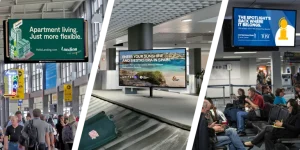
Integration of Airport Advertising With Broader Travel and Tech Trends

Integration With Broader Travel and Tech Trends in Airport Advertising
Airport advertising is undergoing a fundamental transformation. As aviation ecosystems modernise, integration with broader travel and tech trends is expanding advertising touchpoints far beyond traditional static formats. Today, airports are evolving into connected environments where media blends seamlessly with passenger services, digital platforms, and real-time data.
This shift is redefining how brands engage travellers — turning airports into interactive communication ecosystems rather than isolated advertising locations.
Integration With Broader Travel and Tech Trends Explained
The modern traveller interacts with technology at every stage of the journey. From mobile boarding passes to biometric screening and real-time flight alerts, technology now shapes airport experiences.
As a result, advertising is integrating naturally into these digital touchpoints. Instead of interrupting passengers, brands now appear within environments travellers already trust and engage with.
This alignment between media and technology marks a new era for airport advertising.
From Static Displays to Connected Media Ecosystems
Traditional airport advertising relied heavily on posters, banners, and fixed signages. While effective for visibility, these formats offered limited interaction.
Today, innovation has introduced:
-
Interactive kiosks
-
Mobile-linked activations
-
Experiential installations
-
Social media extensions
Together, these elements form a connected media ecosystem that supports storytelling across multiple channels.
Consequently, brands can now guide travellers through a narrative rather than delivering a single visual message.
Airport Technology Expands Advertising Touchpoints
Airport technology upgrades are creating new engagement moments throughout the passenger journey.
Key innovations include:
-
Smart wayfinding systems
-
Biometric check-ins
-
App-based passenger communication
-
Real-time service notifications
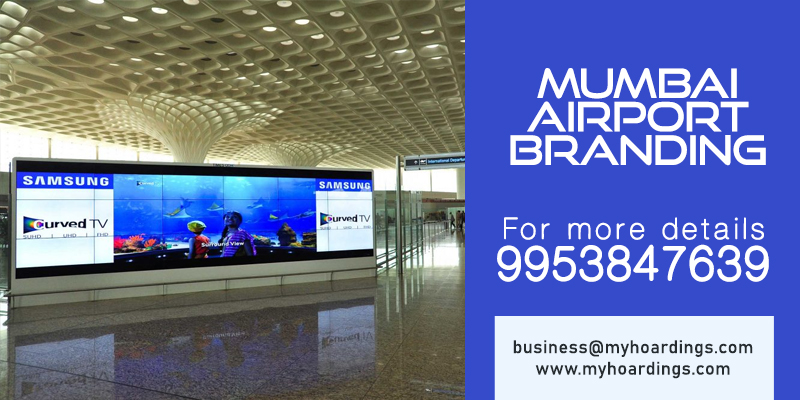
Each of these touchpoints provides contextual opportunities for brand messaging.
For example, digital screens integrated with wayfinding can deliver location-relevant content, while airport apps can support brand partnerships that feel helpful rather than promotional.
Experiential Media Enhances Passenger Engagement
Experiential advertising has become a major growth area within airport environments.
Rather than passively viewing ads, passengers now interact with installations through motion graphics, immersive visuals, and spatial storytelling.
Experiential media benefits from high dwell time zones such as:
-
Arrival halls
-
Security queues
-
Departure lounges
-
Retail corridors
Because travellers are already waiting, engagement becomes natural rather than forced.
This approach transforms advertising into part of the airport experience itself.
Social Media Extends Airport Campaigns Beyond Terminals
Airport campaigns no longer end inside terminals. Social media now acts as a powerful extension of physical activations.
Passengers frequently capture and share visually striking installations. This organic sharing multiplies campaign reach without additional media cost.
Moreover, airports increasingly collaborate with brands to amplify activations through official social channels, influencer partnerships, and real-time content.
As a result, airport advertising now travels beyond physical boundaries into digital conversations.
Data-Driven Media Enables Smarter Campaign Planning
Data plays a central role in modern airport advertising strategies.
Media operators now leverage insights such as:
-
Passenger flow patterns
-
Dwell time behaviour
-
Time-of-day movement
-
Travel purpose segmentation
These insights help brands schedule messaging more effectively and align creatives with traveller mindsets.
For instance, business travellers respond differently than leisure tourists. Data-driven planning allows brands to address each segment with relevant messaging.
Technology Supports Personalisation Without Intrusion
One of the biggest advancements lies in subtle personalisation.
Rather than targeting individuals directly, airport media adapts content based on context — such as terminal location, time, or travel phase.
This approach maintains privacy while improving relevance.
Consequently, advertising feels informative and timely rather than disruptive.
Why Brands Are Embracing Integrated Airport Media
Brands increasingly favour airport environments because they offer:
-
Premium, brand-safe surroundings
-
Long attention spans
-
Multiple tech-enabled touchpoints
-
Opportunities for storytelling
-
Strong recall and perception
When advertising aligns with travel technology, engagement becomes meaningful rather than momentary.
This integration elevates airport media from awareness to experience.
The Future of Airport Advertising Ecosystems
As travel and technology continue to converge, airport advertising will become even more integrated.
Future developments may include:
-
AI-driven content optimisation
-
Real-time creative triggers
-
Seamless physical-digital storytelling
Airports will increasingly function as intelligent communication platforms rather than static media locations.
A New Chapter for Airport Media Innovation
Integration with broader travel and tech trends is reshaping the very definition of airport advertising.
By combining DOOH, experiential formats, social amplification, and data-driven planning, airports are creating immersive environments where brands connect with travellers naturally.
Ultimately, the future of airport advertising lies not in isolated formats — but in integrated ecosystems that mirror how people travel, interact, and engage today.