How Red-Eye Flight Passengers Interact Differently with Airport Ads
While most airport advertising strategies focus on the high-energy “Golden Hour” of daytime travel, a massive, affluent segment of the market is often overlooked: The Red-Eye Traveler. Passengers flying between 11:00 PM and 5:00 AM aren’t just tired; they are in a unique psychological state. Their interaction with Out-of-Home (OOH) media shifts from “discovery” to “utility and comfort.” To win their attention, brands have to change the script.
1. The Low-Stimulus Receptivity
By 2:00 AM, the chaotic roar of a busy airport has faded into a hum. For the red-eye passenger, the brain is naturally trying to “shut down,” making high-contrast, bright, and flashing digital screens feel intrusive.
However, this creates a vacuum. In a quiet terminal, a well-placed, warm-toned digital ad or a static high-quality lightbox becomes a focal point. Because there is less “visual noise” from crowds and other shops, the ads that are visible gain a much higher percentage of the passenger’s focused attention. They don’t just glance; they stare because there is nothing else to distract them.
2. A Shift Toward “Wellness and Recovery”
The mindset of a nighttime traveler is focused on the “aftermath” of the flight. They are thinking about the meeting they have in four hours, the sleep they are missing, or the dry air on the plane.
Ads that perform best during these hours focus on problem-solving:
-
Skincare: Hydration masks and “refresh” kits.
-
Finance: Seamless, “no-stress” banking for the weary business traveler.
-
Comfort: Luxury loungewear or high-end noise-canceling headphones.
When an ad mirrors the passenger’s current physical state (exhaustion) and offers a solution (comfort), the brand recall is significantly higher.
3. The “Captive” Solitary Experience
Red-eye flights often involve longer wait times with fewer open amenities. Most retail shops close their doors, leaving passengers to wander the concourses. This turns the airport hallway into a private gallery.
During the day, airport ads are a social experience you see them while talking to friends or navigating crowds. At night, it is a 1-on-1 interaction between the passenger and the brand. This solitude allows for longer copy and more storytelling. A traveler might spend three minutes reading a detailed brand history on a pillar wrap simply because they have the time and the silence to do so.
4. Lighting as a Psychological Anchor
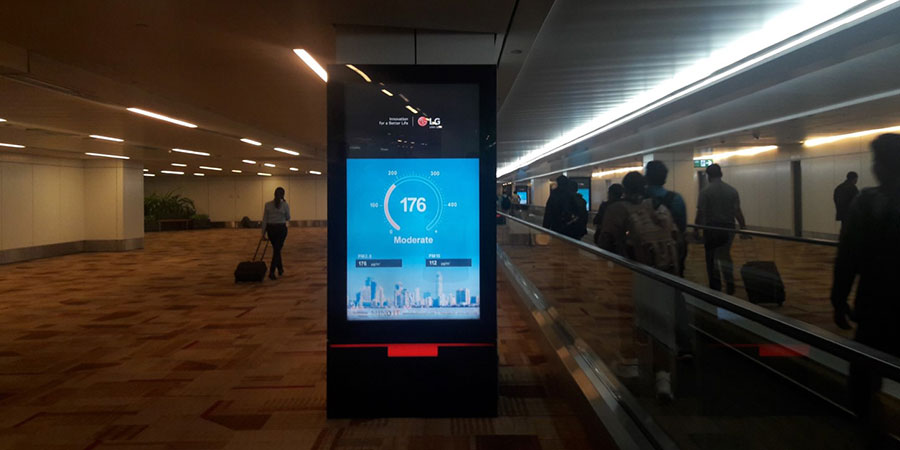
In a darkened or dimmed terminal, Digital Out-of-Home (DOOH) acts as a light source. Humans are naturally drawn to light in dark environments (the “moth effect”).
Smart brands use this to their advantage by utilizing “Dark Mode” aesthetics ads with dark backgrounds and soft glowing text. This is easier on the eyes of a tired passenger and feels more premium and “night-appropriate.” It creates an atmosphere of luxury and exclusivity that resonates with the high-net-worth business travelers who frequent these late-night routes.
Conclusion
Marketing to red-eye passengers requires empathy. It’s not about shouting the loudest; it’s about being the most helpful or the most soothing presence in the terminal. When a brand respects the traveler’s state of mind, the traveler rewards that brand with deep, lasting recall.