Airport Advertising vs Digital Ads: Which Creates Better Brand Trust?
Brand trust has become one of the most valuable assets for businesses in today’s competitive marketplace. Consumers are exposed to thousands of advertisements daily across websites, social media platforms, mobile applications, and physical environments. As advertising clutter continues to grow, brands face increasing challenges in capturing attention and establishing credibility.
Two major advertising channels dominate modern marketing strategies: airport advertising and digital advertising. While both offer unique advantages, the question remains: which medium creates better brand trust? Understanding consumer behavior, media environments, and audience perception reveals why airport advertising often enjoys a significant advantage.
The Challenge Facing Digital Advertising
Digital advertising has transformed the marketing landscape by providing precise targeting, measurable results, and large-scale reach. Brands can deliver personalized messages to specific audiences based on demographics, interests, and online behavior.
However, digital advertising also faces several trust-related challenges. Consumers are frequently interrupted by pop-ups, autoplay videos, sponsored posts, and banner ads. Ad fatigue has become increasingly common, causing many users to ignore or actively avoid online advertisements. The rise of ad blockers further demonstrates growing consumer resistance toward digital promotions.
Additionally, concerns about data privacy, misinformation, fake websites, and fraudulent advertisements have reduced trust in some digital advertising environments. As a result, brands often struggle to create lasting credibility through online channels alone.
Why Airport Advertising Builds Stronger Trust
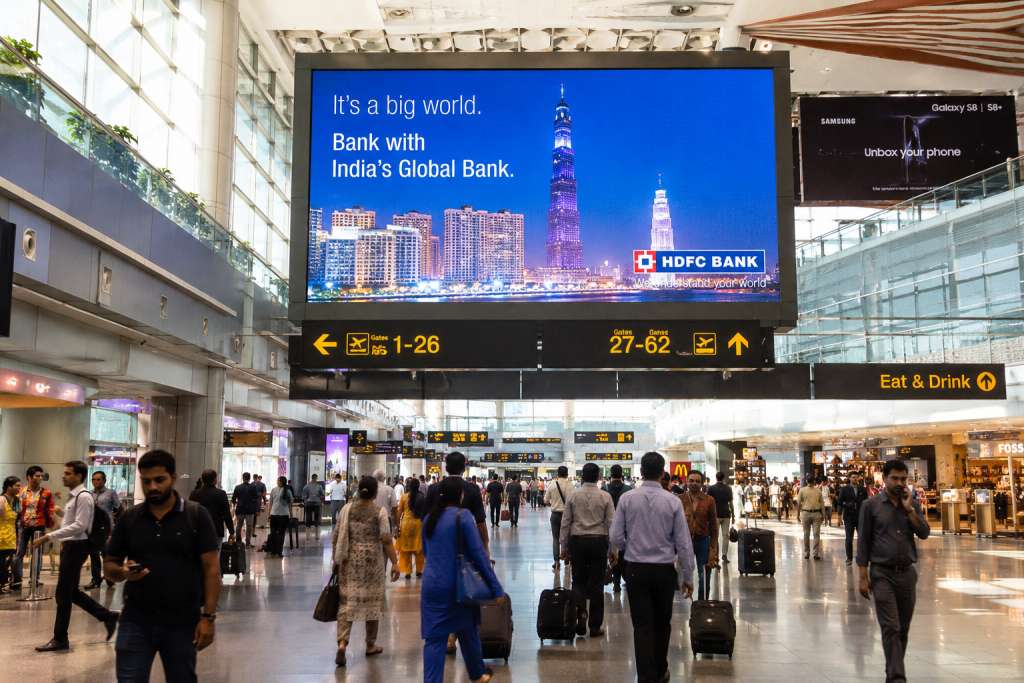
Airport advertising benefits from a premium environment that naturally enhances brand perception. Airports are associated with professionalism, global connectivity, business travel, and high-quality experiences. When consumers see a brand displayed across airport terminals, lounges, baggage claim areas, or digital screens, they often perceive that brand as established and trustworthy.
Unlike digital advertisements that can be skipped within seconds, airport advertising enjoys extended visibility. Travelers spend considerable time navigating terminals, waiting for flights, and relaxing in lounges. This prolonged exposure allows consumers to engage with advertising messages more naturally and comfortably.
Large-format displays, digital networks, and innovative OOH installations also create a stronger visual impact. The physical presence of airport media often conveys legitimacy and permanence, reinforcing consumer confidence in the advertised brand.
The Role of Audience Quality
One of the key strengths of airport advertising is audience quality. Airports attract business executives, corporate decision-makers, international travelers, affluent consumers, and professionals who possess significant purchasing power.
These audiences are often in a planning and decision-making mindset. Whether booking services, exploring products, or considering future purchases, travelers are more receptive to well-placed advertising messages. This increases the effectiveness of brand communication and strengthens trust.
Comparing Visibility and Engagement
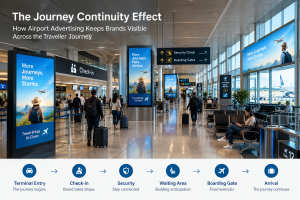
Digital ads compete with endless online content, notifications, and distractions. Airport advertising, on the other hand, benefits from a controlled environment where advertisements command greater attention. Strategic placements throughout the passenger journey ensure repeated exposure and higher recall.
This combination of visibility, credibility, and engagement creates a more trustworthy advertising experience compared to many digital channels.