Airport Advertising vs. Highway Hoardings — Which Brings Better ROI?

Compare airport advertising vs. highway hoardings in India. Discover which outdoor format delivers better reach, ROI, and engagement.
In India’s fast-evolving out-of-home (OOH) landscape, two formats consistently dominate marketing discussions — airport advertising and highway hoardings. Both are powerful, both deliver reach, and both shape how brands are perceived in public spaces.
Yet, they serve very different advertising purposes. While airport media targets premium, high-intent audiences in controlled environments, highway hoardings deliver large-scale exposure to mass audiences on the move.
The real question is: which of these two formats brings better ROI for your brand? Let’s decode their strengths, differences, and performance metrics to help you make a smarter advertising investment.
The Rise of Airport Advertising in India
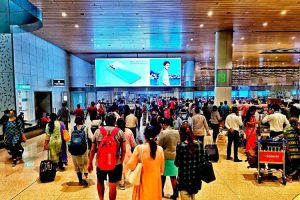
Over the past decade, India’s aviation industry has seen tremendous growth. With air traffic projected to exceed 450 million passengers annually by 2026, airports have transformed into high-engagement retail and advertising ecosystems.
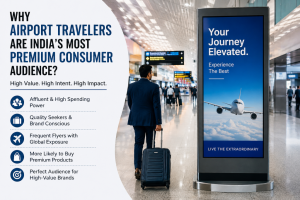
Brands now view airports not just as transit points but as premium experiential zones — where business travelers, tourists, and high-income professionals spend ample dwell time.
Why Airport Advertising Works:
-
Captive Audience: Travelers typically spend 45–90 minutes at airports, allowing multiple ad exposures.
-
Premium Positioning: Association with world-class infrastructure enhances brand credibility.
-
Diverse Audience Mix: Airports attract a mix of decision-makers, executives, and aspirational consumers.
-
Digital-First Environment: DOOH screens, motion LED displays, and interactive installations make advertising engaging and measurable.
From digital billboards at Delhi’s T3 to static panels at Bengaluru and Mumbai, airport advertising in India is fast becoming a symbol of brand sophistication.
Understanding Highway Hoardings
On the other hand, highway hoardings are the bedrock of outdoor advertising in India. Stretching across national and state highways, these large-format displays provide massive visibility for brands seeking reach rather than precision.
Highways connect metro cities to Tier-II and Tier-III regions — which means highway ads target urban commuters, long-distance travelers, and transport professionals.
Why Highway Hoardings Work:
-
High Traffic Exposure: Thousands of vehicles pass daily, ensuring massive visibility.
-
Continuous 24/7 Display: Unlike digital ads, hoardings are visible round the clock, creating consistent exposure.
-
Cost-Effective Reach: Lower CPM (cost per thousand impressions) compared to premium formats like airports.
-
Strong Regional Penetration: Ideal for FMCG, automobile, and retail brands targeting both urban and rural audiences.
Despite being traditional, highway hoardings remain one of the most cost-effective tools for large-scale brand awareness campaigns in India.
Audience Comparison: Premium vs. Mass Reach
The biggest differentiator between airport and highway advertising lies in audience quality versus quantity.
| Parameter | Airport Advertising | Highway Hoardings |
|---|---|---|
| Audience Type | Premium, business travelers, tourists | Mass audience, intercity commuters, drivers |
| Dwell Time | High (45–90 minutes) | Low (5–10 seconds) |
| Engagement Level | High — digital, interactive | Low — static, visual recall |
| Targeting Precision | Very specific (location-based, audience type) | Broad and wide reach |
| Ad Cost | High | Moderate to Low |
| Brand Perception | Premium, aspirational | Mass-market, broad awareness |
If your goal is to influence purchasing decisions or build luxury positioning, airport media offers higher ROI. But if your goal is to build top-of-mind awareness at scale, highway hoardings remain unbeatable.
Creative Possibilities and Technology Integration
Airport Advertising:
Modern airports are hubs of Digital Out-of-Home (DOOH) innovation. Advertisers can run dynamic content, motion graphics, and AI-driven campaigns that change based on time or flight schedules.
For example:
-
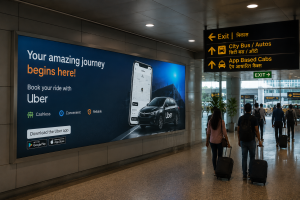
A travel app can show different messages for arriving vs. departing passengers.
-
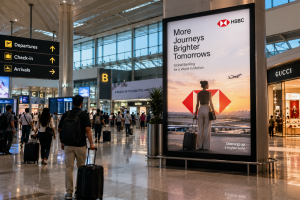
A luxury brand can use motion screens near duty-free zones for visual storytelling.
-
A fintech company can target business travelers with digital video panels near lounges.
Highway Hoardings:
While traditionally static, highway formats are evolving too. LED hoardings, solar-powered billboards, and 3D installations are making outdoor displays more eye-catching.
However, since drivers and commuters view them for just a few seconds, creatives need bold design, minimal text, and powerful visuals to ensure recall.
Cost and ROI Comparison
Let’s break down cost and ROI in practical terms.
| Factor | Airport Advertising | Highway Hoardings |
|---|---|---|
| Cost per site (monthly) | ₹3 lakh – ₹15 lakh | ₹50,000 – ₹2 lakh |
| Average Impressions (monthly) | 2–3 million (high intent) | 10–30 million (broad reach) |
| Engagement Potential | High | Moderate |
| Ideal Duration | 1–3 months | 3–6 months |
| ROI Focus | Brand credibility & influence | Awareness & frequency |
Airport media is expensive but highly efficient per impression, as audiences are more receptive and affluent. Highway hoardings deliver massive impressions at a lower cost, ideal for campaigns focused on reach rather than targeting.
Brand Case Scenarios
-
Luxury & Lifestyle Brands: Airport advertising is perfect for luxury products, airlines, fintech apps, or fashion labels that want aspirational appeal.
-
FMCG & Automobile Brands: Highway hoardings are ideal for broad awareness and regional penetration, especially during product launches or promotions.
-
Real Estate & Education: Both formats work well — airports for NRI investors and professionals, highways for local and commuter-based audiences.
-
Tech & Travel Brands: Airports win here — with digital storytelling that aligns perfectly with connected travelers.
The Role of DOOH and Measurement
The integration of DOOH technology has brought data and measurability to airport advertising. Brands can now track impressions, dwell time, and engagement metrics, making ROI calculation far more accurate.
Highway hoardings, while less measurable, still rely on traffic density analytics and location-based estimates. However, emerging tech like AI-enabled cameras and mobile geofencing are making even outdoor measurement more reliable.
Challenges to Consider
| Airport Advertising Challenges | Highway Hoardings Challenges |
|---|---|
| High rental and creative production costs | Limited dwell time for message retention |
| Requires pre-approvals from airport authorities | Weather exposure and maintenance issues |
| Restricted ad duration slots | Regulatory restrictions and visibility zones |
Smart advertisers mitigate these challenges by mixing formats — using airports for brand storytelling and highways for widespread visibility.
Which Brings Better ROI?
The answer depends on your campaign objective:
-
If you want premium visibility, decision-maker targeting, and high engagement, choose airport advertising.
-
If you want mass awareness, frequency, and regional expansion, highway hoardings deliver better value.
However, the best ROI often comes from combining both formats — airports for credibility and highways for continuity.
For example, a car brand can launch a new model through immersive airport displays while reinforcing awareness with highway hoardings along major expressways.
Conclusion
In India’s dynamic advertising landscape, both airport media and highway hoardings play vital roles. Airport advertising offers precision, digital interactivity, and prestige, while highway hoardings guarantee scale, frequency, and visibility.
Ultimately, the right ROI depends on aligning your format choice with your brand’s goals. A premium financial brand may thrive in airports; an FMCG brand may dominate highways. But when used together, they form a powerful OOH ecosystem that drives both recall and results.
Partner with MyHoardings — India’s leading OOH media network — to design an integrated campaign that connects your brand with millions, across airports, highways, and transit zones nationwide.