7 Digital Billboard Trends to Boost Engagement in 2026
If you’ve walked through a city lately, you’ve probably noticed that billboards aren’t just “big TVs on sticks” anymore. We’re reaching a point where the physical world is starting to act a lot like our digital feeds interactive, personalized, and sometimes, a little bit weird.
In 2026, the goal isn’t just to be “seen.” It’s to be the thing people actually talk about at dinner. Here are the seven trends that are moving the needle right now.
1. The “Viral Bait” (Anamorphic 3D)
You’ve seen the videos on Instagram: a giant dragon looks like it’s flying out of a building in London, or a massive wave seems to crash over a street in Seoul. This isn’t just a gimmick anymore; it’s a strategy. These 3D billboards use “forced perspective” to trick the human eye.
-
The Real Win: People don’t just look at these ads; they pull out their phones, film them, and share them. When your billboard becomes a viral TikTok, your ROI isn’t just local it’s global.

2. Ads That Actually Check the Weather
We’ve finally moved past the era of “static” scheduling. In 2026, billboards are hooked up to live data feeds. If a sudden thunderstorm hits, a digital screen can switch from showing an ad for an iced latte to a steaming cup of hot chocolate in under five seconds. It feels less like an advertisement and more like a helpful suggestion.
3. The End of the “Fixed Contract” (Programmatic Buying)
For decades, if you wanted a billboard, you had to book it for 30 days and cross your fingers. Now, we have Programmatic DOOH. It allows brands to buy “slots” exactly when they need them. A gym might only bid for screen time between 6:00 AM and 9:00 AM when people are in a “fitness” mindset. It makes high-end advertising accessible to smaller businesses that don’t have “big-bank” budgets.
4. Interactive “Easter Eggs”
Nobody likes being shouted at by a screen. The best campaigns right now are the ones that let us play. We’re seeing more billboards that interact with our phones not just boring QR codes, but AR (Augmented Reality) triggers. Imagine pointing your camera at a billboard and seeing a 3D “try-on” of a new jacket or a hidden discount code that only appears on your screen. It turns a commute into a scavenger hunt.
5. Billboards with a Conscience
In 2026, being “green” isn’t just a PR move; it’s a requirement. We are seeing a massive rise in Eco-Billboards. Some use smog-eating coatings (Titanium Dioxide) that actually clean the air around the structure, while others are 100% solar-powered. When a brand shows they care about the city’s air quality, it builds a level of trust that a flashy slogan never could.

6. The “Micro-Moment” Screen
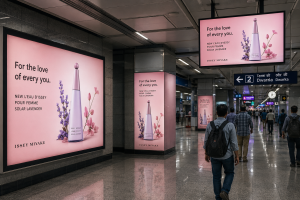
While the giant highway boards get all the glory, the real engagement is happening in the “small spaces”elevators, gym lobbies, and residential kiosks. In these “micro-environments,” people are actually looking for a distraction because th ey’re bored. The recall rate for an ad seen in an elevator is often 3x higher than one seen while driving at 100 km/h.
7. Talking Back (Gesture and Voice)
It sounds like sci-fi, but it’s here. Some premium digital displays now respond to movement or even simple voice commands. I recently saw a campaign where you could “wave” at the screen to change the color of the car on display. It’s tactile, it’s fun, and it makes the brand feel “human” and approachable.
Conclusion
In 2026, the best digital billboard isn’t the brightest one it’s the smartest one. It’s the one that knows it’s raining, knows you’re bored, and gives you something worth filming. If you aren’t making the audience feel something, you’re just adding to the noise.