How Government Media Tenders Are Issued and Awarded in India?
How Government Media Tenders Are Issued and Awarded in India? A Step-by-Step Process Explained
Government media tenders in India are a structured and regulated mechanism through which public sector bodies appoint agencies for advertising, publicity, and communication activities. These tenders ensure transparency, fair competition, and optimal utilisation of public funds. For media agencies, broadcasters, and outdoor advertising companies, understanding how government media tenders are issued and awarded in India is essential for securing long-term, high-volume business opportunities.
Unlike private-sector deals, government media tenders follow strict procurement norms. Therefore, eligibility, documentation, and compliance play a decisive role alongside pricing.

What Are Government Media Tenders in India?
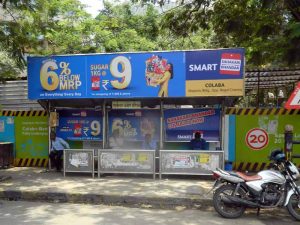
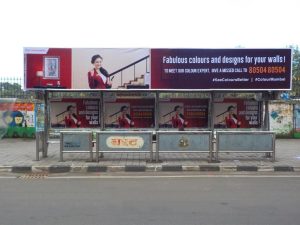
Government media tenders are formal invitations issued by central ministries, state departments, public sector undertakings (PSUs), and urban local bodies. These tenders invite qualified media agencies to plan, buy, and execute advertising across print, television, radio, digital, OOH, and transit media.
Most government advertising in India is coordinated through the Directorate of Advertising and Visual Publicity, commonly known as DAVP. At the state level, similar directorates or information departments handle media empanelment and tenders.
Step-by-Step Process: How Government Media Tenders Are Issued
1. Tender Notification and Publication
The process begins when a government body publishes a media tender on official portals such as the Central Public Procurement Portal (GeM or CPPP), department websites, and leading newspapers. The tender document clearly outlines the scope of work, media categories, campaign duration, and budget framework.
Importantly, these notifications also specify whether the tender is for empanelment, a single campaign, or long-term media rights.
2. Eligibility and Qualification Criteria
Government media tenders in India include strict eligibility norms. These usually cover minimum annual turnover, years of industry experience, audited financial statements, and prior government or PSU work exposure.
For example, OOH or transit media tenders may require proof of existing infrastructure, while digital media tenders often demand performance metrics and platform certifications. As a result, only compliant and financially stable agencies move forward.
3. Pre-Bid Meeting and Clarifications
To ensure clarity, authorities often conduct a pre-bid meeting. During this stage, bidders can raise queries regarding scope, pricing formats, timelines, and evaluation criteria. Subsequently, official corrigenda or amendments are issued, which become part of the tender conditions.
This step reduces ambiguity and ensures equal understanding among all bidders.
How Government Media Tenders Are Evaluated
4. Technical Bid Submission
The technical bid focuses on capability rather than cost. Agencies submit documents detailing their team strength, media planning expertise, execution methodology, and compliance declarations.
Evaluation committees assess whether bidders meet mandatory technical benchmarks. Only technically qualified bidders advance to the financial stage.
5. Financial Bid and Pricing Structure
In the financial bid stage, agencies quote rates, commissions, discounts, or service fees based on the tender format. Some government media tenders follow L1 (lowest bidder) selection, while others use Quality-and-Cost-Based Selection (QCBS).
Consequently, aggressive under-quoting without execution capacity often leads to disqualification or poor performance scoring.
6. Award of Tender and Letter of Acceptance
Once bids are evaluated, the authority issues a Letter of Acceptance (LoA) to the selected bidder. This is followed by contract signing, performance security submission, and onboarding.
At this stage, the agency becomes officially authorised to release government advertisements across approved media platforms.

Role of Central and State Bodies
Central government advertising is largely managed through DAVP, while state governments operate via departments of information and public relations. For infrastructure-related campaigns, bodies like the National Highways Authority of India or metro rail corporations issue independent media tenders.
Each authority follows standard procurement rules but may customise media mixes based on regional needs.
Why Government Media Tenders Matter for Agencies
Government media tenders offer volume, continuity, and credibility. While margins may be regulated, payment security and campaign scale make them attractive. Additionally, successful execution enhances an agency’s credentials for future public-sector projects.
However, compliance discipline, documentation accuracy, and ethical bidding are crucial for long-term success.
Challenges in Government Media Tenders
Despite their benefits, government media tenders involve challenges such as delayed payments, strict audit scrutiny, and limited flexibility. Therefore, agencies must maintain strong financial planning and operational controls.
Nevertheless, those who master the process gain a stable and scalable revenue stream.
Conclusion
To conclude, understanding how government media tenders are issued and awarded in India is vital for any media agency aiming to work with the public sector. From transparent tender publication to structured technical and financial evaluation, the process is designed to ensure accountability and value for public money.
For compliant and capable agencies, government media tenders remain one of the most reliable pillars of the Indian advertising ecosystem.