How to Choose the Right Outdoor Advertising Format for Your Brand
In an era where digital fatigue has reached a breaking point, the physical world has become the most “premium” ad space available. By 2026, the average consumer is exposed to thousands of digital ads per day, most of which are swiped away or ignored by ad-blockers. But you can’t “ad-block” a 40-foot billboard or a wrapped subway train.
Outdoor advertising (OOH) has reclaimed its throne as the “unblockable” medium. However, with the rise of Digital Out-of-Home (DOOH), 3D anamorphic displays, and programmatic buying, the paradox of choice is real. Choosing the wrong format doesn’t just waste money it can actually hurt your brand’s perceived value. Here is how to navigate the landscape and pick the right “stage” for your message.
1. Define the “Mindstate” of Your Audience
The biggest mistake brands make is choosing a format based on price rather than the consumer’s mental state at the moment of contact.
The “Rushed” Mindstate (Highways and Commuter Arteries)
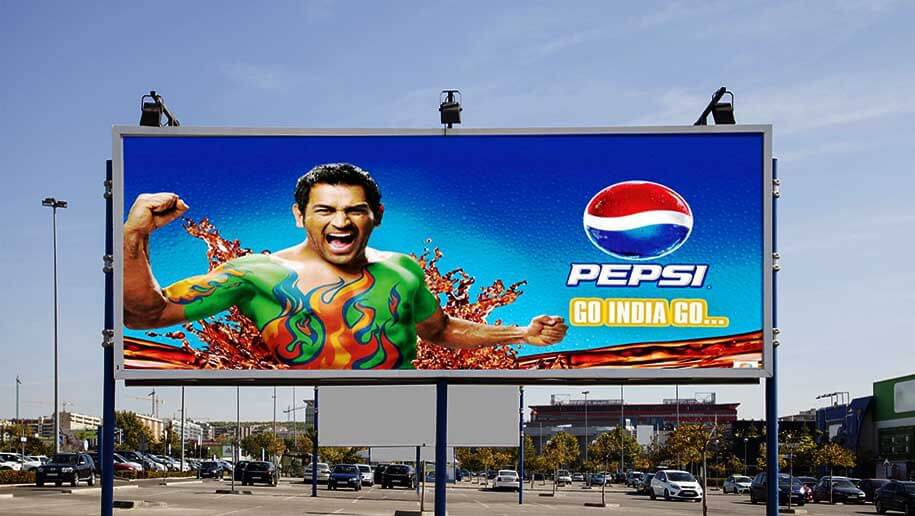
When someone is driving at 70 mph, they are in a high-alert, low-retention state. Large-format static billboards are the kings here.
-
The Strategy: Use these for “Fame.” This is about brand authority.
-
The Rule: If your message takes more than 3 seconds to read, you’ve failed. One image, one logo, and a maximum of seven words. This is not the place for a QR code or a complex offer.

The “Waiting” Mindstate (Transit Shelters and Rail Platforms)
This is the gold mine of OOH. When people are waiting for a bus or a train, they are actively looking for a distraction. Their “dwell time” is high often between 3 to 10 minutes.
-
The Strategy: This is where you get conversational. You can include more text, detailed product benefits, and high-contrast QR codes that lead to a landing page or an app download.
-
The 2026 Edge: Use “Near-Field Communication” (NFC) tags in the posters so commuters can simply tap their phone to the glass to get a discount code.
2. The Great Debate: Static vs. Digital (DOOH)
In 2026, the lines have blurred, but the choice remains critical.
Static Billboards offer 100% “share of voice.” Your brand is there 24/7. It becomes a landmark. If you are a local lawyer, a furniture store, or a long-term brand player, static provides a sense of permanent reliability that digital sometimes lacks.
Digital (DOOH), on the other hand, offers agility. Through programmatic platforms, you can now buy “triggers.”
-
Weather Triggers: An umbrella brand only shows up when the local API detects rain.
-
Time-of-Day Triggers: A coffee brand dominates the screens from 6:00 AM to 10:00 AM, then switches to a cocktail lounge ad at 5:00 PM.
-
Audience Triggers: Using anonymous mobile data, screens in 2026 can detect if the crowd currently passing by skews toward “tech enthusiasts” or “luxury shoppers” and swap the creative in real-time.
3. High-Impact “Spectaculars” and Viral Potential
If your goal is to trend on social media, you aren’t looking for a billboard; you’re looking for a “Spectacular.” These are the massive, often curved screens found in Times Square, Piccadilly Circus, or Tokyo’s Shibuya Crossing.
In 2026, 3D Anamorphic illusions are the standard for high-tier product launches. These ads use forced perspective to make objects appear as though they are floating in mid-air or breaking out of the building.
-
The ROI Factor: You don’t buy a Spectacular for the 50,000 people who walk past it. You buy it for the 5 million people who will see the video of it on TikTok and Instagram. It is a “content engine” disguised as an advertisement.

4. Street Furniture and “Human-Scale” Advertising
For lifestyle, fashion, and DTC (Direct-to-Consumer) brands, bigger isn’t always better. Street furniture kiosks, urban panels, and benches places your brand at eye level.
This format is about intimacy. It bridges the gap between the brand and the sidewalk. In 2026, many of these kiosks are equipped with “Interactive AR” (Augmented Reality). A passerby can point their phone at your street-level ad and see a virtual model wearing your clothes or a 3D version of your new gadget sitting on the sidewalk.
5. The Metrics: How Do You Know It’s Working?
One reason people think OOH Advertising is “old school” is because they think it’s untraceable. In 2026, that is a myth. When choosing a format, ask your provider about Attribution Modeling:
-
Mobile Footfall: We can now track (anonymously) if a person who was within the “viewing cone” of your billboard eventually walked into your physical store within 30 days.
-
Brand Lift Studies: Using surveys and digital tracking, brands can measure the “mental availability” increase in a specific zip code where OOH was deployed versus a control city where it wasn’t.
-
QR Conversion: Even though they were mocked for years, the “Post-Pandemic QR” is a standard. It provides a direct, trackable link from the physical world to your digital checkout.
6. The “Context” Checklist
Before you sign the contract, run your choice through this final filter:
-
Clutter: Is the format in a sea of other ads? If so, you need a “Visual Disruptor” high-contrast colors or 3D extensions that break the frame.
-
Production Costs: Digital has zero printing costs but higher “rent.” Static has high installation and printing costs but lower monthly fees.
-
Longevity: Is your message “evergreen” (Static) or “time-sensitive” (Digital)?
Conclusion
Choosing the right outdoor advertising format in 2026 is an exercise in empathy. You have to put yourself in the shoes of the person walking, driving, or waiting.
If you want to be a household name, buy the highway static. If you want to drive app installs, buy the transit shelters. If you want to go viral, invest in a 3D spectacular.
The physical world is the last place where you have a captive audience. Don’t waste the opportunity by picking the wrong stage.