Role of Media Rights in Metro Rail, Airport, and Smart City Advertising Contracts
Role of Media Rights in Metro Rail, Airport, and Smart City Advertising Contracts Explained for Brands & Media Operators
The role of media rights in metro rail, airport, and smart city advertising contracts has become increasingly strategic in India’s rapidly expanding infrastructure landscape. As cities modernise and public transport usage rises, advertising within these high-footfall environments is no longer sold on a short-term basis. Instead, authorities now award structured media rights contracts that define who controls, operates, and monetises advertising assets for extended periods.

For brands, these contracts unlock premium visibility. For media operators, they create long-term revenue ecosystems. Therefore, understanding how media rights function across metro rail, airports, and smart cities is essential for advertisers, agencies, and infrastructure planners alike.
Why Media Rights Matter in Infrastructure Advertising
Media rights determine ownership and commercial control of advertising inventory. In large public infrastructure projects, fragmented media selling often leads to clutter and inconsistent execution. Consequently, authorities prefer appointing a single rights holder through a competitive tender.
This approach ensures uniform branding guidelines, better asset maintenance, and predictable revenue for the authority. At the same time, the media rights holder gains exclusivity, scale, and the ability to invest in advanced advertising formats.

Media Rights in Metro Rail Advertising Contracts
Metro rail networks are among the most valuable transit advertising environments in India. Daily ridership, predictable commuter patterns, and high dwell time make metro systems ideal for brand storytelling.
Organisations such as the Delhi Metro Rail Corporation award long-term media rights contracts covering station branding, train wraps, digital screens, entry–exit gates, and platform displays. These contracts typically span 8 to 15 years.
Because of this long tenure, media rights holders invest heavily in digital OOH screens, LED panels, and immersive formats. As a result, brands benefit from consistent exposure across an entire city network, rather than isolated placements.
Role of Media Rights in Airport Advertising
Airport advertising contracts represent one of the most premium segments of out-of-home media. Airports combine affluent audiences, long dwell times, and high recall environments. Therefore, media rights here are highly competitive and tightly regulated.
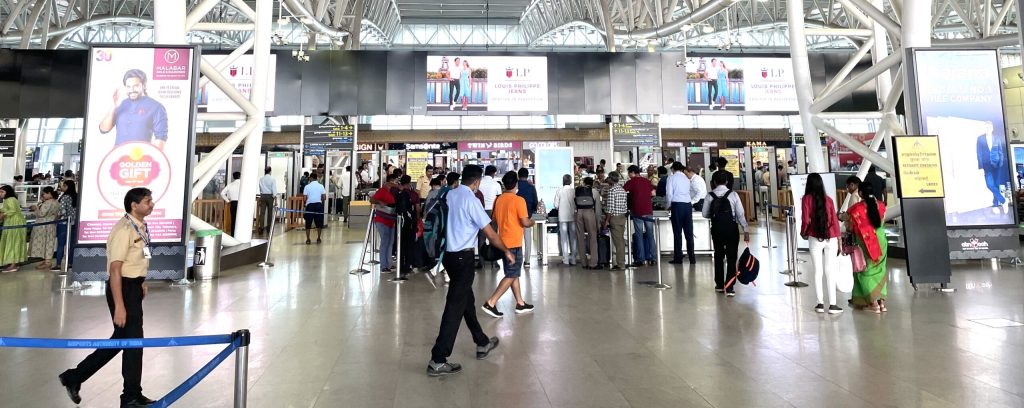
In India, bodies such as the Airports Authority of India and private airport operators award exclusive advertising rights through detailed tenders. These rights include terminal displays, baggage trolleys, conveyor belts, boarding passes, aerobridges, and digital video walls.
Because airport media rights often involve revenue-sharing models, operators focus on premium brand categories, luxury advertisers, and global campaigns. Consequently, airports become brand-building platforms rather than just media spaces.
Smart City Advertising and Emerging Media Rights Models
Smart city projects introduce a new dimension to media rights in India. Under the Smart Cities Mission, cities deploy digital infrastructure such as smart poles, command centres, public Wi-Fi kiosks, and LED screens.
Advertising rights in smart cities are often bundled with technology deployment and maintenance responsibilities. Therefore, media rights holders are not just sellers of ad space but also technology partners.
This model enables contextual, data-driven advertising. For instance, digital screens can display time-based, weather-triggered, or location-specific messages. As a result, smart city media rights are increasingly aligned with programmatic and performance-based advertising.
Commercial Impact of Long-Term Media Rights Contracts
The biggest advantage of media rights contracts lies in their long-term nature. Unlike short-term media buying, these agreements allow operators to plan infrastructure investments and scale advertiser relationships over time.
For authorities, media rights ensure steady, predictable income without operational burden. For brands, they deliver consistent exposure across daily commuter journeys and urban touchpoints.
However, the long-term commitment also demands realistic revenue projections and strong operational execution. Poor planning can strain finances, while smart monetisation can create category leadership.
Challenges in Infrastructure Media Rights
Despite their potential, metro rail, airport, and smart city media rights come with challenges. High reserve prices, strict compliance norms, and performance-linked penalties increase risk. Additionally, footfall fluctuations and regulatory changes can impact inventory utilisation.
Therefore, successful media rights operators focus on diversified advertiser portfolios, digital innovation, and data-backed pricing strategies.
Conclusion
In conclusion, the role of media rights in metro rail, airport, and smart city advertising contracts is central to how modern urban advertising ecosystems function in India. These rights transform public infrastructure into structured, scalable, and premium media platforms.
As India continues to invest in transport and smart urban development, media rights will remain the backbone of sustainable advertising monetisation. For brands and agencies that understand this model, infrastructure advertising offers unmatched visibility, credibility, and long-term impact.