Transit Advertising: Guide to Metro & Train Branding
Let’s be honest: most advertising is annoying. We pay for premium subscriptions just to avoid it, and we’ve developed a “skip ad” reflex that triggers in milliseconds. But then there’s the metro.
When you’re standing on a crowded platform or sitting in a quiet train car, you aren’t looking for a “skip” button. You’re looking for a distraction. This is the secret sauce of transit advertising. It doesn’t interrupt your life; it fills a void. In 2026, as our digital worlds become more cluttered, the physical presence of a train wrap or a station takeover feels more “real” than anything on a screen.
The Captive Audience: It’s Not Just Data, It’s Boredom
In the marketing world, we love the term “dwell time,” but let’s call it what it is: The Commuter Gap. Whether you’re in Delhi, London, or New York, the metro experience is the same. You have 20 minutes where you’re not quite “at work” and not quite “at home.” Your brain is in a state of transit. Because mobile signals can be spotty underground, passengers do something radical they look up.
A well-placed ad in a train coach isn’t just a message; it’s a companion. I’ve seen people read the fine print on a healthcare ad or study the ingredients on a food poster simply because it was the most interesting thing in their field of vision. You can’t buy that kind of focused attention on Instagram.

The Big Canvas: Types of Transit Branding
If you’re planning a campaign, you have to choose your weapon. Each format does something different to the human brain.
1. The “Showstopper” (Full Train Wraps)
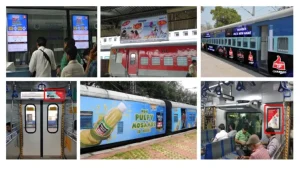
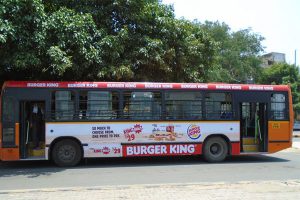
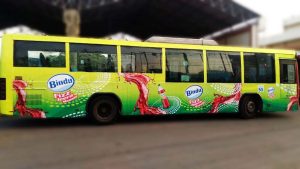
Think of a full train wrap as a 300-foot-long billboard that moves through the heart of the city. When a wrapped train pulls into a station, people stop walking. They take photos. They point. It turns a piece of public utility into a brand event.
-
The Human Edge: It creates “Grandeur.” If a brand can afford to wrap an entire train, the subconscious mind assumes that brand is a leader. It’s a massive trust signal.
2. The “Intimate Chat” (Interior Panels)
Inside the car, the vibe changes. Now, you’re in a confined space with the passenger. This is where you get personal.
-
Strategic Tip: Don’t just put your logo. Tell a story. Use the 15 minutes they’re sitting there to explain why your product matters. I’ve seen fintech apps use this space to explain complex features—and it works because the reader actually has time to process the info.
3. The “Daily Routine” (Station Domination)
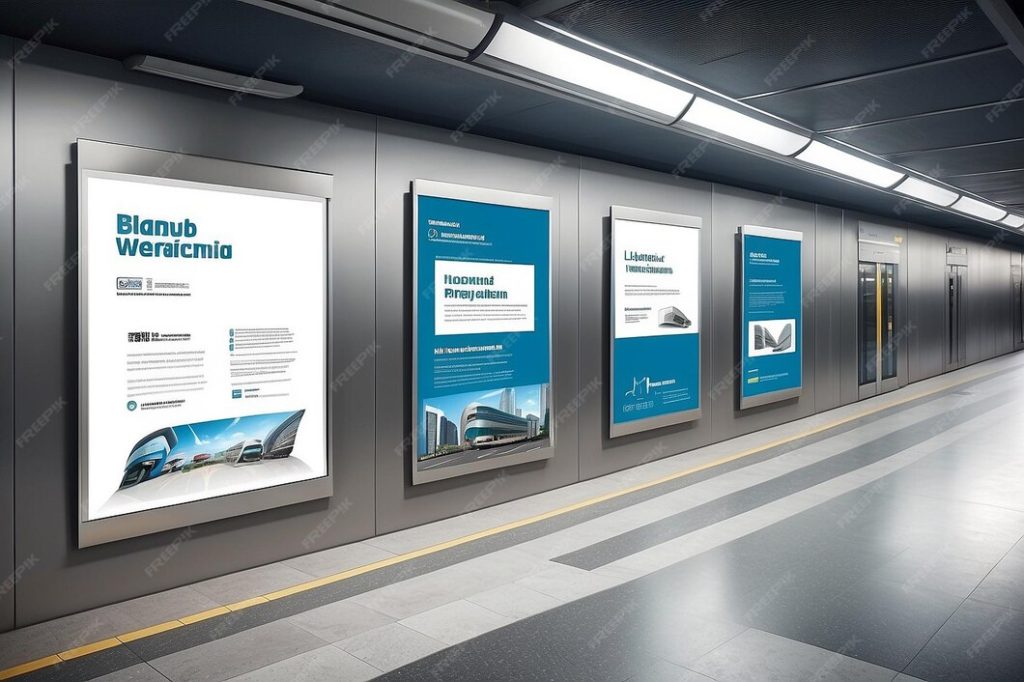
This is when a brand takes over every pillar, staircase, and floor decal in a single station. For the daily commuter, this is powerful. If they see your brand every morning at 8:30 AM, you become a part of their morning ritual. By Thursday, they don’t just recognize your brand; they feel like they know you.
Making it “Un-Skippable”: Creative Strategies for 2026
In 2026, “good enough” isn’t good enough. If your ad looks like a boring corporate memo, people will find a way to ignore it. Here is how to make it human:
-
Talk Like a Local: If you’re advertising at a station near a university, use the slang and the problems students face. If you’re at a business hub, talk about the Sunday Scaries or the need for a better caffeine fix.
-
The “Easter Egg” Effect: Hide small details in your ads. Reward the person who looks closely. Maybe it’s a funny line of text in the corner or a hidden QR code that leads to a secret playlist. This creates a “win” for the commuter.
-
Context is King: I recently saw an ad for a mattress brand inside a late-night commuter train. The headline? “You should be sleeping right now.” It was simple, funny, and perfectly timed. That’s how you win.
The Tech Bridge: QR Codes and Beyond
We used to think of transit ads as “offline,” but that’s a dated way of thinking. Every person on that train has a smartphone in their pocket.
The most successful campaigns right now use interactive bridges. A QR code shouldn’t just go to your homepage (that’s boring). It should go to a “Metro-Only” landing page. Give them a discount code like TRAIN25 or a free trial that expires by the time they reach their stop. It turns a passive observation into an active conversion.
Connection
At the end of the day, transit advertising is about being where people are. It’s one of the last places where we share a collective experience as a city. We’re all sitting in the same car, looking at the same walls, headed to different lives.
If you can make a commuter smile, think, or even just feel a little less bored for five minutes, you’ve done more than just “advertise.” You’ve made a connection. And in 2026, that’s the only thing that actually moves the needle.
So, is your brand ready to hop on? Don’t just buy a slot; tell a story that’s worth the ride.