Best Smart City Advertising Opportunities Across Major Indian Metros
Smart city advertising in India lets brands pair scale with precision. By combining DOOH intelligence, transit frequency, street-level precision, premium airports, and retail media, marketers can reach the right people at the right time—and prove impact. Plan locally, design for motion, measure everything, and optimize fast. That’s how you win the streets in 2026.
India’s Smart Cities Mission has accelerated the build-out of connected infrastructure across urban India. Consequently, smart city advertising now blends DOOH screens, sensor-driven placements, transit networks, and data-led targeting to reach people where they live, work, and move. This guide maps the best smart city advertising opportunities in major metros and shows how brands can plan high-impact, measurable campaigns.
Why Smart City Advertising Works Now
Smart urban infrastructure turns everyday city assets into programmable media. Therefore, brands gain:
-
Precision: Plan by corridor, time, weather, or event.
-
Speed: Swap creatives instantly across citywide DOOH.
-
Measurement: Track exposure with footfall, traffic, or QR activity.
-
Context: Align messages with commute peaks, festivals, and local moments.
As a result, advertisers can pair scale with relevance—something classic OOH alone could not do.
Mumbai: Finance Capital, High-Density DOOH Corridors
Best opportunities
-
Transit DOOH on metro lines, Monorail touchpoints, and high-dwell suburban hubs.
-
Premium mall media (Kurla, Ghatkopar, Malad) with large LED walls and atrium takeovers.
-
Smart poles & street furniture along LBS Marg, Western/Eastern Express Highways.
-
Airport media for decision-maker targeting and brand stature.
Planning tips
-
Use dayparting: office hours for BFSI/fintech; evenings for food, OTT, and retail.
-
Pair airport dominance with expressway billboards for continuity.
-
Add QR + app offers near malls and metro concourses to drive conversions.
Delhi-NCR: Government, Enterprise, and Commuter Scale
Best opportunities
-
Metro station networks with concourse LEDs, escalator panels, and full-train wraps.
-
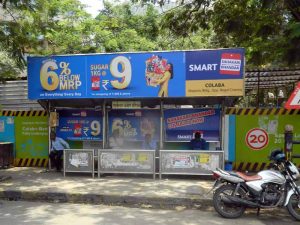
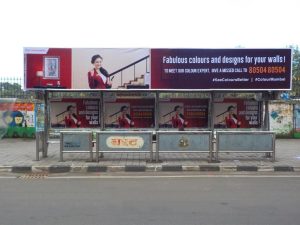
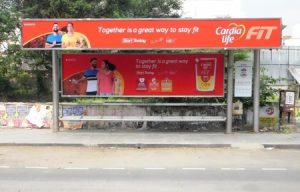
Smart bus shelters along Ring Road, Outer Ring Road, and Gurgaon express corridors.
-
Civic DOOH clusters in Connaught Place, ITO, and district centers.
-
Airport + Aerocity for premium B2B audiences.
Planning tips
-
Localize by micro-market (CP, Noida Sec-18, Cyber City, South Ex).
-
Run contextual creatives during policy events, fairs, and winter carnival weeks.
-
Use weather triggers (heat/cold alerts) to switch creative themes on DOOH.
Bengaluru: Tech Workforce and High EV-Mobility Penetration
Best opportunities
-
Tech corridor DOOH on ORR, Whitefield, Electronic City, and Manyata approaches.
-
EV fleet branding (e-cabs, e-buses) with GPS-verified routes.
-
Start-up district LEDs near coworking hubs, cafés, and micro-markets.
-
Airport road spectaculars for product launches.
Planning tips
-
Promote workday utilities (SaaS, fintech, D2C wellness) 8–11 am & 5–9 pm.
-
Layer in-office sampling or pop-ups near parks on paydays and release Fridays.
-
Tie hackathons/meet-ups with DOOH countdowns and QR sign-ups.
Hyderabad: IT, Pharma, and Premium Transit
Best opportunities
-
Hitec City–Gachibowli arterial DOOH; skywalk LEDs with long sightlines.
-
Airport + ORR for affluent, long-haul commuters.
-
Metro station branding at Raidurg, Ameerpet, and Parade Grounds.
-
Malls & multiplexes for launch weeks and festive sales.
Planning tips
-
Align product education creatives with tech park lunch hours.
-
Use bilingual messaging (English + Telugu) for reach and warmth.
-
Schedule festival clusters (Bathukamma/Diwali/Christmas) with offer rollovers.
Chennai: Coastal Commutes and Automotive Cluster
Best opportunities
-
OMR & ECR DOOH for IT and premium leisure audiences.
-
Metro & MTC transit for mass-reach dayparting.
-
Phoenix MarketCity / Express Avenue indoor LEDs for retail pushes.
-
Airport arrivals for auto/industrial B2B awareness.
Planning tips
-
Keep copy concise for fast coastal arterials.
-
Use Tamil + English variants for higher resonance.
-
Activate weekend leisure routes on ECR with F&B and OTT promos.
Pune: Student + IT Mix, Smart Corridors
Best opportunities
-
Aundh–Baner–Hinjawadi IT belt DOOH; university-area screens for youth brands.
-
BRT & city bus media to blanket daily commutes.
-
Koregaon Park & MG Road street furniture for nightlife categories.
-
Airport + Pune-Mumbai Expressway for launch recall.
Planning tips
-
Test A/B creatives by neighborhood (student vs. IT vs. family).
-
Drive app installs via QR on BRT shelters; track scans by stop.
-
Sync weekend festivals with mall LEDs for footfall spikes.
Ahmedabad: Entrepreneurial Audiences and BRT Strength
Best opportunities
-
BRTS corridor media with high frequency and predictable dwell.
-
CG Road, SG Highway DOOH clusters; corporate zones near Prahladnagar.
-
Malls (Alpha One, Himalaya) for family retail and cinema tie-ins.
-
Airport approaches for investor/SME reach.
Planning tips
-
Use Gujarati + English dual-language assets.
-
Highlight value + trust in BFSI, jewelry, education, and healthcare.
-
Add festival calendars (Navratri, Uttarayan) to plan burst schedules.

Kolkata: Culture-Led, High Dwell and Metro Expansion
Best opportunities
-
South City / Quest mall LEDs and atriums for premium lifestyle pushes.
-
Metro station DOOH and tram/bus networks for citywide coverage.
-
Park Street & EM Bypass arterial displays for high visibility.
-
Airport + New Town smart clusters for IT–residential mix.
Planning tips
-
Lean into festival storytelling (Durga Puja ramp-ups).
-
Keep visual craft strong; cultural cues matter.
-
Run evening dayparts for leisure, food, and OTT brands.
Pillars of a Smart City Media Plan
1) DOOH with Real-Time Triggers
Use APIs for time, traffic, weather, scores, or countdowns. Then rotate creatives automatically to match context. This boosts attention and memory.
2) Transit Media as the Reach Engine
Blend metro trains, stations, buses, autos, and cabs. Because routes repeat, frequency climbs quickly. Add QR or NFC to turn exposure into actions.
3) Street Furniture & Smart Poles
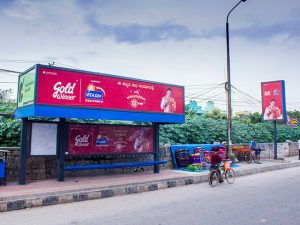
Backlit panels, IoT-enabled poles, and kiosks add neighborhood precision. Moreover, they’re perfect for local language variants and hyperlocal offers.
4) Airports for Decision-Makers
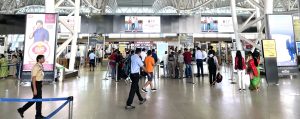
Airports deliver premium audiences, long dwell, and DOOH dominance. Use them for launches, category leadership, and B2B trust.
5) Malls and Retail Media
Indoor LEDs, atriums, and experiential pods convert footfall into trials. Therefore, pair with coupon QR codes or in-app rewards to measure sales lift.

Creative & Copy Best Practices for Smart City DOOH
-
Keep it under 7–10 words; use large typography.
-
Design for motion: subtle animation beats static frames.
-
Localize: language + landmarks boost relevance and CTR scans.
-
Use dayparts: morning utility, afternoon value, evening leisure.
-
Add one clear CTA: Scan, Tap, Try, Watch, Book—never two.
Measurement & ROI: Make It Quantifiable
-
Exposure: DOOH play logs, traffic/footfall counters, impression models.
-
Engagement: QR/NFC scans, short URLs, WhatsApp deep links.
-
Attribution: geofenced lift in store visits or app installs near screens.
-
Sales: promo-code redemptions, POS matchback in mall or catchment stores.
-
Optimization: rotate creative based on scan-through rates and time blocks.
Because you can measure each layer, you can reallocate budget weekly to the best corridors, dayparts, or formats.
Compliance & Sustainability
-
Permits first: ensure sites meet city norms for size, brightness, and placement.
-
Brightness limits: set safe nits for night operations.
-
Green ops: prefer LED, recycled vinyls, solar-powered units, and low-waste creative swaps.
These choices protect brand reputation and reduce long-term costs.
Sample 4-Week Smart City Flight (Metro-Scale)
-
Week 1: Airport + arterial DOOH splash for launch visibility.
-
Week 2: Add metro/station DOOH + buses for frequency; push QR trials.
-
Week 3: Layer malls for weekend engagements; run in-atrium demos.
-
Week 4: Optimize to high-scan corridors; retarget app installers with offer refresh.
This cadence builds awareness, adds frequency, drives trials, and then tunes for ROI.
Conclusion
Smart city advertising in India lets brands pair scale with precision. By combining DOOH intelligence, transit frequency, street-level precision, premium airports, and retail media, marketers can reach the right people at the right time—and prove impact. Plan locally, design for motion, measure everything, and optimize fast. That’s how you win the streets in 2026.