RWA Advertising vs Digital Ads: Which Delivers Better ROI?
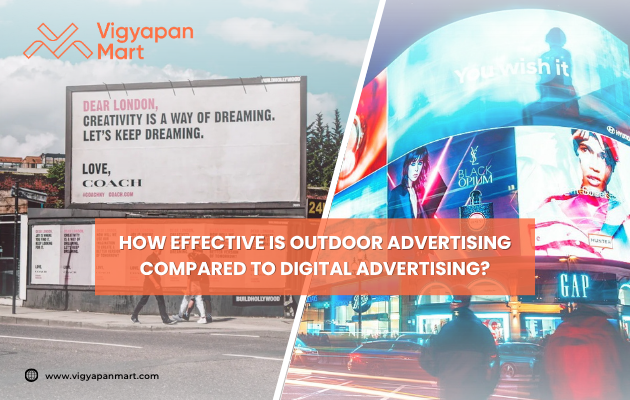
In the current marketing climate, the debate between “Digital” and “Physical” has reached a tipping point. For over a decade, digital ads were the undisputed king of ROI due to their trackability and scale. However, as we move through 2026, the landscape has changed. Digital costs are at an all-time high, and “ad fatigue” has made consumers more elusive than ever.
For brands targeting the premium urban household, the real question is: Does a click on a screen offer more value than a presence in the resident’s home? Let’s analyze the ROI of RWA Advertising against the digital giants.
The Problem with Digital: The High Cost of “Invisible” Reach
While digital ads offer massive reach, that reach is becoming increasingly shallow. In 2026, the average urban consumer is proficient at subconsciously “tuning out” sponsored content, a phenomenon known as banner blindness.
The Rising Cost of Acquisition (CAC)
On platforms like Meta and Google, the competition for the same “premium” keywords has caused the Cost Per Acquisition (CAC) to skyrocket. Brands are often paying for “vanity metrics” likes and views—that do not necessarily translate into household intent. In many cases, digital ads are shown to users who have the interest but not the intent or geography to purchase.
The “Skip” Culture and Ad Fraud
Digital advertising is plagued by non-human traffic and short attention spans. A YouTube ad can be skipped in 5 seconds; a Facebook ad is scrolled past in 2. This “fleeting attention” means brands have to spend significantly more to achieve the same level of recall that was possible five years ago.
The RWA Advantage: Zero-Waste Hyperlocal Precision
RWA Advertising (Residential Welfare Association branding) operates on a completely different logic. It doesn’t aim for millions of eyes; it aims for the right eyes in their most receptive environment.
100% Verified Demographics
Unlike digital targeting, which relies on cookies and estimated interests, RWA targeting is physical and verified. If you choose a premium society with 4-BHK apartments and a high density of luxury SUVs, your “spillage” is zero. You are guaranteed that every rupee of your budget is reaching a high-net-worth household.
The “Safe Zone” and Implicit Trust
Psychologically, an ad inside a gated community carries more weight than one on a smartphone. Residents view their society as a “Safe Zone.” Because the RWA board must vet any brand before it enters the premises, there is an implicit “seal of approval” attached to the advertisement. This reduces the “Stranger Danger” factor, allowing the brand to build trust much faster than a cold digital ad.

Conversion Metrics: From Clicks to Community Advocacy
The ultimate measure of ROI is the conversion rate. This is where the physical presence of RWA Advertising bridges the gap that digital often leaves wide open.
Closing the “Last Mile” Gap
The biggest barrier to a sale is “friction” the effort a customer has to make to reach the brand. Digital ads require the user to leave their current activity, visit a website, and eventually a physical store. RWA branding, combined with Society Activations, brings the store to the customer. Whether it’s a test-drive starting from the resident’s parking lot or a product sampling at the clubhouse, the path to purchase is shortened to just a few steps.
The Power of Social Proof
In a gated community, buying decisions are contagious. When a resident sees their neighbor engaging with a brand’s kiosk or carrying a specific brand’s shopping bag, it triggers “Social Proof.” In a tight-knit society, word-of-mouth is the ultimate ROI multiplier. One successful RWA activation can trigger a wave of conversions that a digital ad campaign would struggle to replicate.
Conclusion: The Final ROI Verdict
If your goal is mass awareness for a low-cost commodity, Digital Ads remain a powerful tool. However, for premium brands, local services, and high-value products, RWA Advertising offers a far superior ROI.
By eliminating media wastage, leveraging the community’s “Safe Zone” trust, and physically closing the distance between the brand and the consumer, RWA branding ensures that your marketing spend isn’t just an expense it’s an investment in the consumer’s daily life. In 2026, the most valuable “real estate” for an advertiser is the space between the society gate and the resident’s front door.