What Are Media Rights Tenders in India and How Do They Work?

What Are Media Rights Tenders in India and How Do They Work? A Complete Guide for Brands & Media Companies
Media rights tenders in India play a critical role in determining who controls advertising, broadcasting, and commercial exploitation of high-value properties. These properties may include sports leagues, metro rail networks, airports, government communication channels, or large public events. Simply put, media rights tenders in India are formal bidding processes through which authorities allocate exclusive or semi-exclusive rights to manage, sell, and monetise media inventory for a defined period.
As competition for premium visibility grows, understanding how media rights tenders work becomes essential for broadcasters, media agencies, advertisers, and investors. Therefore, this guide explains the structure, process, and strategic importance of media rights tenders in the Indian context.

Understanding Media Rights Tenders in India
Media rights tenders refer to structured procurement processes where a rights-owning authority invites bids from eligible companies to operate and monetise media assets. These assets can range from television broadcast rights to out-of-home advertising rights across public infrastructure.
In India, such tenders are widely used because they ensure transparency, competitive pricing, and regulatory compliance. Moreover, they help authorities maximise long-term revenue while ensuring professional execution by experienced operators.

Types of Media Rights Tenders in India
Sports Media Rights Tenders
Sports properties account for the most high-value media rights tenders in India. Governing bodies invite bids for television, digital streaming, and sponsorship rights. For example, the Indian Premier League media rights tender reshaped India’s sports broadcasting economics due to its multi-billion-rupee valuation.
Similarly, organisations like the Board of Control for Cricket in India regularly issue tenders for bilateral series and domestic tournaments.
Transit & Infrastructure Media Rights
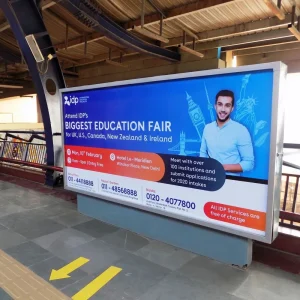
Another major category includes metro rail, airport, railway station, and bus terminal advertising rights. Authorities such as Delhi Metro Rail Corporation award long-term media rights contracts covering station branding, trains, digital screens, and outdoor inventory.

Government Communication & Public Messaging Rights
Several government departments issue media rights tenders for public awareness campaigns, empanelment of agencies, or bulk media buying. These tenders are usually governed by strict eligibility and compliance norms.
How Media Rights Tenders in India Work
1. Tender Notification and Scope Definition
The process begins when the authority releases a detailed tender document. This document clearly defines the scope of media rights, duration, minimum guarantee, revenue-sharing model, and operational responsibilities.
2. Eligibility and Pre-Qualification Criteria
To maintain quality control, media rights tenders in India include strict eligibility requirements. These may involve minimum turnover thresholds, prior experience in similar projects, and financial solvency standards. As a result, only serious and capable bidders qualify.
3. Technical Bid Submission
In the technical bid stage, bidders outline their execution strategy, media planning capabilities, technology usage, and compliance approach. Importantly, technical evaluation ensures that operational competence matters as much as financial strength.
4. Financial Bid and Revenue Model
After technical qualification, shortlisted bidders submit financial bids. These bids may involve fixed annual license fees, minimum guarantee plus revenue share, or hybrid models. Consequently, authorities compare bids to determine the most commercially viable option.
5. Evaluation and Award of Rights
Once bids are evaluated, the authority awards media rights to the highest or most suitable bidder. The winning bidder then signs a long-term agreement outlining performance benchmarks and penalty clauses.
Why Media Rights Tenders Are Strategically Important
Media rights tenders in India are not merely transactional. They influence brand visibility, revenue scalability, and market dominance. For instance, winning a metro advertising tender can give a media company city-wide visibility for 10–15 years.
Furthermore, long-term rights allow agencies to invest in infrastructure, digital screens, data analytics, and programmatic capabilities. Therefore, these tenders often define leadership positions in OOH, sports broadcasting, and transit media sectors.
Key Challenges in Media Rights Tenders
Despite their potential, media rights tenders also involve risks. High reserve prices, aggressive bidding, and long payback periods can strain cash flows. Additionally, regulatory changes and traffic fluctuations may impact inventory performance.
However, companies that conduct robust feasibility studies and realistic revenue projections are better positioned to succeed.
Future of Media Rights Tenders in India
Looking ahead, media rights tenders in India are evolving rapidly. With the rise of digital screens, programmatic DOOH, and OTT platforms, tender scopes are becoming more technology-driven. Authorities now expect bidders to deliver innovation, data transparency, and measurable ROI.
As infrastructure expands and content consumption diversifies, media rights tenders will continue to be a cornerstone of India’s advertising and broadcasting ecosystem.
Conclusion
To summarise, what are media rights tenders in India and how do they work is a question every media professional must understand. These tenders allocate control over premium media assets through transparent, competitive processes. When executed well, they create long-term value for both authorities and media operators.
Ultimately, success in media rights tenders depends on strategic bidding, operational expertise, and a clear understanding of audience monetisation.