Metro Station Advertising Strategies for High-Frequency Urban Reach
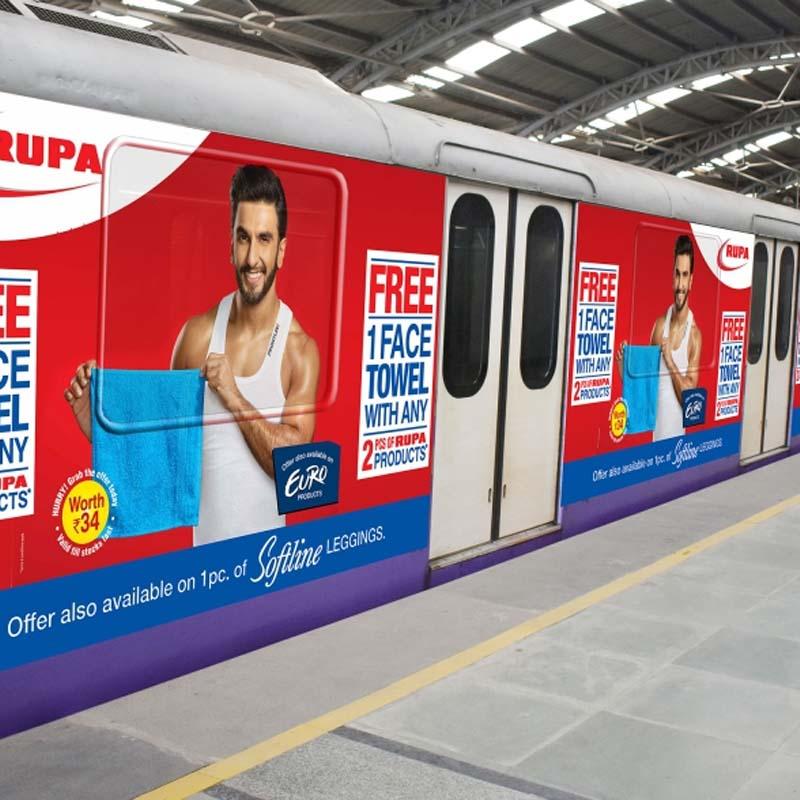
If you have ever stood on a platform at Rajiv Chowk in Delhi or Majestic in Bengaluru during rush hour, you know that the “crowd” is an understatement. It is a sea of people. For a brand, this is the most valuable real estate in India. In 2026, Metro advertising has moved beyond just sticking posters on walls; it’s about “conquering” the commuter’s journey from the moment they enter the station until they swipe out.
The “Captive” Window: 45 Minutes of Boredom
The secret sauce of Metro advertising is simple: people are bored. Whether they are standing on the platform at Sector 52 Noida or sitting in a coach on the Mumbai Metro Line 2A, they are looking for a distraction. Unlike YouTube ads that you skip or Instagram ads you scroll past, you can’t “skip” the wall of a Metro station.
The strategy here is repetition. A commuter who takes the same route daily will see your ad at least twice a day, 22 days a month. That’s 44 high-quality impressions from a single person. By the time they need to buy a laptop or a new pair of sneakers, your brand is already the first one they remember.
Route-Specific Targeting (The “Laser” Approach)
You don’t need to transit advertise across the whole city. Smart Indian brands now pick their lines based on “audience character.“
-
The Tech Crowd: If you are a Fintech or SaaS brand, you focus on the Blue Line in Bengaluru or the Hitech City stations in Hyderabad. You are talking to software engineers with high disposable income.
-
The Student Hub: For EdTech or fast-food brands, the Yellow Line in Delhi (near North Campus) is the goldmine.
-
The Shoppers: Places like MG Road in Pune or Noida Sector 18 are where people go to spend money. Putting a “Sale” ad here catches people exactly when they are in a shopping mood.
Station Domination: The Power Move
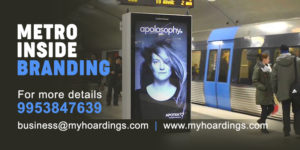
If you have a big launch like a new Netflix series or a Maruti car you go for Station Domination. This is where you wrap every pillar, every escalator side-panel, and even the floor stickers with your brand. Brands like Spotify and Netflix have done this brilliantly in India. When a commuter walks into a station and everything is “Netflix Red,” it creates a massive psychological impact. It makes the brand feel “huge” and “unmissable.“
The QR Code + 5G Advantage
In 2026, every Metro ad must be “clickable.” With 5G being seamless inside most Metro tunnels now, the gap between seeing an ad and buying the product has vanished. We are seeing a lot of “Scan to Shop” ads on the overhead hangers (the little cards that hang from the ceiling). A passenger can scan a QR code while standing and have their groceries delivered to their home by the time they finish their commute. It’s not just an ad anymore; it’s a point-of-sale.

Inside the Coach: High-Intimacy Branding
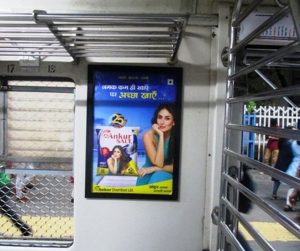
While the station gives you “scale,” the inside of the train gives you “intimacy.” Door panels are the most premium spots because every time the train stops, eyes naturally move toward the doors. Grab handles are another clever spot it’s the only form of advertising that a customer literally “touches” for 20 minutes. For small businesses, inside-panel posters (A3 or A4 size) are the most budget-friendly way to start, costing as little as ₹10,000 to ₹15,000 per month.
Conclusion
Metro advertising in India is the ultimate “Ground Game.” It is about being there in the daily grind of the Indian urban professional. If you want to build a brand that feels like a part of the city’s heartbeat, you have to be on the tracks. You don’t need to reach everyone in India you just need to reach the 60 lakh people who move through these stations every single day.